
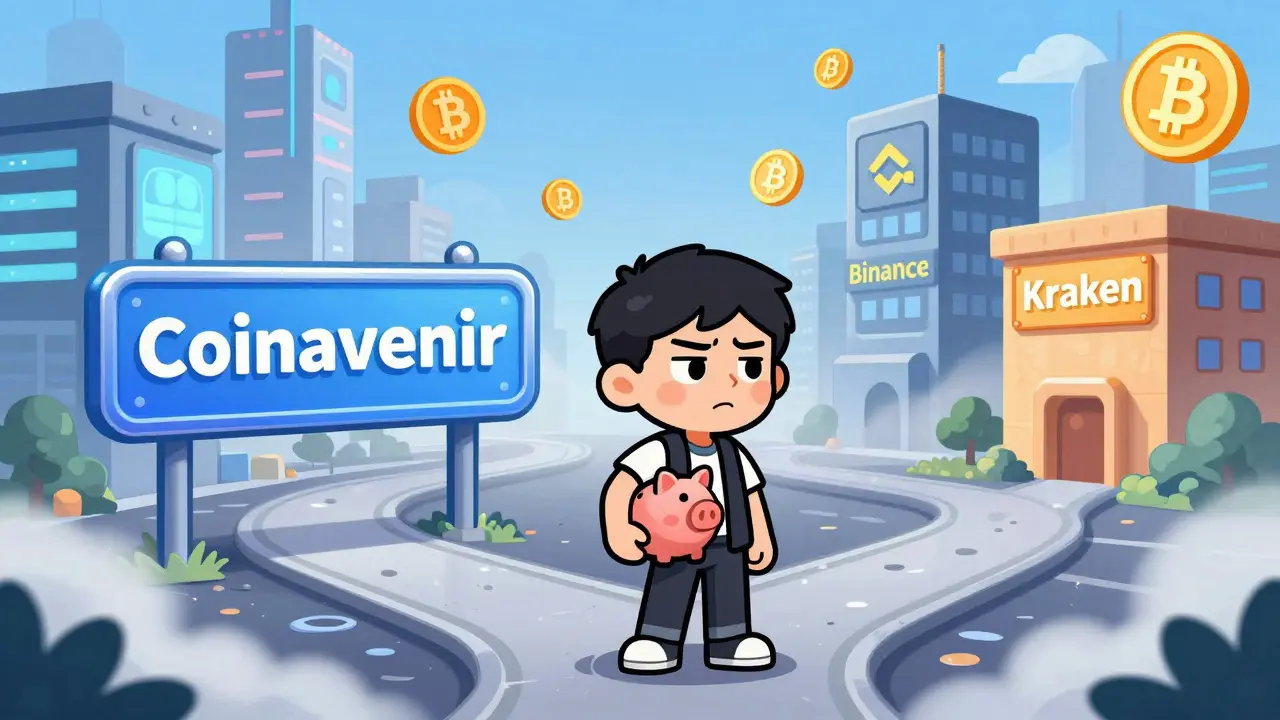
Remember the golden age of crypto when you could trade with just an email address and a wallet seed phrase? Those days are gone. In 2026, the landscape is defined by strict regulations, mandatory identity checks, and a fierce battle for trust among exchanges. Enter Coinavenir, a platform that launched in September 2023 promising to make perpetual futures trading accessible to beginners. But does it deliver on that promise, or is it another flash-in-the-pan derivative platform lost in the noise?
If you are looking for a place to park your life savings, look elsewhere. If you are curious about how new, niche derivatives platforms operate in a post-regulation world, read on. This review cuts through the marketing fluff to examine the security, transparency, and usability of Coinavenir based on available data up to mid-2026.
What Is Coinavenir?
Coinavenir is a cryptocurrency exchange focused primarily on perpetual futures and derivatives trading, targeting users who may be new to finance. Founded in late 2023, the platform positions itself as a simplified alternative to giants like Binance or ByBit. Their stated vision is to "spread the fire further up to the most calm," which translates to trying to onboard people who aren't deeply familiar with complex financial instruments.
The company operates with a distributed headquarters structure, listing offices in Vietnam, Taiwan, Indonesia, Saint Vincent, and Singapore. This multi-jurisdictional setup is common for newer crypto firms trying to navigate varying global regulations. However, it also means that if things go wrong, determining which legal authority has jurisdiction over your funds can be complicated.
Unlike spot trading platforms where you buy and hold assets, Coinavenir focuses on derivatives. This means you are betting on the price movement of cryptocurrencies without necessarily owning them. It’s higher risk, higher reward, and typically reserved for more experienced traders-yet Coinavenir claims to target beginners. That contradiction is worth noting.
The Transparency Problem: Why Data Matters
In the crypto world, transparency isn’t just a buzzword; it’s a survival metric. After the collapses of FTX and other major players, users demand proof that their money actually exists. Here is where Coinavenir faces significant challenges.
As of the latest verified data from CoinMarketCap, Coinavenir is listed under "untracked trading volume." This doesn’t mean they have zero volume, but it means they haven’t provided verifiable metrics that meet industry standards for liquidity reporting. For a derivatives exchange, liquidity is everything. Low liquidity means you might not be able to exit a position quickly, or the slippage (the difference between expected price and executed price) could eat into your profits.
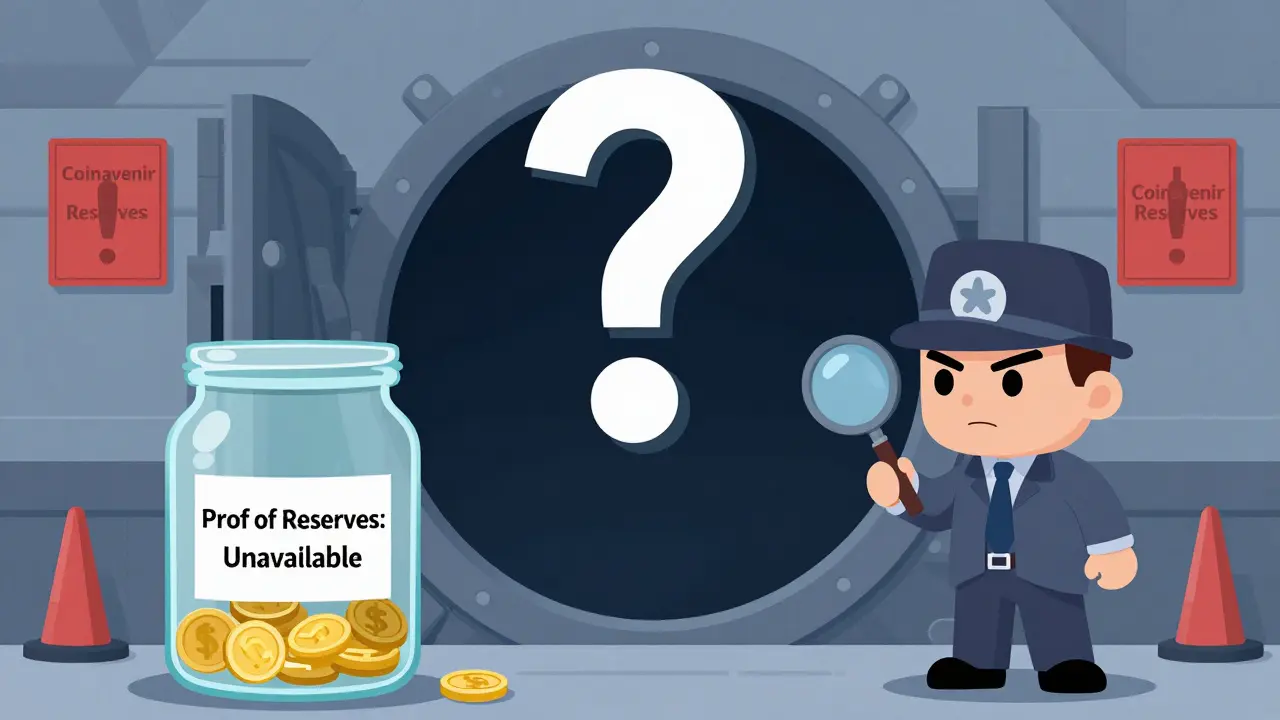
More concerning is the status of their reserves. CoinMarketCap explicitly notes that "Total asset reserve data [is] unavailable." Major competitors like Kraken publish regular Proof-of-Reserves reports audited by top accounting firms like Mazars. Without this data, there is no independent verification that Coinavenir holds enough assets to cover user liabilities. In an industry where solvency is questioned daily, this lack of visibility is a major red flag.
Security Infrastructure: Cold Storage Claims vs. Reality
Security is the backbone of any exchange. Coinavenir states that it employs an automated cold storage system where every deposited asset moves into a cold wallet automatically. Transfers to hot wallets (connected to the internet) are processed in short periods to reduce breach risks. On paper, this sounds standard.
However, compare this to industry leaders. Coinbase, for example, maintains 98% of assets in cold storage and carries $180 million to $400 million in insurance coverage for digital assets. They undergo regular third-party security audits. Coinavenir provides no verifiable details about insurance coverage or independent security audits.
The context here is critical. In the first half of 2025 alone, $3.1 billion was lost to hacks across the crypto industry, according to AIInvest.com. Hot wallets accounted for 62% of stolen funds. While Coinavenir claims to minimize hot wallet exposure, the absence of third-party verification or hacking insurance means users bear the full risk if a breach occurs. With only 22% of major exchanges maintaining hacking insurance, being uninsured is a notable disadvantage.
| Feature | Coinavenir | Coinbase | Kraken |
|---|---|---|---|
| Proof of Reserves | Unavailable | Regular Audits | Mazars Verified |
| Cold Storage Policy | Automated (Claimed) | 98% Cold Storage | Majority Cold Storage |
| Insurance Coverage | Unknown | $180M-$400M | Limited Specifics |
| Trading Volume Verification | Untracked | Verified High Volume | Verified High Volume |
| Third-Party Security Audits | Not Disclosed | Regular | Regular |
KYC Requirements and User Onboarding
If you value privacy, Coinavenir is likely not for you. The platform mandates KYC (Know Your Customer) verification for all trading and withdrawal activities. There is no option for anonymous trading, even for small amounts.
This aligns with increasing global regulatory pressures, particularly following the implementation of frameworks like the 2025 GENIUS Act, which imposes stricter reserve and compliance requirements on crypto entities. However, it contrasts with some competitors like UEEx, which offered no-KYC options for basic activities in earlier iterations.
For beginners, this adds friction. Expect the onboarding process to take 15-30 minutes, involving government ID submission and facial recognition. While this enhances security against fraud, it also means your personal data is stored on their servers. Given the lack of publicized data breach history or GDPR/CCPA compliance statements specific to Coinavenir, users should weigh the convenience of access against the privacy implications.
Trading Experience: Features and Limitations
Coinavenir admits its futures offerings "may not be in the most technical or most coins." This is a humble admission that highlights its niche. You won’t find the deep order books or extensive altcoin selection of Binance or OKX. Instead, you get a streamlined interface designed for simplicity.
However, "simple" often means "limited." As of late 2023, CoinMarketCap noted "No data is available now" for market pairs, suggesting a very narrow selection. For a derivatives trader, limited pairs mean fewer hedging opportunities and less diversification.
Pricing structures are also opaque. While industry averages for derivatives maker fees range from 0.02% to 0.06%, and taker fees from 0.05% to 0.1%, Coinavenir does not publish clear fee schedules in verified sources. Hidden fees or high spreads can significantly impact profitability, especially for high-frequency traders.
Technical integration is another weak point. There is no public API documentation or mobile app store listings referenced in authoritative sources. If you rely on algorithmic trading bots or need mobile access, Coinavenir currently lacks the infrastructure to support you.
Community Sentiment and Expert Analysis
In the crypto space, reputation is built on community feedback and expert scrutiny. Here, Coinavenir is virtually invisible. Trustpilot, Reddit’s r/CryptoCurrency, and Bitcointalk show no substantial discussion threads about the exchange. Compare this to Coinbase, which has thousands of reviews, or even controversial platforms that spark heated debates.
This silence is telling. Established security analysts, such as those at AIInvest.com, regularly assess top exchanges for vulnerabilities. Coinavenir was omitted from their 2025 security report covering 14 major exchanges. This suggests the platform hasn’t achieved sufficient market prominence-or trust-to warrant professional assessment.
Without user testimonials, you cannot gauge customer support quality, withdrawal speeds, or real-world pain points. You are essentially flying blind regarding the day-to-day operational reliability of the platform.
Who Should Use Coinavenir? (And Who Should Avoid It)
Based on the available evidence, Coinavenir serves a very specific, albeit risky, profile:
- Consider it if: You are a beginner who wants to experiment with perpetual futures using very small amounts of capital you can afford to lose. You prefer a simpler interface than ByBit and are comfortable with strict KYC processes.
- Avoid it if: You prioritize security, transparency, or liquidity. If you need Proof-of-Reserves, insurance coverage, or a wide variety of trading pairs, established exchanges like Kraken, Coinbase, or Binance are far safer choices.
- Avoid it if: You are an institutional investor or high-volume trader. The lack of API support, unverified volume, and potential liquidity issues make it unsuitable for serious trading operations.
Final Verdict: Proceed with Extreme Caution
Coinavenir represents the current state of many mid-tier crypto exchanges: ambitious marketing, basic functionality, and significant gaps in transparency. While its focus on simplifying derivatives for beginners is a valid market need, the execution lacks the foundational trust signals required in 2026.
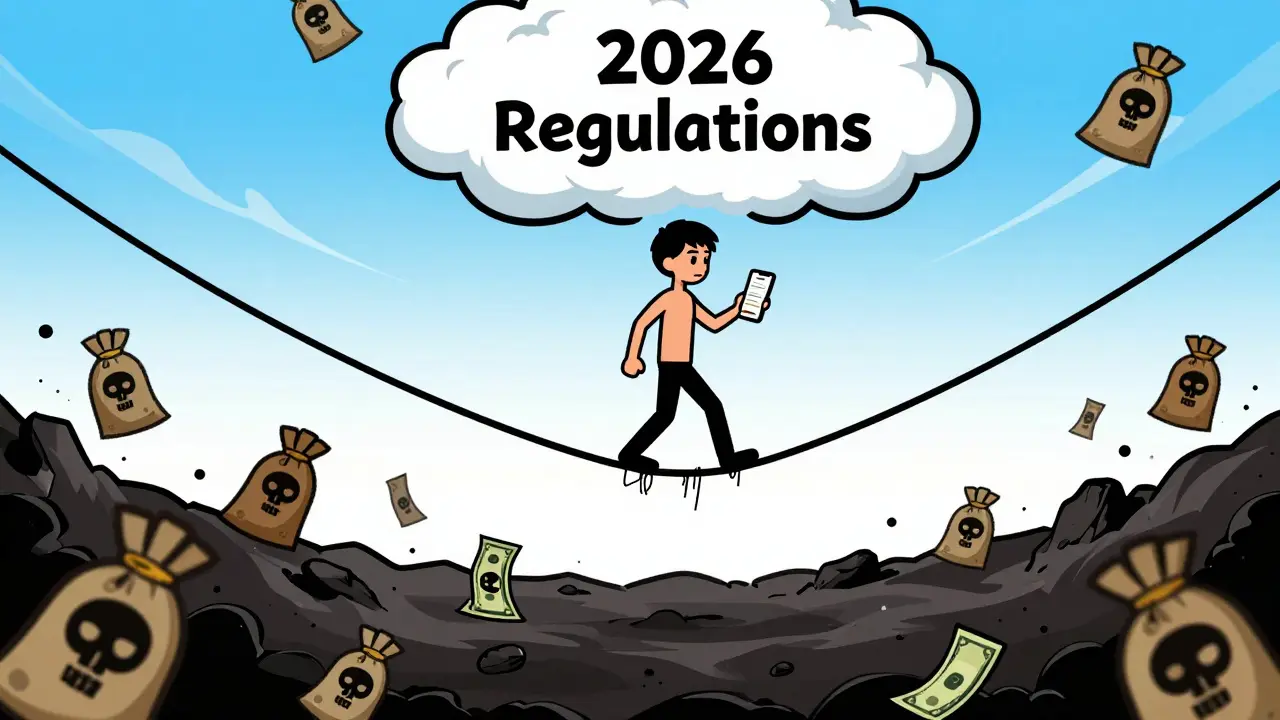
The absence of Proof-of-Reserves, unknown insurance status, and untracked trading volume are not minor oversights-they are critical risks. In an industry where billions are lost annually to hacks and insolvencies, choosing a platform without verified security measures is akin to walking a tightrope without a net.
If you decide to use Coinavenir, treat it as a high-risk experimental account. Never deposit more than you can afford to lose, and always keep the majority of your assets in a self-custody hardware wallet. For the vast majority of traders, sticking with regulated, transparent, and audited exchanges remains the wisest path forward.
Is Coinavenir a legitimate exchange?
Coinavenir appears to be a legitimate operating entity founded in 2023, but it lacks the transparency and third-party verification that define "trustworthy" exchanges in 2026. It is listed on CoinMarketCap but with untracked volume and no reserve data, which raises significant caution flags for users seeking security.
Does Coinavenir require KYC?
Yes, Coinavenir mandates Know Your Customer (KYC) verification for all trading and withdrawal activities. There are no anonymous trading options available on the platform.
Is my money insured on Coinavenir?
There is no public information confirming that Coinavenir offers insurance coverage for user funds. Unlike Coinbase, which discloses specific insurance limits, Coinavenir’s insurance status is unknown, meaning users may bear full loss in case of a hack or insolvency.
Can I trade anonymously on Coinavenir?
No. Because KYC is mandatory for all activities, you must provide government-issued identification and pass facial recognition checks before trading or withdrawing funds.
How does Coinavenir compare to ByBit or Binance?
Coinavenir is much smaller and less transparent than ByBit or Binance. It lacks verified trading volume, proof-of-reserves, and extensive coin listings. While it aims for simplicity, it sacrifices the liquidity, security features, and market depth found on major exchanges.
Where is Coinavenir headquartered?
Coinavenir operates with a distributed structure, listing headquarters in Vietnam, Taiwan, Indonesia, Saint Vincent, and Singapore. This multi-jurisdictional approach complicates regulatory oversight.