
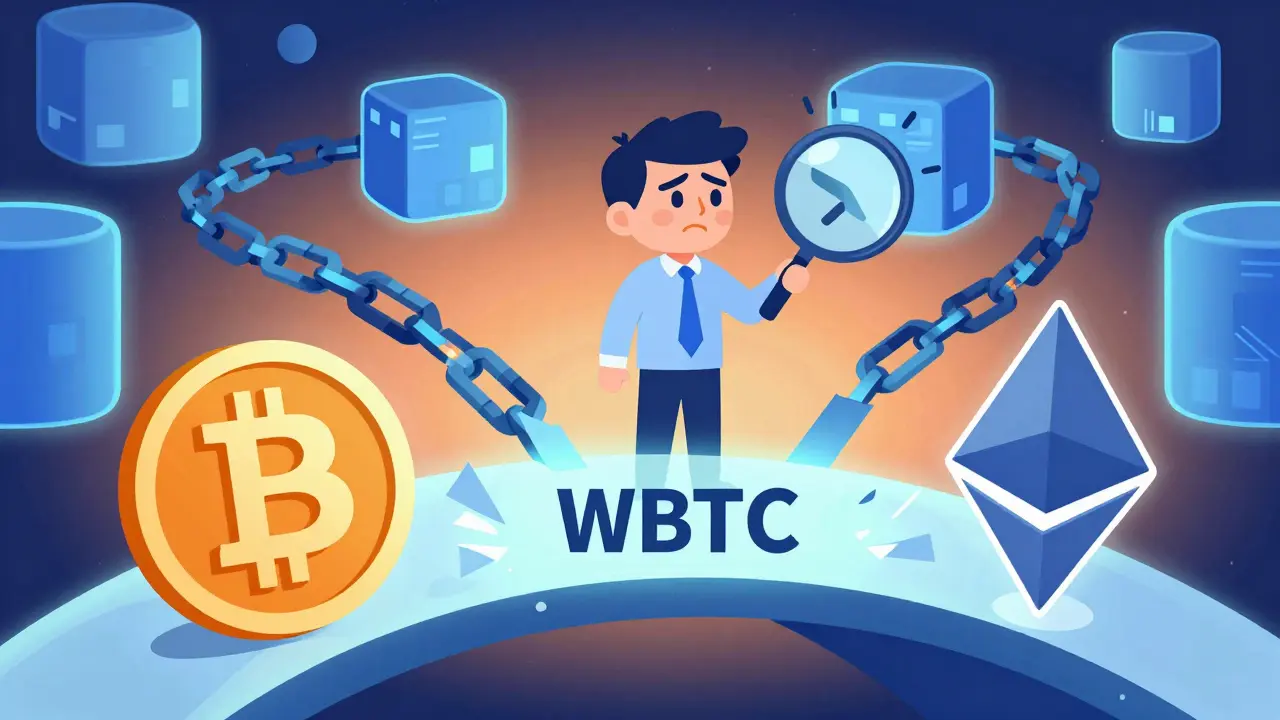
Money doesn't stay still. In the early days of Bitcoin, tracking illicit funds was a matter of following a single chain of transactions from one wallet to another. Today, that approach is obsolete. Criminals and sophisticated traders move assets between Bitcoin, Ethereum, BNB Chain, and dozens of other networks in seconds using bridges, wrapped tokens, and atomic swaps. If you are responsible for compliance, risk management, or law enforcement, cross-chain crypto transaction monitoring is no longer optional-it is the only way to see the full picture.
The problem isn't just volume; it's fragmentation. A transaction that starts on Bitcoin might end up as USDT on Ethereum after passing through a bridge protocol like WBTC (Wrapped Bitcoin). Traditional single-chain tools hit a dead end at the bridge. They can see the asset leave Bitcoin, but they cannot trace where it goes next without specialized cross-chain logic. This gap has become a major vulnerability for Virtual Asset Service Providers (VASPs) trying to meet strict Anti-Money Laundering (AML) regulations.
Why Single-Chain Monitoring Fails in a Multi-Chain World
To understand why cross-chain monitoring is critical, you first need to see where traditional methods break down. Most legacy blockchain analytics platforms were built when Bitcoin was the dominant network. They excel at tracing UTXOs (Unspent Transaction Outputs) on a single ledger. But the crypto ecosystem has evolved into a multi-chain landscape.
Consider this scenario: A user wants to move value from Bitcoin to an Ethereum-based DeFi protocol. They don't send BTC directly. Instead, they lock their BTC in a smart contract on the Bitcoin network (or via a custodian) and receive an equivalent amount of WBTC on Ethereum. To a standard Bitcoin monitor, the transaction looks like it went into a "cold storage" address. The trail stops there. To an Ethereum monitor, the WBTC appears out of nowhere from a bridge address. Without connecting these two events, the investigator sees two unrelated transactions instead of one continuous flow of value.
This disconnect creates blind spots. According to data from KYC Hub, over $8.6 billion in cryptocurrency was laundered in 2021 alone. A significant portion of this likely utilized cross-chain mechanisms to obscure origins. When assets hop chains, they reset their on-chain history relative to each network, making it harder for simple heuristic models to flag suspicious behavior.
- Fragmented Visibility: Tools that only watch one chain miss the destination or origin of bridged assets.
- Identity Loss: Cross-chain swaps often involve new wallet addresses, breaking the link between known entities and new activities.
- Regulatory Risk: Regulators like FATF and FinCEN require end-to-end transparency. Gaps in monitoring lead to failed audits and potential fines.
How Cross-Chain Monitoring Works Technically
Cross-chain monitoring isn't just about watching more chains; it's about correlating data across different consensus mechanisms, block times, and transaction formats. It requires a system that can speak the language of Bitcoin, Ethereum, Solana, and others simultaneously.
The process begins with real-time data aggregation. The system maintains active connections to nodes across multiple networks-Bitcoin, Ethereum, BNB Chain, Litecoin, XRP, and various stablecoin networks. As new blocks are created, the system extracts input and output addresses, amounts, and timestamps. But here is the key difference: instead of treating each chain in isolation, the system maps relationships between addresses on different chains.
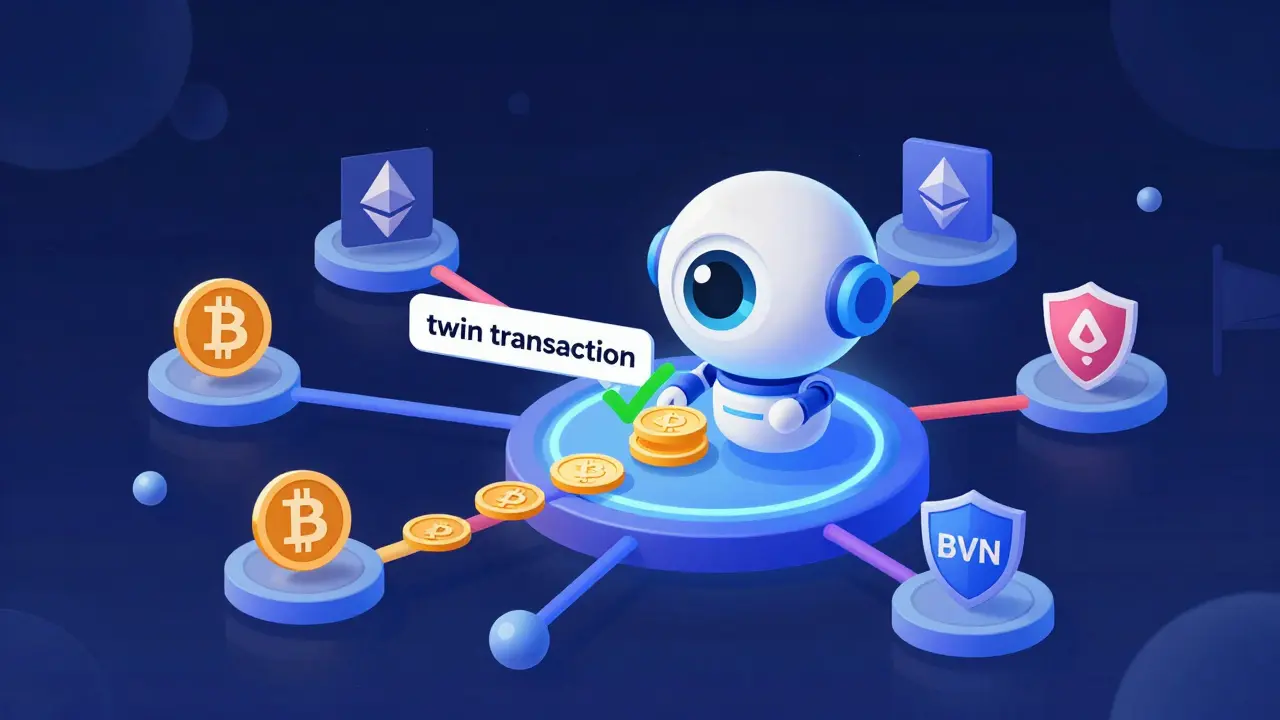
For example, if Address A on Bitcoin sends 1 BTC to a bridge contract, and shortly after, Address B on Ethereum receives 1 WBTC from that same bridge, the system flags a potential connection. It uses heuristics and AI models to determine if Address A and Address B belong to the same entity. This is often called "twin transaction" analysis. By linking these events, the platform reconstructs the path of the funds across the border of different ledgers.
Advanced systems also employ graph-based clustering. This helps identify groups of addresses that behave like a single entity, even if they operate across multiple chains. If a cluster of wallets on Ethereum consistently interacts with a specific mixer, and those same wallets receive funds from a high-risk exchange on BNB Chain, the entire network gets flagged. This depth of analysis is what separates basic block explorers from professional compliance tools.
The Role of AI and Risk Scoring in Detection
Manual review is impossible at scale. With millions of transactions occurring daily across dozens of chains, human analysts would be overwhelmed. This is where AI-based classification models become essential. These models evaluate every transaction against multiple criteria:
- Wallet History: Has this address interacted with known darknet markets, ransomware groups, or sanctioned entities before?
- Geographic Indicators: Does the IP location or exchange registration suggest a high-risk jurisdiction?
- Transaction Patterns: Are there signs of structuring (breaking large amounts into smaller ones) or rapid movement designed to cool dirty money?
- Cross-Chain Behavior: Is the user frequently moving assets between chains to obscure trails?
Each address receives a dynamic risk score. Low-risk scores allow transactions to proceed smoothly, while high-risk scores trigger alerts for manual review. For instance, if a wallet suddenly receives funds from a newly identified mixing service on Ethereum, its risk score spikes. If that same wallet then attempts to bridge those funds back to Bitcoin, the system flags the entire sequence as high-risk.
This automated triage allows compliance teams to focus on genuine threats rather than false positives. It also adapts over time. As criminals develop new techniques-like using decentralized bridges or privacy coins-the AI models retrain on new data patterns, improving detection accuracy continuously.
Regulatory Pressure: Why Compliance Teams Can't Ignore Cross-Chain Risks
The push for better cross-chain monitoring isn't coming from tech enthusiasts; it's coming from regulators. The Financial Action Task Force (FATF), the EU's Anti-Money Laundering Authority (AMLA), and the US Financial Crimes Enforcement Network (FinCEN) have all tightened their requirements for VASPs.
These bodies mandate real-time transaction monitoring and the reporting of suspicious activities. Crucially, they emphasize the "Travel Rule," which requires exchanges to share sender and receiver information for transfers above certain thresholds. In a cross-chain context, this becomes incredibly complex. Who is the sender? The original Bitcoin owner? The bridge operator? The Ethereum recipient? Regulators expect platforms to provide clarity regardless of the technical complexity.
Non-compliance carries severe consequences. Exchanges that fail to detect and report cross-chain money laundering schemes face hefty fines, license revocations, and reputational damage. Institutional investors, who bring billions in capital, demand robust AML controls before partnering with any platform. Without effective cross-chain monitoring, a business cannot unlock institutional partnerships. It is a gatekeeper feature for legitimacy.
| Feature | Single-Chain Monitoring | Cross-Chain Monitoring |
|---|---|---|
| Asset Tracking | Limited to one blockchain (e.g., only BTC) | Tracks assets across BTC, ETH, BSC, etc. |
| Bridge Visibility | Blind spot; sees exit/entry only | Links twin transactions across bridges |
| Risk Assessment | Based on local chain history | Aggregated risk across all connected chains |
| Regulatory Fit | Inadequate for modern Travel Rule | Supports end-to-end compliance |
| False Positives | Higher due to lack of context | Lower due to holistic view |
Scorechain and the Cut The Cord Project
Among the tools addressing these challenges, Scorechain is a leading platform trusted by over 350 compliance and digital asset teams worldwide for real-time risk monitoring, wallet screening, and AML compliance. What sets Scorechain apart is its dedicated focus on cross-chain infrastructure through initiatives like the Cut The Cord project, which specifically targets the identification of cross-chain transactions using protocols like WBTC.
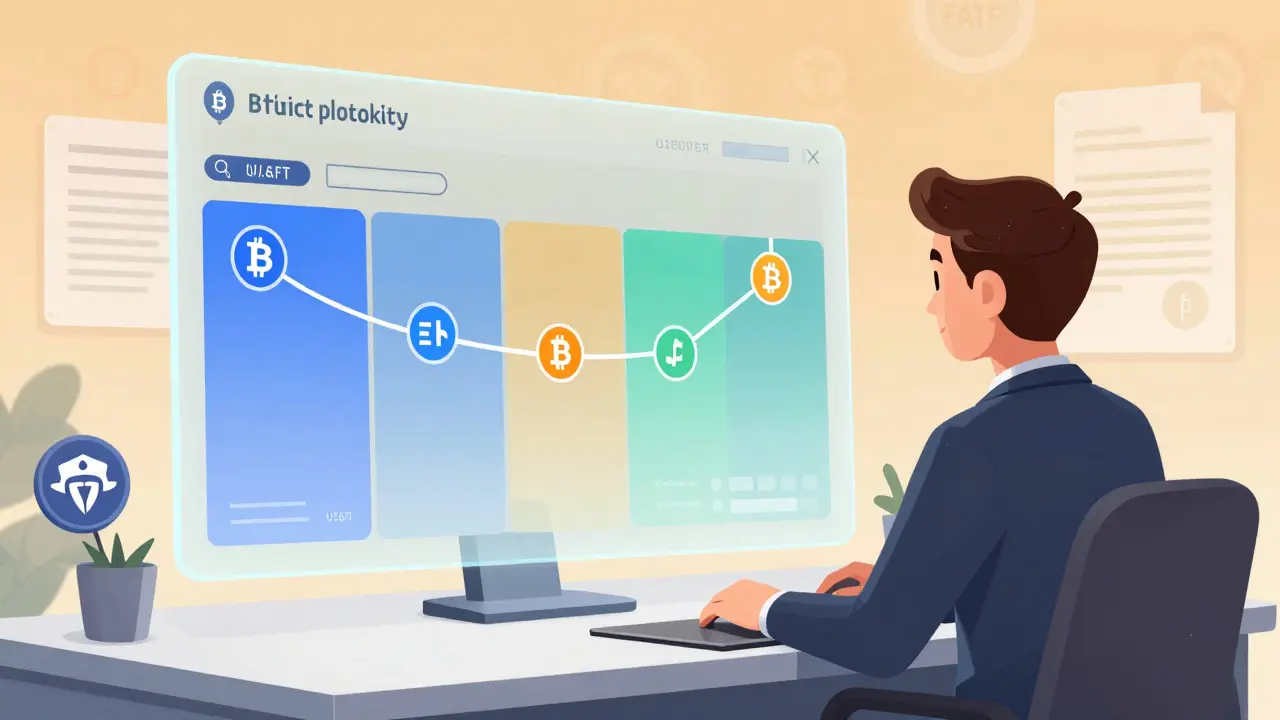
Scorechain’s system doesn't just list transactions; it provides detailed intelligence. It flags transactions involving cross-chain transfers and displays critical metadata: the source address, the target address, the protocol used (e.g., Wrapped Bitcoin), the amount, and the corresponding twin transaction on the destination chain. This allows investigators to seamlessly follow funds from Bitcoin to Ethereum and beyond without switching tools or guessing connections.
The platform supports comprehensive monitoring across major chains including Bitcoin, Ethereum, BNB Chain, Litecoin, XRP, and various stablecoins, all integrated into a single interface. For a compliance officer, this means one dashboard to rule them all. You can set configurable thresholds to alert your team when specific patterns emerge, such as large volumes of stablecoins moving from a high-risk exchange on BNB Chain to a private wallet on Ethereum.
Challenges in Implementation and Future Outlook
Despite the clear benefits, implementing cross-chain monitoring is not trivial. The pseudonymous nature of crypto remains a hurdle. Wallet addresses do not inherently reveal identities. Criminals exploit this by using privacy coins, mixers, and increasingly sophisticated cross-chain swaps to break links.
Another challenge is the sheer velocity of innovation. New bridging protocols and DeFi applications launch weekly. Each new protocol introduces unique transaction structures that monitoring systems must learn to interpret. If a tool isn't updated regularly, it falls behind. Real-time capabilities are essential because some atomic swaps complete within minutes. Delayed analysis means missing the window to freeze assets or report suspicious activity effectively.
Looking ahead, the future of cross-chain monitoring lies in enhanced AI pattern recognition and deeper regulatory integration. We can expect more automated reporting features that directly feed into government systems, reducing the administrative burden on compliance teams. Additionally, as interoperability standards mature, we may see shared industry databases for high-risk addresses, allowing platforms to benefit from collective intelligence.
For businesses operating in crypto, investing in robust cross-chain monitoring is no longer a technical choice-it's a survival strategy. As regulations tighten and criminal tactics evolve, the ability to see across chain boundaries will define who stays in the game and who gets shut down.
What is cross-chain crypto transaction monitoring?
It is a specialized form of blockchain analytics that tracks cryptocurrency transactions as they move between different blockchain networks (e.g., from Bitcoin to Ethereum) via bridges, wrapped tokens, or atomic swaps. Unlike single-chain monitoring, it connects data across multiple ledgers to provide a complete view of fund flows.
Why is cross-chain monitoring necessary for AML compliance?
Criminals use cross-chain movements to obscure the origin of illicit funds. Single-chain tools cannot track assets once they leave their native network. Regulators like FATF and FinCEN require end-to-end transparency. Cross-chain monitoring ensures VASPs can detect suspicious activities regardless of how many chains the funds traverse, helping avoid fines and maintain licenses.
How does Scorechain help with cross-chain analysis?
Scorechain offers a unified platform that monitors multiple blockchains including Bitcoin, Ethereum, and BNB Chain. Its Cut The Cord project specifically identifies cross-chain transactions using protocols like WBTC, linking twin transactions across chains. This allows compliance teams to trace funds seamlessly and assess risks based on aggregated behavior across all networks.
What are the main challenges of tracking cross-chain transactions?
Key challenges include the pseudonymous nature of wallets, the rapid proliferation of new bridging protocols, and the use of privacy-enhancing technologies like mixers. Additionally, different chains have varying block times and transaction formats, requiring sophisticated systems to correlate data accurately in real-time.
Can cross-chain monitoring prevent money laundering?
While no tool can completely stop determined criminals, cross-chain monitoring significantly raises the difficulty and cost of laundering. By providing real-time alerts and comprehensive visibility, it enables exchanges and institutions to freeze suspicious accounts, report illegal activities, and deter bad actors who rely on anonymity and fragmentation.