

Did you just find a notification claiming your FEAR token rewards are ready?
If that sounds familiar, you aren’t alone. With crypto marketing messages popping up everywhere, it is easy to get caught up in the hype. However, the truth about the FEAR token airdrop is quite different from what recent spam emails might suggest. If you are looking to claim your share in early 2026, you need to know that the main distribution window closed years ago. Understanding the history of the FEAR token campaign protects you from potential scams and clarifies the actual value of the asset today.
This guide breaks down exactly what happened during the original launch, explains why you might still see references to it, and analyzes where the token stands right now. We will look at the specifics of the CoinMarketCap partnership, the distribution numbers, and whether there is any remaining utility left for holders.
Quick Overview
Before digging into the technical history, here are the critical facts you need to know immediately:
- The primary FEAR token airdrop concluded permanently on September 24, 2021.
- No legitimate claims can be made for this specific event after the deadline passed.
- Distribution involved 20,000 tokens allocated across more than 500 verified winners.
- Current market activity shows modest stability rather than rapid growth projections.
- Beware of phishing sites using “FEAR” branding to steal your wallet credentials.
The Original Distribution Mechanism
To understand why people are still searching for details, we have to look back at how the project launched. In September 2021, the FEAR Token executed a significant community-building strategy through a direct partnership with CoinMarketCap is a popular platform for tracking cryptocurrency prices and market capitalization data.. This collaboration was part of a broader trend where established platforms used their massive user bases to kickstart new gaming projects.
The process was surprisingly straightforward for its time. Participants did not need to connect complex Web3 wallets like MetaMask immediately. Instead, the barrier to entry was purely social engagement. You had to maintain active accounts on Twitter and join the official Telegram channel. After verifying these accounts, you would log in to your CoinMarketCap account and click a specific button labeled 'Join This Airdrop' within their dedicated portal.
This approach leveraged the trust users already placed in CoinMarketCap. In 2021, the platform boasted over 100 million monthly active users. By integrating the signup process directly into the CMC interface, the developers ensured widespread exposure without requiring participants to navigate risky blockchain smart contracts manually. It was a low-friction model designed for mass adoption rather than deep technical interaction.
Quantifying the Rewards
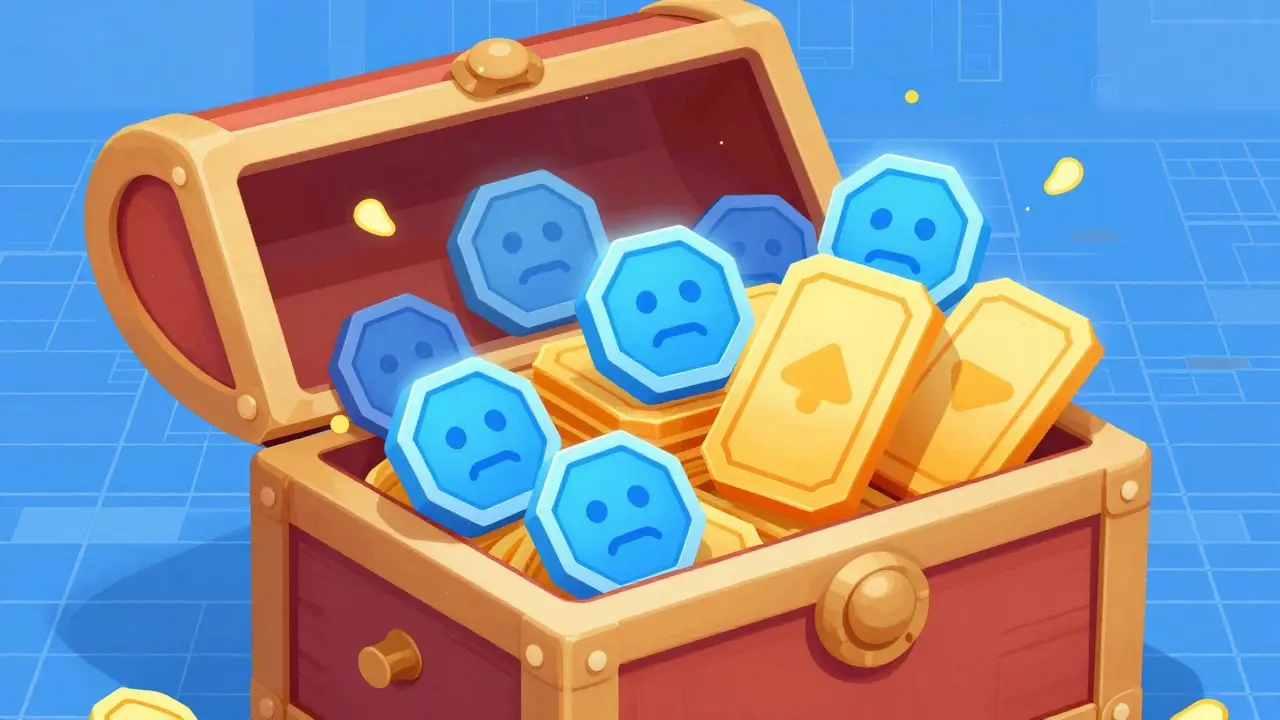
Many investors wonder exactly what was given away. The FEAR token campaign wasn’t a single payout event; it was structured in phases to maximize reach and engagement. Initially, the team distributed 2,000 Play2Earn NFT Airdrop tickets. These were not just random digital cards; they held intrinsic value. Each ticket was worth 25 FEAR tokens at face value.
Following the initial ticket release, the campaign expanded significantly. The total allocation grew to 20,000 tokens. These tokens were spread across a larger pool of winners, with records showing over 500 individuals successfully receiving their shares. This volume indicated a successful distribution phase, as hitting 500+ qualified participants requires a high level of user verification and bot prevention, which CoinMarketCap managed effectively.
| Distribution Phase | Asset Type | Quantity Allocated | Winner Count |
|---|---|---|---|
| Initial Drop | NFT Tickets | 2,000 | Via CMC Signup |
| Secondary Round | FEAR Tokens | 20,000 | +500 Winners |
Project Status and Development Timeline
Air drops often fade quickly, but some projects sustain momentum. The FEAR token positioned itself firmly within the Play2Earn sector, which saw explosive growth between 2021 and 2022. During this bull run period, gaming tokens attracted billions in investment capital. The goal was to build a sustainable ecosystem where players could earn revenue while playing games.
However, visibility matters. Unlike giants such as Axie Infinity or The Sandbox, which maintained dominant positions in the gaming blockchain space, FEAR has seen reduced presence in major tracking updates by 2025 and into 2026. While the token remains listed on various exchanges, community activity metrics are quieter compared to the boom years. This does not mean the token is useless, but it suggests the project moved away from aggressive marketing toward operational stability.
Recent development updates regarding the project are sparse. This lack of noise typically signals one of two things: the project is in a quiet maintenance phase, focusing on backend improvements, or it has entered dormancy. Given the availability of the token on secondary markets, the former is more likely, but investors should manage expectations accordingly. The project did pivot away from token-heavy distribution strategies eventually, moving focus toward utility integration.
Pricing Analysis and Market Forecasts
You might be asking yourself, "If I missed the free tokens, is it worth buying them now?" Let’s look at the actual numbers. As of early 2026, the market price of the FEAR token hovers around $0.008443. This puts it in a stable range relative to its historical highs.
Forecast models analyzing the trajectory from 2025 through 2028 provide interesting insight into potential volatility. Analysts estimate an average price range sitting between $0.006654 and $0.008444 over the medium term. The projections do not indicate massive exponential spikes but rather modest stability. Potential highs are forecasted to reach approximately $0.009288, while support levels drop towards $0.003659 in bearish scenarios.
When looking at extended timelines like 2028, the projection sees a potential high of $0.01123. This represents a Return on Investment (ROI) of roughly 16% from current valuation levels. This positions FEAR as a low-volatility gaming asset. For comparison, newer Layer 2 protocols or DeFi projects often promise higher returns but come with significantly increased risk. FEAR sits as a safer, slower-moving bet, assuming the underlying utility holds.
The Evolution of Airdrop Strategies
The FEAR airdrop represents a specific era of cryptocurrency history. In 2021, social media likes and Telegram joins were sufficient to qualify for rewards. By 2026, the landscape has shifted dramatically. Modern airdrop campaigns require proof of meaningful economic activity on the blockchain.
Projects like EigenLayer have established a new gold standard for these distributions. They utilize restaking mechanisms that reward users for actively securing networks, not just following a Twitter handle. This shift prevents the “sybil attacks” where bots created hundreds of fake accounts to steal free coins-a problem the FEAR team faced back in 2021.
Current protocols often use Soulbound Tokens to verify identity and prevent farming. Participants are expected to demonstrate contribution across multiple ecosystems. While the FEAR airdrop was simpler, it laid the groundwork for these complex systems. Understanding this evolution helps explain why you won’t see similar simple sign-ups dominating headlines in 2026.
Risks and Security Warnings
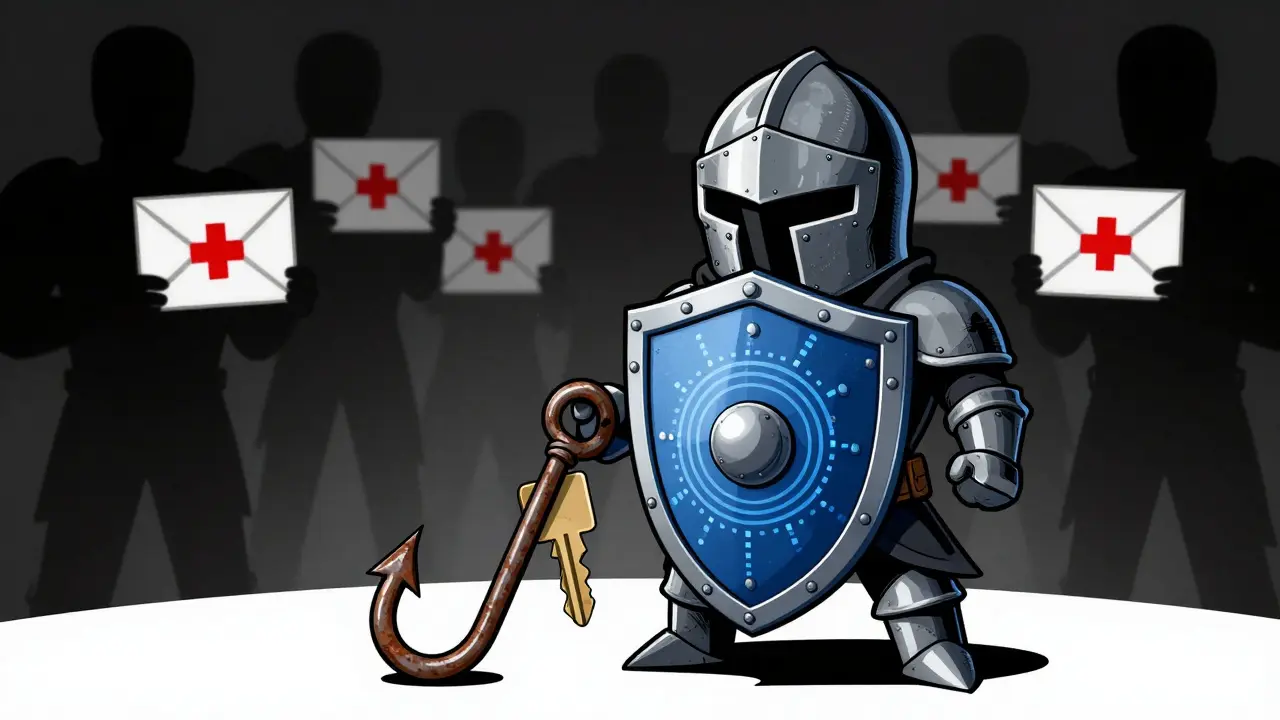
Because the term "FEAR token airdrop" still trends occasionally, malicious actors target curious users. Phishing websites mimicking the original CoinMarketCap page are dangerous. They ask you to connect your wallet to “claim” nonexistent funds, which grants them access to drain your assets.
Regulatory frameworks have tightened significantly since 2021. Newer airdrops now require Know Your Customer (KYC) procedures and geographic restrictions that were absent during the FEAR distribution era. If anyone contacts you promising a retroactive claim for the FEAR campaign, it is highly likely a fraud. Always verify announcements through official channels and cross-reference with trusted aggregators.
Frequently Asked Questions
Is the FEAR token airdrop still open in 2026?
No, the primary airdrop distribution concluded on September 24, 2021. Any website currently claiming you can claim a reward from that specific campaign is likely a scam.
What was the minimum requirement to join the original campaign?
Participants needed active social media accounts on Twitter and Telegram, plus a registered CoinMarketCap account to participate in the qualification process.
How many FEAR tokens were actually distributed?
The campaign initially distributed 2,000 NFT tickets, followed by a larger round allocating 20,000 tokens to over 500 verified winners.
Is the FEAR token volatile or stable?
Analysis suggests it is a relatively stable, low-volatility token compared to emerging DeFi protocols, with modest growth projections through 2028.
Can I claim rewards late if I missed the deadline?
No, deadlines for airdrop participation are strictly enforced. Legitimate projects do not reopen distribution windows years later.


Sean Carr
It really helps to understand the timeline before diving into old rewards again.