
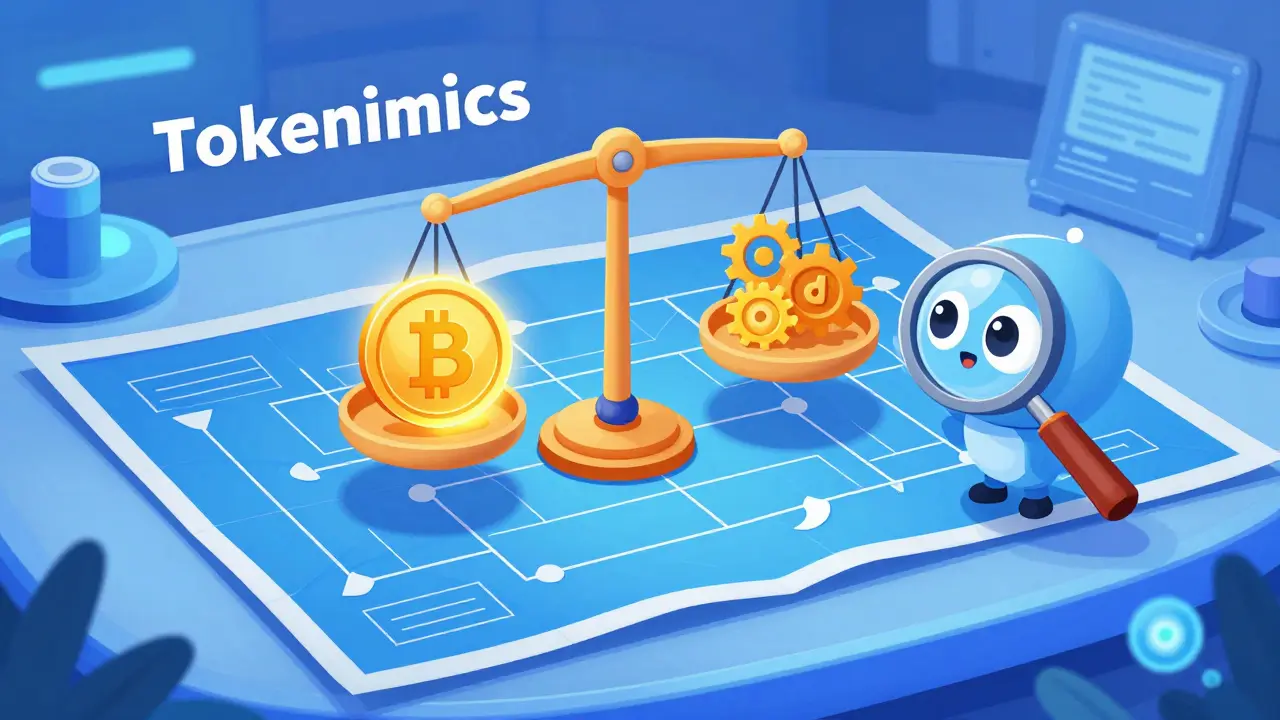
Most people treat cryptocurrency prices like a lottery ticket, but the real magic happens under the hood in the economic blueprint. This blueprint is what we call Tokenomics is the economic model governing a cryptocurrency token's supply, distribution, utility, and value accrual mechanisms. It is the difference between a project that crashes in three months and one that survives a brutal bear market. In fact, data from CoinGecko's 2024 report shows that projects with solid economic structures have a 63% higher survival rate during downturns.
If you are looking for good tokenomics examples, you have to look past the marketing hype. A great model doesn't just make a token scarce; it creates a reason for people to hold it that isn't based on hope. Whether it is through burning tokens to reduce supply or tying value to actual network usage, the best models balance inflation and deflation to keep the ecosystem healthy.
The Gold Standard: Ethereum's Shift to Deflation
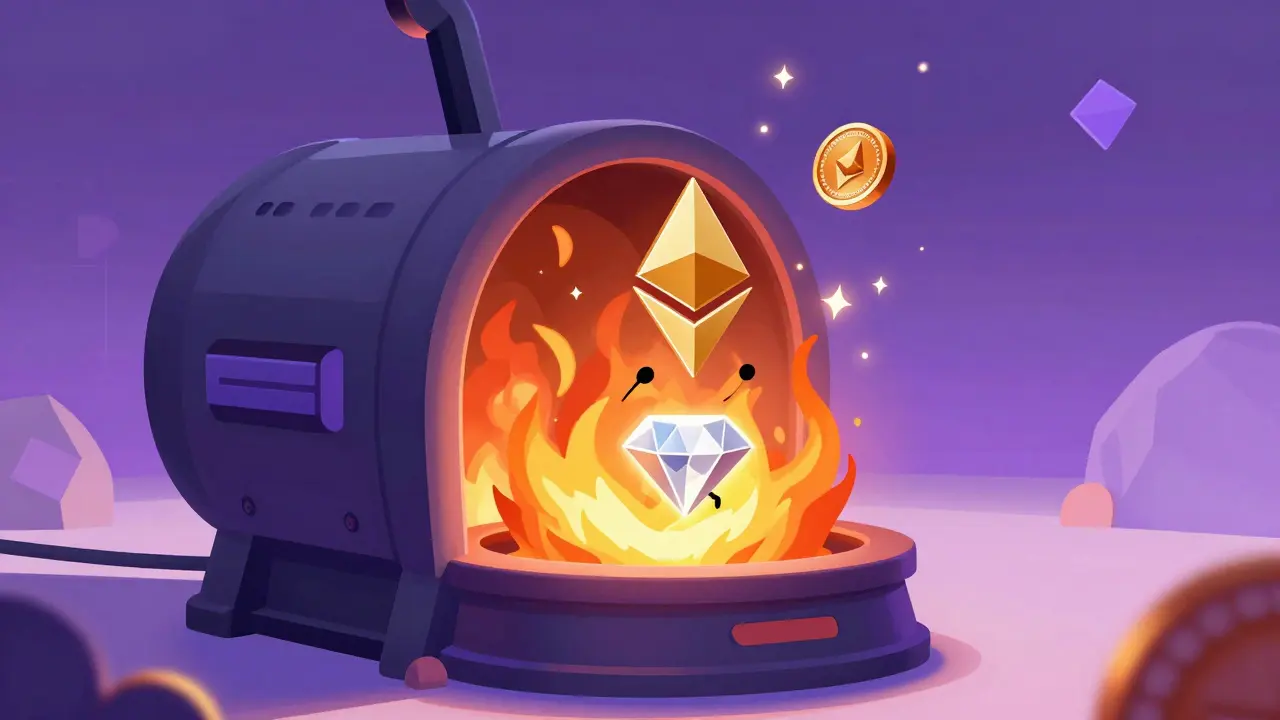
For a long time, Ethereum followed a simple inflationary path. However, they pulled off one of the most significant pivots in crypto history with EIP-1559, implemented in August 2021. Instead of giving all transaction fees to validators, this mechanism burns a portion of the base fee.
Why does this matter? It creates a direct link between network activity and token scarcity. When the network is busy-say, during a massive NFT mint or a DeFi surge-more ETH is burned. By October 2025, this process had destroyed over 4.1 million ETH, worth roughly $12.8 billion. This transforms the token from a simple utility tool into a productive asset that becomes scarcer as the platform grows. It is a masterclass in aligning network success with token value.
The Power of Predictable Burns: BNB and Avalanche
While Ethereum burns tokens organically based on traffic, other projects use more structured approaches. Binance Coin (BNB) uses a quarterly burn mechanism. This is less about network traffic and more about a scheduled commitment to reduce supply. By July 2025, BNB had destroyed over 20 million tokens, slashing the total supply from 200 million to about 128 million.
Then you have Avalanche (AVAX), which takes a more aggressive approach. Avalanche implements a hard-capped supply of 720 million tokens and burns all transaction fees. According to CoinMarketCap, this has reduced the circulating supply by about 1.2% annually. This "triple-token burn"-affecting gas fees, subnet creation, and staking-ensures that as the ecosystem expands, the supply naturally tightens.
| Project | Primary Mechanism | Key Attribute | Health Score (Messari) |
|---|---|---|---|
| Ethereum | EIP-1559 Burn | Adaptive Monetary Policy | 92/100 |
| Avalanche | Hard Cap + Burn | Transaction Fee Destruction | 89/100 |
| BNB | Quarterly Burn | Predictable Supply Reduction | 85/100 |
| Solana | Scheduled Inflation | High Throughput / Low Fee | 80/100 |
Community-First Distribution: The Hyperliquid Case
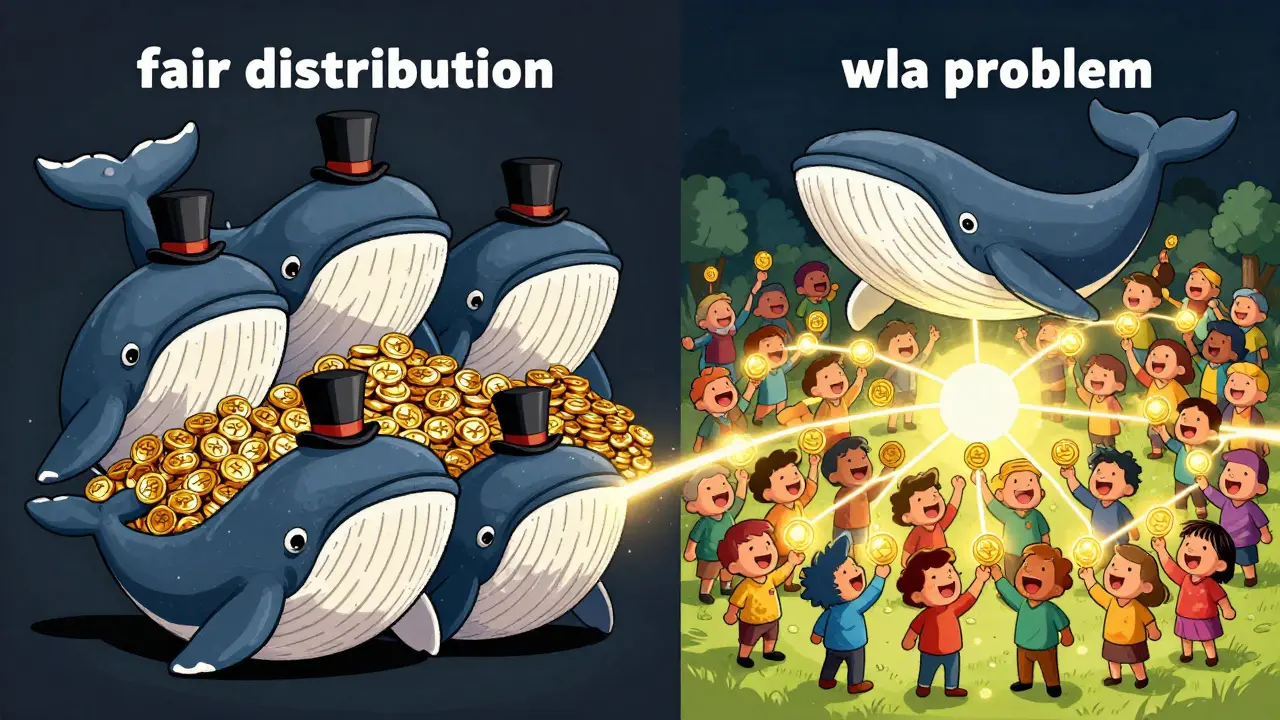
One of the biggest red flags in tokenomics is a "whale" problem-where a few insiders hold most of the supply and dump it on retail investors. Most projects allocate a massive chunk to venture capitalists (VCs) and the team. Hyperliquid (HYPE) flipped this script in late 2024.
With a total cap of 1 billion tokens, Hyperliquid allocated 76.3% of its supply directly to the community via airdrops. The team only took 12%, and ecosystem development got 11.7%. This is a critical design choice because it removes the "VC overhang" and puts the power in the hands of actual users. When 68% of investors prioritize fair distribution, models like this become incredibly attractive compared to those with 3-month cliffs that lead to massive price crashes.
The Utility Loop: Chainlink and Solana
Scarcity is great, but a token without a use case is just a digital collectible. Chainlink (LINK) provides a great example of a utility loop. With over 350,000 active node operators, the token is required to pay for oracle services that secure billions in DeFi value. To further improve their model, Chainlink launched CCIP 2.0 in 2025, which converts 10% of oracle fees into LINK burns, creating a synergy between actual service demand and supply reduction.
Solana (SOL) focuses on the volume play. By keeping fees incredibly low (around $0.00025), they drive massive transaction numbers. While some criticize its inflation rate-which has historically diluted holders-the sheer scale of activity creates an organic usage loop. Their proposed "SOL 2.0" upgrade aims to fix this by lowering inflation to 3.5% and introducing fee burning to mimic the success of Ethereum.
Red Flags: When Tokenomics Fail
To recognize a good example, you have to understand the bad ones. A common failure occurs when there is a misalignment between the team's incentives and the holders'. For instance, some projects allocate 40-70% of tokens to the team with very short vesting periods. In March 2025, a project with a 45% team allocation and a mere 3-month vesting period collapsed, erasing $850 million in value within 48 hours after the tokens were unlocked. The team dumped, and the community was left holding the bag.
Another pitfall is "artificial scarcity." Creating a cap without a reason for people to buy the token is a recipe for stagnation. We see this with some enterprise-focused tokens where the project has great adoption, but the token itself doesn't actually do anything. If the token isn't needed for the protocol to function, its value is purely speculative.
How to Evaluate Tokenomics Yourself
You don't need to be a math professor to analyze a project, but you should look for specific metrics. According to the Consensys Academy, a professional evaluation should cover at least 17 metrics. If you're short on time, focus on these three:
- The Vesting Schedule: Look for "cliffs" (periods where no tokens are released). A minimum 12-month cliff is generally a sign of a team committed to long-term growth.
- The Inflation vs. Burn Rate: Is the token printing new coins faster than it's burning old ones? If inflation is 8% but there is no burn mechanism, your holdings are being diluted.
- Utility Penetration: Ask yourself: "Does this protocol actually need this token to work?" At least 30% of the supply should ideally have a functional utility (staking, governance, or payment).
Using tools like CryptoSlate's Tokenomics Explorer can help you verify these claims. Don't trust a whitepaper alone-check the blockchain to see if the burns are actually happening in real-time. Only about 42% of projects provide real-time tracking, so those that do are usually the ones you can trust.
What is the most important part of good tokenomics?
The most critical element is the alignment of incentives. A good model ensures that the developers, investors, and users all benefit when the protocol grows. This is usually achieved through a combination of fair distribution (low team allocation), genuine utility (the token is required for the service), and a sustainable supply mechanism (like burns or capped inflation).
Is a deflationary token always better than an inflationary one?
Not necessarily. While deflationary tokens (like BNB or AVAX) can increase price via scarcity, some inflationary models are necessary for security. For example, Solana uses inflation to reward validators who secure the network. The key is whether the inflation is offset by utility or a gradual decrease in the inflation rate over time.
How does EIP-1559 affect Ethereum's value?
EIP-1559 introduces a "burn" mechanism where a portion of every transaction fee is permanently removed from circulation. This means that during periods of high network activity, Ethereum becomes deflationary. This links the token's value directly to the demand for the network's services.
What is a "vesting cliff" and why does it matter?
A vesting cliff is a period during which early investors or team members cannot sell their tokens. It prevents a sudden mass-selloff (dumping) immediately after a token launch. A longer cliff (12+ months) typically indicates that the team is focused on building the project rather than seeking a quick exit.
Why do some tokens with high usage have low prices?
This usually happens when there is a "utility gap." A project might have millions of users (like some enterprise blockchains), but if the token isn't actually required for those users to interact with the system, the usage doesn't translate into token demand. This is why "utility penetration" is a key metric in tokenomics analysis.


Nishant Goyal
Solid breakdown. Really helpful for beginners.