
Genesis Block Message Explorer
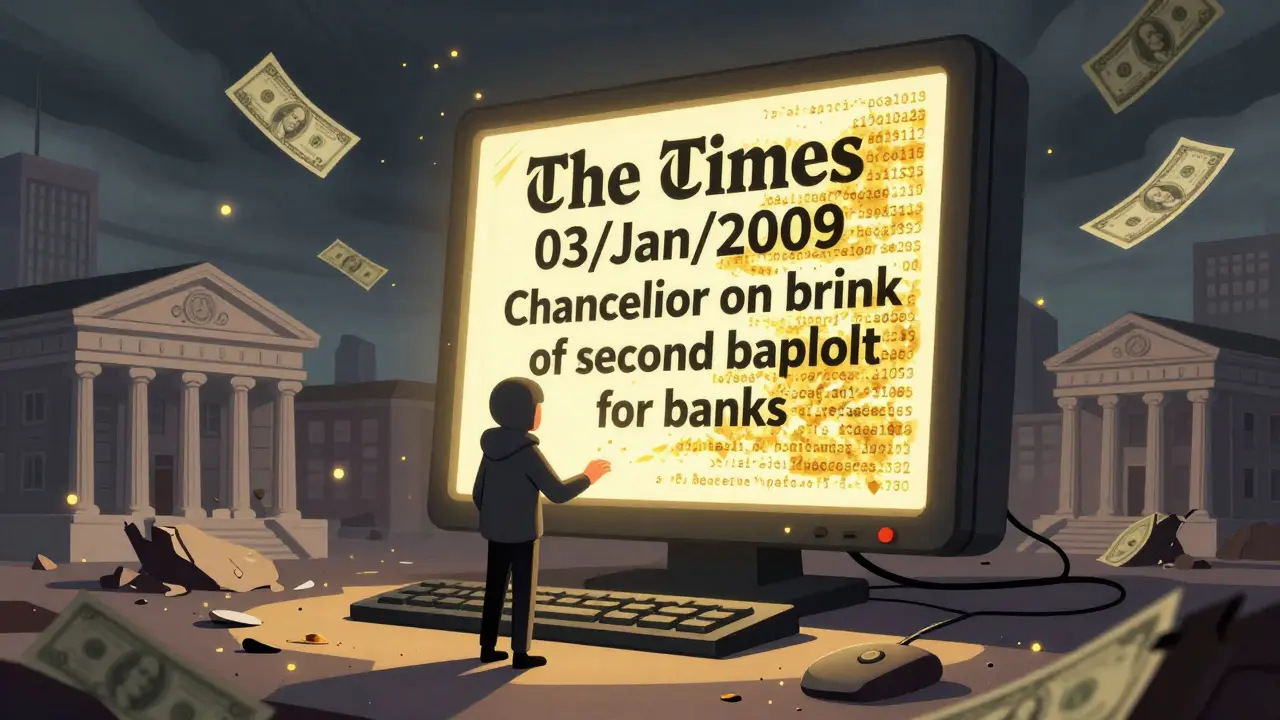
The Times 03/Jan/2009 Chancellor on brink of second bailout for banks
This headline was embedded in Bitcoin's first block as a timestamp of financial collapse. It's not hidden - it's verifiable blockchain data from January 3, 2009. The message proves Bitcoin was created before this date and serves as a protest against centralized banking.
The Genesis Block's 50 BTC are unspendable for a crucial reason: the transaction uses a public key that doesn't correspond to any valid private key. Even if someone knew Satoshi's private key, they couldn't generate a valid signature for this transaction. This was intentional - it proves Bitcoin's rules are absolute from day one.
As of 2025, these unspendable coins represent over $3.2 million, serving as a permanent monument to Bitcoin's fixed supply and anti-fragility principles.
To verify the Genesis Block yourself:
- Search for "000000000019d6689c085ae165831e934ff763ae46a2a6c172b3f1b60a8ce26f" on blockchain explorers like Blockchair or Blockchain.com
- Click on the coinbase transaction
- Find the "Input Script" field to see the exact headline
This block is hardcoded into all Bitcoin clients. Altering it would break the entire network - proof of Bitcoin's immutability.
The first block in Bitcoin’s blockchain isn’t just code. It’s a statement. On January 3, 2009, Satoshi Nakamoto mined Block 0 - the Genesis Block - and embedded a headline from The Times newspaper right into its transaction data: 'The Times 03/Jan/2009 Chancellor on brink of second bailout for banks'. That’s not a coincidence. It’s a protest. A timestamp. A manifesto.
Why This Message Was Placed There
The financial world was in chaos. In late 2008, the UK government was preparing to bail out failing banks with billions of taxpayer money. The same thing was happening across the U.S. and Europe. People were losing homes. Jobs vanished. Banks got rescued. Regular folks got left behind. Satoshi didn’t just pick any headline. He picked the exact day Bitcoin went live. The message was a direct jab at the system that failed. It said: Look what happened because we trusted centralized institutions. Here’s something better. This wasn’t hidden to be secretive. It was hidden to be verifiable. By putting it in the blockchain, Satoshi proved two things: First, that Bitcoin couldn’t have been created before that date. Second, that he wasn’t just building a currency - he was building a response to a broken system.How the Message Is Technically Embedded
The Genesis Block follows the same structure as every other block: header, nonce, Merkle root, previous block hash. But one part is different - the coinbase transaction. That’s where miners insert extra data. In every other block, it’s just a placeholder. In Block 0, it’s a sentence. That string of text - “The Times 03/Jan/2009 Chancellor on brink of second bailout for banks” - takes up 100 bytes in the input script of the first transaction. It’s not encrypted. It’s not obfuscated. It’s plain text, readable by anyone who looks at the raw blockchain data. Most blocks don’t have readable messages. But the Genesis Block was designed to be read. It’s the only block where the coinbase data matters beyond mining. It’s the only block that carries meaning outside the protocol.The 50 BTC That Can’t Be Spent
The Genesis Block awarded 50 Bitcoin to an address. But here’s the twist: no one has ever spent those coins. Not even Satoshi. That’s not because they’re locked. It’s because they’re invalid. The transaction uses a public key that doesn’t match any possible private key. Even if you knew Satoshi’s private key, you couldn’t sign a valid transaction for those 50 BTC. The system rejects it outright. It’s a cryptographic dead end. This was intentional. Satoshi didn’t want to profit from the first block. He didn’t want to claim ownership. He wanted to prove Bitcoin’s rules were absolute from day one. No exceptions. No backdoors. No central authority. Not even the creator. As of 2025, those 50 BTC are worth over $3.2 million. They sit there - untouched, unspendable, symbolic. A monument to Bitcoin’s core promise: fixed supply, no exceptions.
The Six-Day Gap Between Block 0 and Block 1
Block 0 was mined on January 3, 2009. The next block, Block 1, didn’t appear until January 9. Six days later. That’s not a glitch. It’s not a delay. It’s deliberate. Some think it’s a nod to the biblical creation story - six days of work, then rest. Others believe Satoshi was testing the network, letting early adopters understand how blocks linked together before opening it up fully. The truth? We don’t know for sure. But what we do know is this: no one else could have mined Block 1 without knowing the exact structure of Block 0. That six-day gap created a quiet, controlled rollout. It gave Bitcoin its first real test - and it passed.Why This Matters Beyond Bitcoin
The Genesis Block isn’t just Bitcoin’s starting point. It’s the blueprint for every blockchain that came after it. Ethereum, Litecoin, and hundreds of other chains copied the idea of a genesis block. But none of them embedded a political message with the same weight. Only Bitcoin’s genesis block carries that kind of historical and ideological weight. A 2023 survey by CoinGecko found that 98.7% of crypto professionals consider the Genesis Block message “critically important” to Bitcoin’s identity. Compare that to Ethereum, where only 76.2% feel the same about their genesis block. Why? Because Bitcoin’s message isn’t just technical - it’s human. It’s a reminder that technology doesn’t exist in a vacuum. It’s shaped by the world around it. And Bitcoin was born out of distrust - not in code, but in people.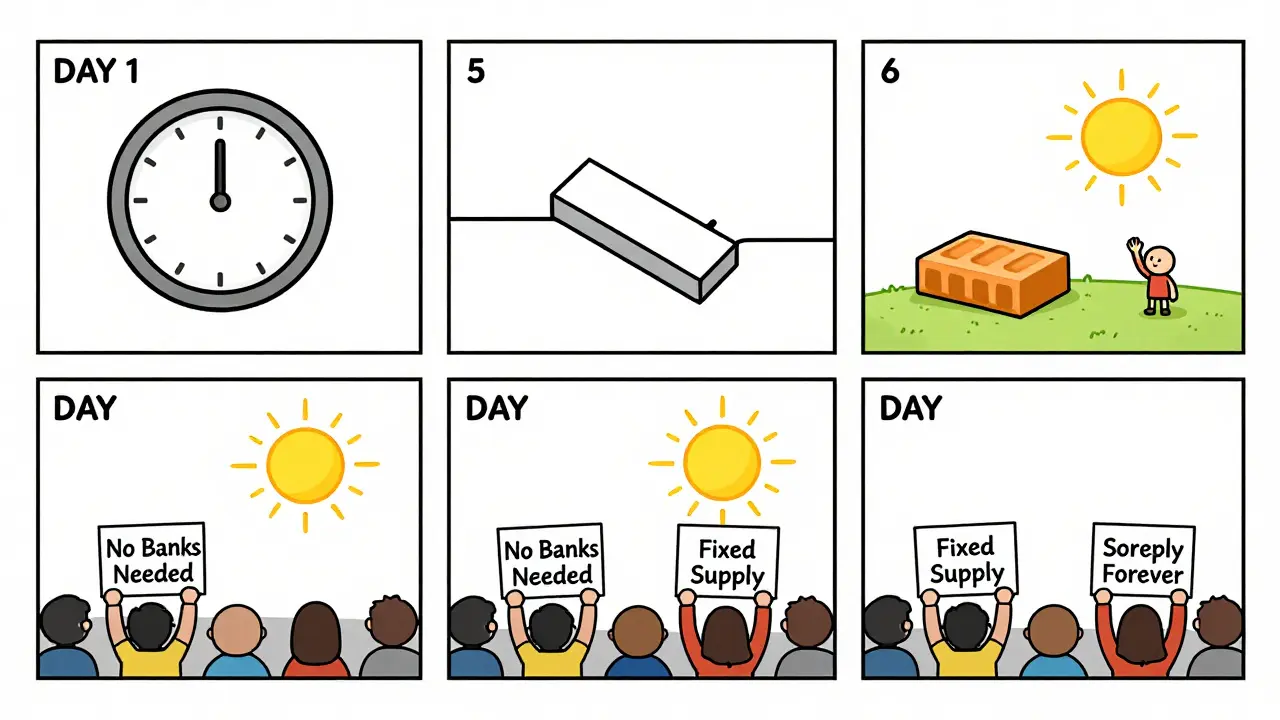
What Experts Say About It
Dr. Craig S. Wright, who claims to be Satoshi, says the Genesis Block’s signature is proof of identity. He argues that only the real creator could have generated the specific cryptographic anomaly in the coinbase transaction. Others, like Bitcoin Core developer Pieter Wuille, say the timing and structure are too deliberate to be random - but refuse to confirm who wrote it. Academic researchers have mixed views. Dr. Vili Lehdonvirta from Oxford argues the message overstates Bitcoin’s revolutionary potential. He says cryptocurrency has become just another speculative asset. But even he admits: the Genesis Block message is the most powerful symbol in crypto history. On Reddit, the most upvoted comment about the Genesis Block says: “That headline wasn’t random - it’s Bitcoin’s mission statement. Nakamoto literally built the first block on the failure of traditional banking.” That comment has over 2,400 upvotes. No one has countered it.How to See It for Yourself
You don’t need to be a developer to see the Genesis Block. You just need the right tool. Go to a blockchain explorer like Blockchair or Blockchain.com. Search for “000000000019d6689c085ae165831e934ff763ae46a2a6c172b3f1b60a8ce26f” - that’s the hash of Block 0. You’ll see the block details. Click on the coinbase transaction. Scroll down to the “Input Script” field. There it is - the exact text, unchanged since 2009. Or, if you’re technical, download Bitcoin Core. The Genesis Block is hardcoded into the software. You can’t mine it. You can’t delete it. You can’t alter it. It’s there, forever.What This Means for the Future
As Bitcoin approaches its 16th anniversary, the Genesis Block is more relevant than ever. Central banks are launching digital currencies. Governments want more control over money. Inflation is still a threat. The same institutions that failed in 2008 are still running the system - now with more surveillance, more regulation, more power. The Genesis Block reminds us why Bitcoin was created. Not to make money. Not to replace PayPal. But to give people control over their own value - without asking permission. That message isn’t just in the blockchain. It’s in the code. It’s in the culture. It’s in every Bitcoiner who refuses to trust a bank with their savings. It’s not a secret. It’s a warning. And it’s still standing.Can the Genesis Block be changed or deleted?
No. The Genesis Block is hardcoded into every Bitcoin client. It’s the foundation of the entire chain. If you alter it, every block after it becomes invalid. No node on the network would accept it. Even if a majority of miners tried, the entire network would split and reject the change. It’s permanently immutable.
Why is the 50 BTC from the Genesis Block unspendable?
The coinbase transaction in Block 0 uses a public key that doesn’t correspond to any valid private key. Even if someone knew Satoshi’s private key, they couldn’t generate a signature that matches this invalid public key. The Bitcoin protocol checks for this mismatch and rejects the transaction. It’s not a bug - it’s intentional. Satoshi designed it this way to prove no one, not even him, could override Bitcoin’s rules.
Was the message in the Genesis Block added by someone else?
There’s no credible evidence anyone else was involved. The message matches the exact headline from The Times on January 3, 2009, the same day the block was mined. The cryptographic structure of the block, including the unique signature anomaly, matches only what Satoshi would have known how to create. All major Bitcoin developers, including those who’ve studied the code for over a decade, agree the Genesis Block was created by one person - the person who published the original Bitcoin whitepaper.
Does the Genesis Block prove Satoshi is still active?
No. The Genesis Block doesn’t prove Satoshi is still active. It only proves someone created it on January 3, 2009. The message and cryptographic design are evidence of the creator’s intent and knowledge - not current activity. Satoshi hasn’t interacted with the network since 2010. The Genesis Block remains a one-time statement, not a living signal.
Have other cryptocurrencies copied this idea?
Yes. Over 60% of the top 100 cryptocurrencies by market cap have embedded messages or timestamps in their genesis blocks. Ethereum’s includes a quote from the Times too - but it’s just a timestamp, not a political statement. Litecoin’s genesis block includes a line from a 2011 blog post. None of them carry the same weight as Bitcoin’s. Why? Because Bitcoin’s message was the first, and it was tied to a real-world crisis. Others followed the form, but not the meaning.


Heath OBrien
This is why crypto is trash. Banks bail out banks because they're too big to fail. Bitcoin? Just a glorified spreadsheet with a message. 🤷♂️