

Airdrop Odds Calculator
The LNR Lunar giveaway was limited to exactly 140 NFTs with over 10,000 participants. Calculate your odds of winning in similar airdrop scenarios.
Enter values above to see your probability of winning
Scarcity matters: The LNR airdrop gave out exactly 140 NFTs. With over 10,000 participants, your odds were less than 1.5%—making it one of the most competitive airdrops of its kind. This scarcity strategy created exclusivity and perceived value.
The LNR Lunar airdrop wasn’t just another free token drop. It was a carefully designed NFT giveaway that gave out exactly 140 NFTs - no more, no less. If you missed it, you missed it. There’s no second chance. No reissue. No extension. This wasn’t a mass distribution like most crypto airdrops. It was exclusive. Limited. And it happened in early 2022, hosted on CoinMarketCap under the Lunar (LNR) project’s name.
How the LNR Airdrop Actually Worked
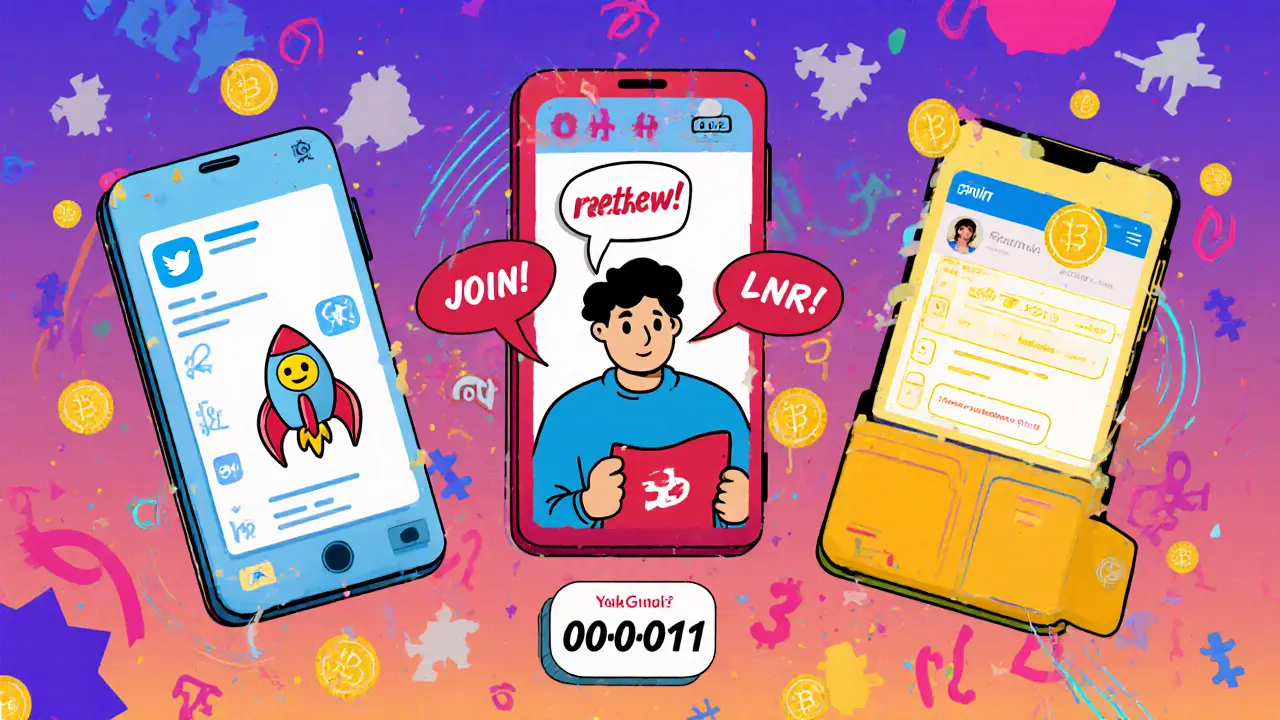
You didn’t just sign up and get lucky. You had to earn your spot. The campaign had three clear steps, and skipping one meant automatic disqualification.- Retweet the official Lunar tweet from @lnrdefi - the exact post tied to the campaign.
- Tag three friends in that retweet. This wasn’t just for visibility - it was a viral growth engine. The project needed new eyes, and this forced participants to bring their networks in.
- Join the official Lunar Telegram group at t.me/lnrdefi. This wasn’t optional. It was the hub for updates, announcements, and later, NFT claims.
After those steps, you had to fill out the official application form on CoinMarketCap’s LNR page. That’s where you submitted your BSC (Binance Smart Chain) wallet address. No MetaMask? No problem - as long as it was a BSC-compatible wallet. No Ethereum? No. No Solana? No. The project was locked into the BNB Chain ecosystem. That meant you needed BNB for gas fees, and you had to know how to manage a wallet on that network.
Why 140 NFTs? The Scarcity Strategy
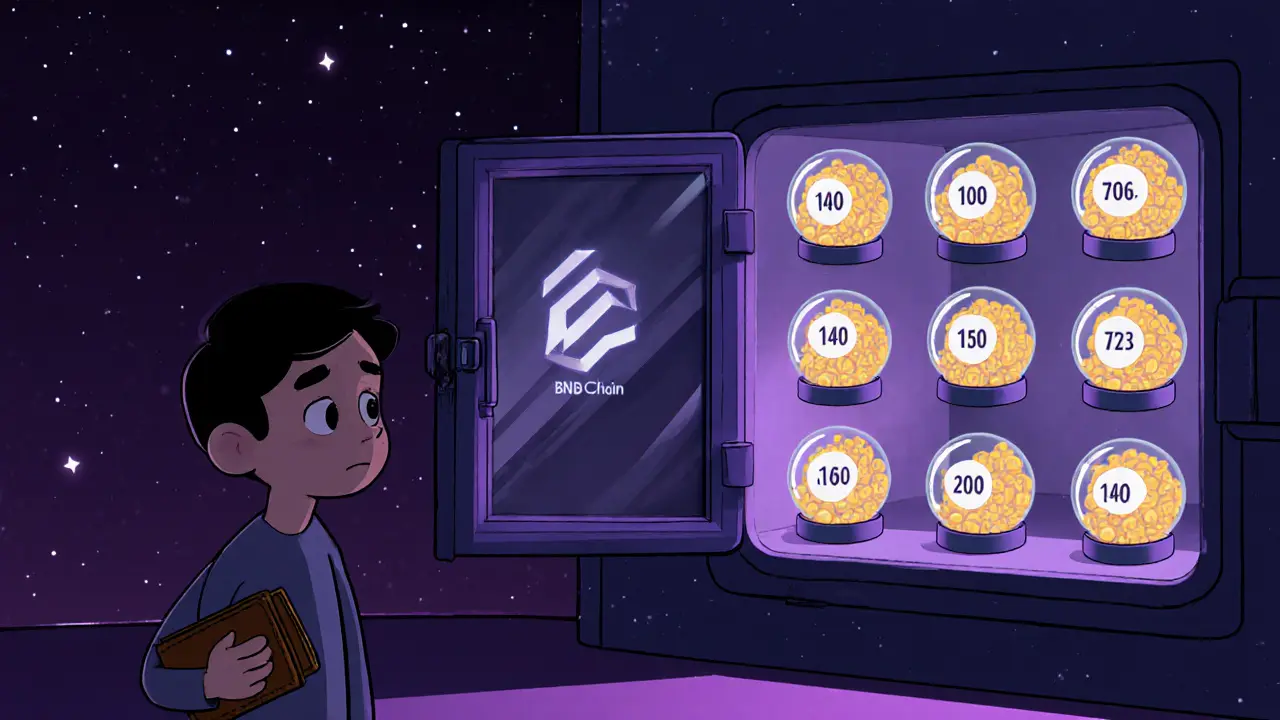
Most airdrops give out thousands or even millions of tokens. This one gave out 140 NFTs. Why? Because scarcity drives perceived value. A token you can get by the thousands is worth less than an NFT you can only get if you were one of the first 140 to complete the steps.This wasn’t about giving away free money. It was about building a core group of collectors and early adopters. The NFTs likely had utility - maybe access to future token sales, exclusive community events, or governance rights. But even without knowing the exact use case, the fact that only 140 existed made them feel valuable. People still talk about it in crypto forums today.
Compare this to other 2022 airdrops: some projects gave out 10,000+ tokens to anyone with a wallet. Lunar chose exclusivity over volume. That’s a smarter move for a smaller project trying to stand out in a noisy market.
Why CoinMarketCap? Credibility Matters
Lunar didn’t host this on their own website. They partnered with CoinMarketCap - one of the most trusted names in crypto data. That gave the airdrop instant legitimacy. People who never heard of Lunar before saw it on CoinMarketCap, trusted it, and joined.CoinMarketCap didn’t manage the winners or send out the NFTs. Lunar did. But by using CoinMarketCap’s platform, Lunar got access to millions of users who already trusted the site. That’s a huge advantage for any new project. It’s like getting a billboard in Times Square instead of posting flyers on a phone pole.
What You Needed to Participate
You didn’t need to buy tokens. You didn’t need to stake anything. You didn’t need to be a crypto expert. But you did need three things:- A Twitter account
- A Telegram account
- A BSC-compatible wallet (like MetaMask configured for BNB Chain)
That’s it. No KYC. No ID upload. No credit card. No complicated forms. Just social media + wallet. That’s why so many people applied - the barrier to entry was low. But because only 140 NFTs were available, competition was fierce. People were retweeting, tagging friends, and joining Telegram groups by the thousands.
What Happened After the Airdrop?
The Lunar team selected the 140 winners and distributed the NFTs directly to their BSC wallets. No public list was released. No transparency report. No blockchain explorer link showing the transfers. That’s a red flag for some, but not uncommon for small projects in 2022.What we do know: the NFTs were minted on the BNB Chain. If you were a winner, you’d see them in your wallet as ERC-721 tokens - the same standard used by most NFTs on Ethereum, but running on Binance’s faster, cheaper network.
Did the NFTs gain value? Did they unlock anything? We don’t have clear data. Lunar’s project didn’t explode into the mainstream. The Telegram group is still active, but quiet. The Twitter account still posts, but rarely. The NFTs likely sit in wallets today - some traded, some kept as collectibles, some forgotten.
Why This Airdrop Still Matters
This campaign is a textbook example of how small crypto projects used NFTs to build community in 2022. It wasn’t about giving away free cash. It was about creating a sense of belonging. Only 140 people got in. That made them feel special. And that’s powerful.It also shows how much the crypto space has changed. Today, most airdrops are automated, require token holdings, or are tied to DeFi protocols. Back then, it was simpler: retweet, join, submit wallet. No smart contracts to interact with. No liquidity pools to navigate.
If you’re running a project now, you can learn from this. You don’t need millions of dollars to launch a successful airdrop. You need clear rules, a real community, and a way to make people feel like insiders.
Can You Still Claim the LNR NFTs?
No. The campaign ended in early 2022. The application form on CoinMarketCap is gone. The official page for LNR on CoinMarketCap now redirects to general token data. The NFTs were distributed once - and only once.If someone claims they can help you get one now, they’re lying. There are no second chances. No hidden lists. No backdoor. The 140 NFTs are already out there - and if you didn’t get one, you missed it.
But here’s the real lesson: don’t wait for the next big airdrop to start. If you want to be part of something early, join communities now. Follow projects on Twitter. Join their Telegrams. Be active. The next exclusive drop might be yours - if you’re already in the room.
Was the LNR airdrop a scam?
There’s no evidence the LNR airdrop was a scam. It followed standard practices: social media tasks, wallet submission, and NFT distribution via BSC. The Lunar team did deliver the 140 NFTs to winners, though they didn’t publish a public list. The lack of transparency is a concern, but not proof of fraud. Many small projects in 2022 operated this way due to limited resources.
Do the LNR NFTs still have value?
There’s no active marketplace for these NFTs, and Lunar hasn’t released any utility updates since 2022. Some may hold sentimental or collector value, but they’re not trading on major platforms like OpenSea or Blur. Their current market value is effectively zero unless the Lunar project revives and integrates them into a functioning ecosystem.
Why did Lunar use BSC instead of Ethereum?
Binance Smart Chain (now BNB Chain) had lower gas fees and faster transactions than Ethereum in 2022. For a small project with limited funds, minting 140 NFTs on Ethereum would’ve cost hundreds of dollars in fees. On BSC, it cost a few dollars. It also aligned with the broader trend of DeFi projects moving to BNB Chain for accessibility.
Could I have used any wallet for the LNR airdrop?
No. Only BSC-compatible wallets worked. That includes MetaMask (configured for BNB Chain), Trust Wallet, or any wallet that supports the Binance Smart Chain network. Ethereum, Solana, or Polygon wallets wouldn’t receive the NFTs. The project was built entirely on BNB Chain, so your wallet had to match.
Was this a token airdrop or an NFT airdrop?
It was an NFT airdrop. Participants received 140 unique NFTs, not LNR tokens. This was unusual at the time - most projects gave away tokens. Lunar chose NFTs to create scarcity and exclusivity, signaling they were building a collectible or utility-based ecosystem rather than just distributing currency.
How many people applied for the LNR airdrop?
The exact number of applicants isn’t public. But given the viral retweet requirement and CoinMarketCap’s reach, estimates from community members suggest over 10,000 people completed the form. With only 140 NFTs available, the odds were less than 1.5% - making it one of the most competitive airdrops of its kind in early 2022.
Did Lunar launch after the airdrop?
Lunar did launch its token and DeFi platform after the airdrop, but it never gained major traction. The project faded from mainstream crypto news by late 2022. The team remains active on social media, but there’s been no major update on NFT utility, token growth, or new product releases since then.
Is there a way to buy an LNR NFT now?
There’s no official marketplace or secondary sales channel for these NFTs. They may exist on decentralized exchanges or peer-to-peer trades, but no public records confirm this. If you see someone selling an LNR NFT today, it’s likely a scam or a copy. The original 140 were distributed directly to winners - no resale mechanism was ever built.


SHASHI SHEKHAR
Man, this LNR airdrop was pure genius in its simplicity. No KYC, no staking, just retweet, tag three friends, join Telegram, and submit your BSC wallet. The real test wasn’t technical skill-it was whether you were active enough in crypto Twitter to even see it. I missed it because I was on vacation in Goa, scrolling through memes instead of checking CoinMarketCap. Now I see those 140 NFTs like ancient artifacts-each one a relic from when crypto still felt like a secret club and not a Wall Street ad slot.
The scarcity angle? Brilliant. Most airdrops feel like spam. This felt like being handed a golden ticket. And the fact that they used BSC? Smart. Ethereum gas fees in early 2022 were insane. You could mint 140 NFTs on BNB Chain for less than $50 total. On Ethereum? Maybe $5k. That’s not just cost efficiency-that’s strategic thinking.
And yeah, no public list. I get why. Publishing winners would’ve opened the floodgates to scams, impersonators, and people claiming they were ‘wrongfully excluded.’ Better to just send them quietly and let the blockchain speak. I still have a friend who got one-he never told anyone. He just kept it in his wallet like a lucky charm. No resale. No utility. Just presence.
Compare that to today’s airdrops where you need to hold 10 different tokens across 5 chains, complete 17 DeFi tasks, and submit a 10-page form. This was poetry. Minimalist. Elegant. And honestly? It built a tighter community. Those 140 people didn’t just get NFTs-they got belonging.
Still, I wonder if Lunar ever planned to unlock utility. Maybe they were just trying to build hype and got overwhelmed. The Telegram group still exists, but it’s ghost town now. Still, the fact that people remember this three years later? That’s the real win.
Projects today should study this. Not the tech. Not the tokens. The psychology. People don’t want free money. They want to feel like they’re part of something exclusive. That’s why this still matters.
Also, BSC was the right call. Not because it’s ‘better’-but because it was accessible. Anyone with a phone and $0.50 in BNB could join. That’s inclusion. Not gatekeeping. 🤝