
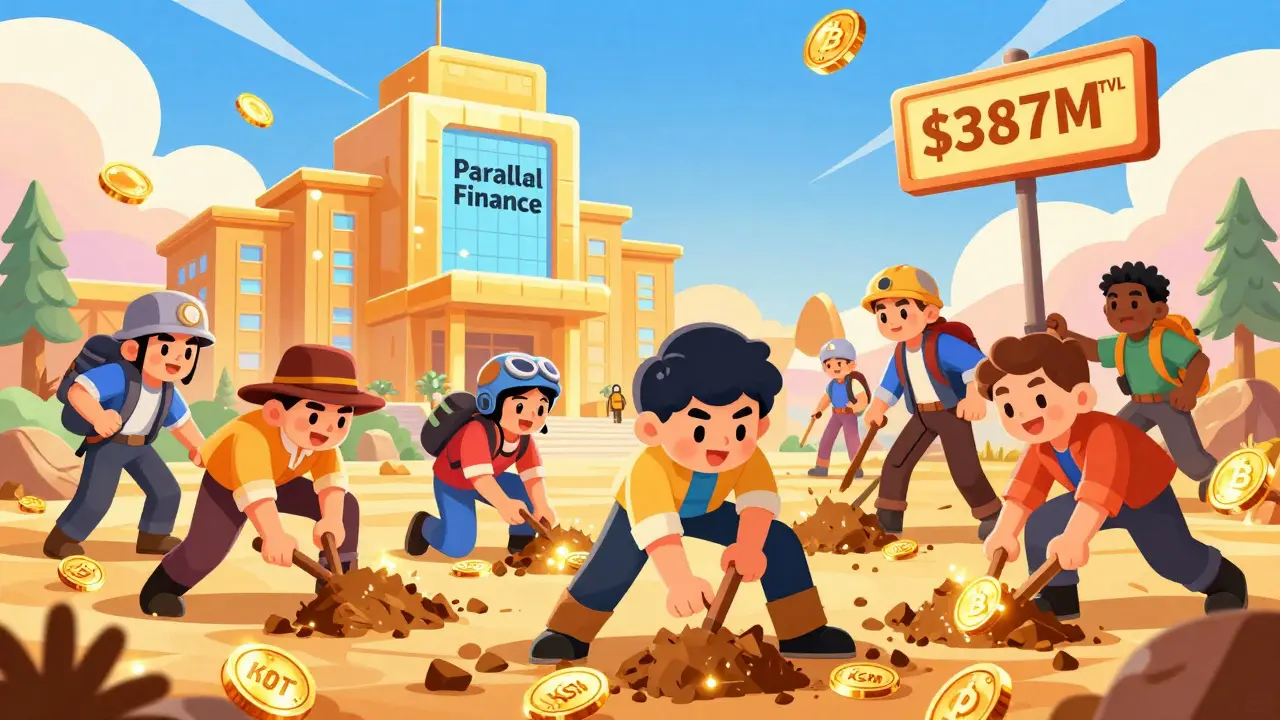
Remember the heady days of 2021 when decentralized finance felt like a gold rush? That was when Parallel Finance, a lending and borrowing protocol on the Polkadot network, hit its peak. At that time, it held nearly $387 million in user assets. Fast forward to mid-2026, and the landscape looks very different. If you are looking at Parallel Finance today, you need to know one thing upfront: this is no longer the high-volume powerhouse it once was. It is a shadow of its former self, grappling with significant trust issues after a controversial shutdown of its NFT services in late 2024.
You might be searching for "Parallel Finance crypto exchange" because you want to trade or earn yield on Polkadot assets. But here is the catch: Parallel Finance isn't a traditional centralized exchange like Binance or Coinbase. It is a decentralized protocol. More importantly, its reputation took a massive hit recently. Before you connect your wallet, let’s look at what actually works, what doesn’t, and whether your money is safe there right now.
What Exactly Is Parallel Finance?
At its core, Parallel Finance is a DeFi platform built on the Polkadot blockchain. It launched in 2021, aiming to let users lend their idle crypto assets to earn interest or borrow against them. Unlike a bank, you don't hand over custody; smart contracts handle everything. The team behind it, led by CEO Yubo Ruan (a former Google engineer), wanted to create a hub for the Polkadot ecosystem.
The platform has two main features:
- Lending and Borrowing: You deposit tokens like DOT (Polkadot) or KSM (Kusama) to earn APY (Annual Percentage Yield). Others can borrow these assets by putting up collateral.
- Dynamic Swap: This is their version of an exchange. It uses an Automated Market Maker (AMM) model, similar to Uniswap on Ethereum. You swap tokens directly from your wallet without an order book.
Historically, it also offered NFT lending, where you could lock up digital art as collateral for loans. However, this feature is now defunct, and its closure caused major headaches for users.
The Big Red Flag: The 2024 NFT Shutdown
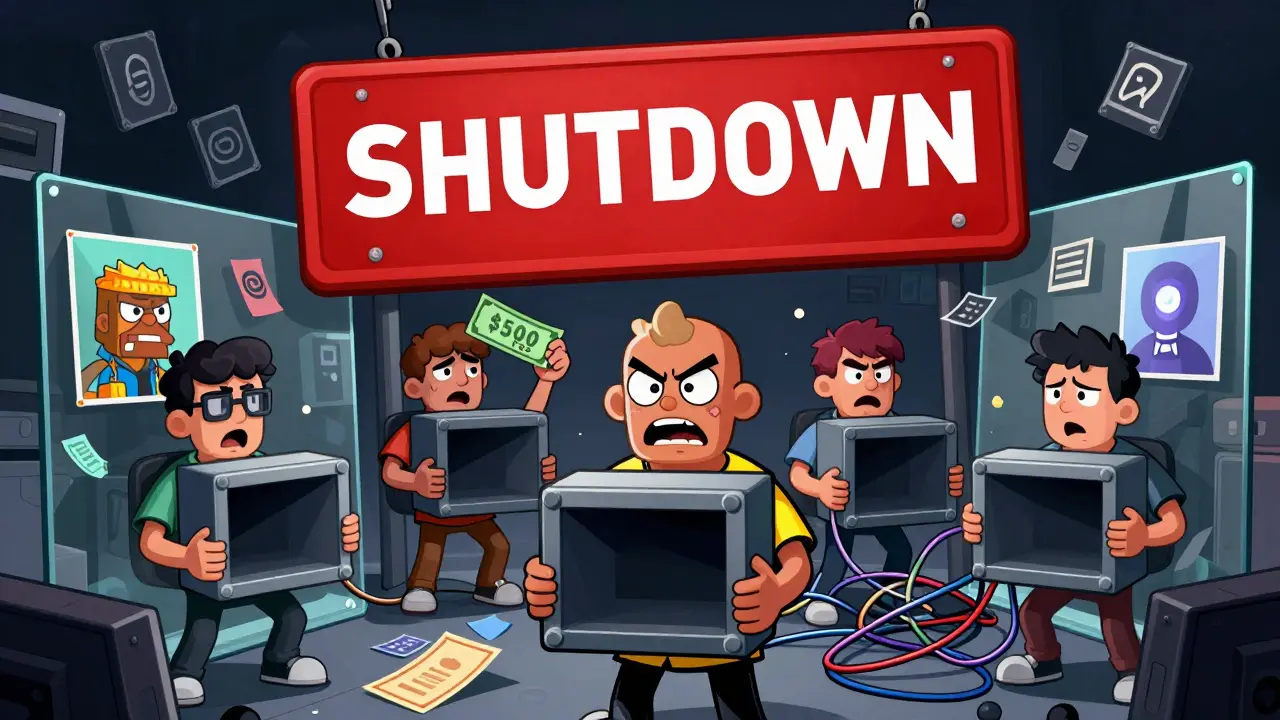
If there is one event that defines Parallel Finance's current status, it is the August 2024 shutdown of its NFT lending service. Here is why you should care, even if you don't own NFTs. It revealed serious flaws in how the platform handles crisis management and user communication.
In July 2024, the team announced they were shutting down NFT lending. By August 1, the service was gone. The problem? Approximately $800,000 worth of high-value NFTs-including Bored Ape Yacht Club and Mutant Apes-were stuck in user vaults. Many users missed the withdrawal window or didn't understand the technical steps required to pull their assets out.
Things got worse when reports surfaced about the team suggesting $500 fees for late withdrawals. This sparked outrage across Reddit and Twitter. On-chain analysts noted that fewer than 15% of affected users successfully recovered their NFTs because the process required interacting directly with raw smart contracts-a task too complex for most retail investors. This incident destroyed much of the community trust the platform had built over three years.
| Feature | Parallel Finance | Aave (Ethereum) | Kujira (Cosmos) |
|---|---|---|---|
| Total Value Locked (TVL) | ~$12.4 Million | ~$13 Billion | ~$400 Million |
| Primary Chain | Polkadot | Ethereum/Multi-chain | Cosmos |
| NFT Lending | Shutdown (Aug 2024) | Active (via partners) | Active |
| User Support Quality | Poor (Slow response times) | Good (Dedicated teams) | Moderate |
| Trust Score | Low (Due to shutdown controversy) | High | Medium-High |
Is the Exchange Functionality Still Usable?
Yes, technically. The Dynamic Swap feature still operates. If you have DOT, KSM, or PARA tokens and want to swap them, the interface works. It connects via MetaMask or Polkadot.js wallets. Transactions usually confirm in 12-15 seconds on the Polkadot network, which is decent speed.
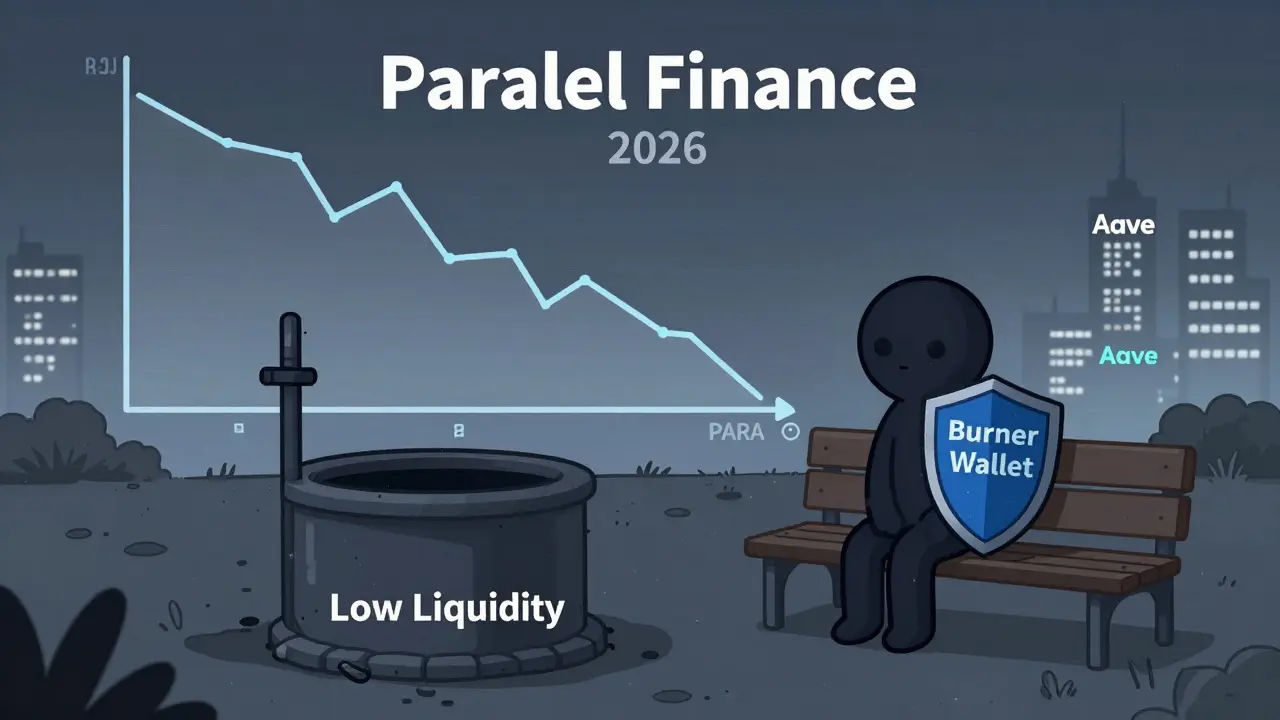
However, liquidity is a major concern. Liquidity refers to how easily you can buy or sell an asset without moving its price drastically. In early 2023, the PARA/DOT pool had $45 million in liquidity. By late 2024, that dropped to around $1.8 million. What does this mean for you? High slippage. If you try to swap a large amount, you will get a much worse rate than expected because there aren't enough buyers/sellers in the pool. For small trades, it might be fine. For larger amounts, you are better off using a dedicated DEX aggregator or a centralized exchange.
Lending and Borrowing: The Core Product
This remains the primary function of Parallel Finance. You can deposit stablecoins or native tokens to earn yield. Historically, rates were attractive, sometimes hitting 8-12% APY on DOT staking derivatives. Today, those rates have normalized and often trail behind competitors due to lower overall usage.
Here is the risk profile:
- Smart Contract Risk: Like all DeFi, if the code has a bug, funds can be drained. Parallel Finance underwent audits from Blocksec and PeckShield in 2022, but audits are not guarantees of future safety.
- Protocol Solvency: With TVL dropping from hundreds of millions to single digits, the protocol has less capital buffer to absorb market shocks.
- Governance Risk: Decisions are made by PARA token holders. Recent governance votes saw participation drop below 40%, meaning a small group of whales can heavily influence changes that affect everyone else.
If you are an advanced user who understands how to monitor smart contract risks and wants exposure specifically to the Polkadot ecosystem, lending on Parallel might still offer marginal yields. For beginners, the complexity and reduced support make it a risky choice compared to established platforms like Aave or Compound.
The PARA Token: Investment or Trap?
The native token, PARA, powers the platform. You use it for governance and fee discounts. Its price action tells a grim story. From an all-time high of roughly $0.0042 in November 2021, it crashed to under $0.0005 by late 2024-a loss of nearly 99%.
Analysts remain divided. Some models suggest further downside, predicting prices could fall toward $0.00005 if adoption doesn't recover. Others see potential if the Polkadot ecosystem rebounds significantly. But remember: buying PARA is a bet on the platform's recovery. Given the trust deficit from the NFT shutdown, that recovery path is steep and uncertain. Do not buy PARA just because it is "cheap." Cheap assets often stay cheap for good reasons.
Security and User Experience in 2026
Let’s talk about support. When things go wrong in DeFi, you need help. Parallel Finance’s customer support has deteriorated sharply. Data from social media analytics showed response times jumping from hours to weeks during the crisis period. Documentation on GitHub hasn’t been updated regularly since mid-2024.
If you encounter an issue, you are largely on your own. There is no 24/7 chat bot, no phone number, and no guaranteed refund policy. This is standard for DeFi, but the lack of proactive communication from the team makes it feel negligent rather than just decentralized.
For security best practices:
- Never connect your main holding wallet to new or struggling protocols. Use a burner wallet with only the funds you intend to use.
- Revoke permissions regularly. Tools like Revoke.cash can help you disconnect Parallel Finance from your wallet when you are done.
- Double-check URLs. Phishing sites targeting Parallel Finance users increased after the news of the shutdown, hoping to trick confused users into handing over private keys.
Verdict: Should You Use Parallel Finance?
For the average crypto user in 2026, the answer is likely no. The platform has lost its competitive edge in terms of liquidity, yield, and trust. While the technology underneath-the Polkadot parachain infrastructure-is sound, the operational execution has faltered. The stranded NFT incident serves as a warning sign about how the team prioritizes profit over user protection in difficult scenarios.
If you are deeply embedded in the Polkadot ecosystem and need a specific niche function that Parallel offers uniquely, proceed with extreme caution. Keep amounts small. Monitor governance forums closely. And always have an exit strategy ready. For most people seeking lending or swapping, safer, more liquid alternatives exist on Ethereum, Solana, or even other Polkadot-native projects that haven't suffered such public relations disasters.
Is Parallel Finance a centralized exchange?
No, Parallel Finance is a decentralized finance (DeFi) protocol. It operates on the Polkadot blockchain using smart contracts. You retain custody of your funds until you interact with the protocol, unlike centralized exchanges (CEXs) like Binance where the company holds your assets.
Why did Parallel Finance shut down its NFT service?
The team announced the shutdown in July 2024, citing operational challenges and low demand. The abrupt nature of the closure left many users unable to withdraw their collateralized NFTs in time, leading to significant backlash and trust issues within the community.
Can I still trade on Parallel Finance?
Yes, the Dynamic Swap feature is still active. However, liquidity is significantly lower than in previous years, which may result in higher slippage costs for traders. It is best suited for small swaps of Polkadot-native assets like DOT and KSM.
Is my money safe on Parallel Finance?
As with any DeFi platform, there are risks. Smart contract bugs, market volatility, and protocol insolvency are real threats. The recent history of poor communication and the NFT shutdown suggests higher operational risk compared to top-tier DeFi protocols. Never invest more than you can afford to lose.
What is the PARA token used for?
PARA is the governance token of Parallel Finance. Holders can vote on protocol upgrades and parameter changes. It also provides fee discounts for users who stake their tokens. Its value is tied directly to the success and usage of the Parallel Finance platform.


Lee Paige
the shutdown of the nft service was clearly a coordinated effort to liquidate assets before the market crashed. they knew what they were doing and left everyone hanging while they cashed out their para tokens. it is always the same story with these so-called decentralized protocols. the centralization is hidden behind smart contracts that only the admins can pause. do not trust any platform that has emergency stop buttons controlled by a small team of developers.