

SEC Crypto Penalty Calculator
Penalty Impact Calculator
Results
Important: 85% of targeted token issuers were never registered. The SEC collected only $345M for investor restitution (down from $930M in 2023).
This tool uses the article's key data points for comparison.
The SEC hit crypto companies with $4.98 billion in penalties in 2024 - a 3,018% jump from the year before. That’s not a typo. One single case accounted for $4.5 billion of that total. While the number of enforcement actions dropped, the fines exploded. This wasn’t random. It was a calculated endgame by the SEC under Chair Gary Gensler, who was leaving office in early 2025. The message was clear: if you’re selling tokens without registering them as securities, you’re playing with fire - and the SEC now has the budget, the staff, and the legal wins to burn you.
Why the Numbers Don’t Add Up
At first glance, the data looks contradictory. The SEC brought 33 crypto enforcement actions in 2024, down 30% from 2023. But another report says 49 actions - up 16%. The truth? It depends on how you count. Some sources include administrative cases. Others only count court lawsuits. The SEC filed 25 lawsuits in federal court and 8 administrative proceedings. Administrative cases dropped by over half. But the big money? That came from the lawsuits.Of those actions, 62% were about unregistered token sales. That’s the core issue. The SEC says most crypto tokens are securities. If you’re selling them to the public without filing paperwork, you’re breaking the law. Companies like Ripple, Coinbase, and Binance got hit hard. But the real shocker was the fine size. In 2023, the SEC collected $2.1 billion total from all crypto cases. In 2024, it collected nearly $5 billion. That’s not a trend. That’s a cliff.
The $4.5 Billion Case That Changed Everything
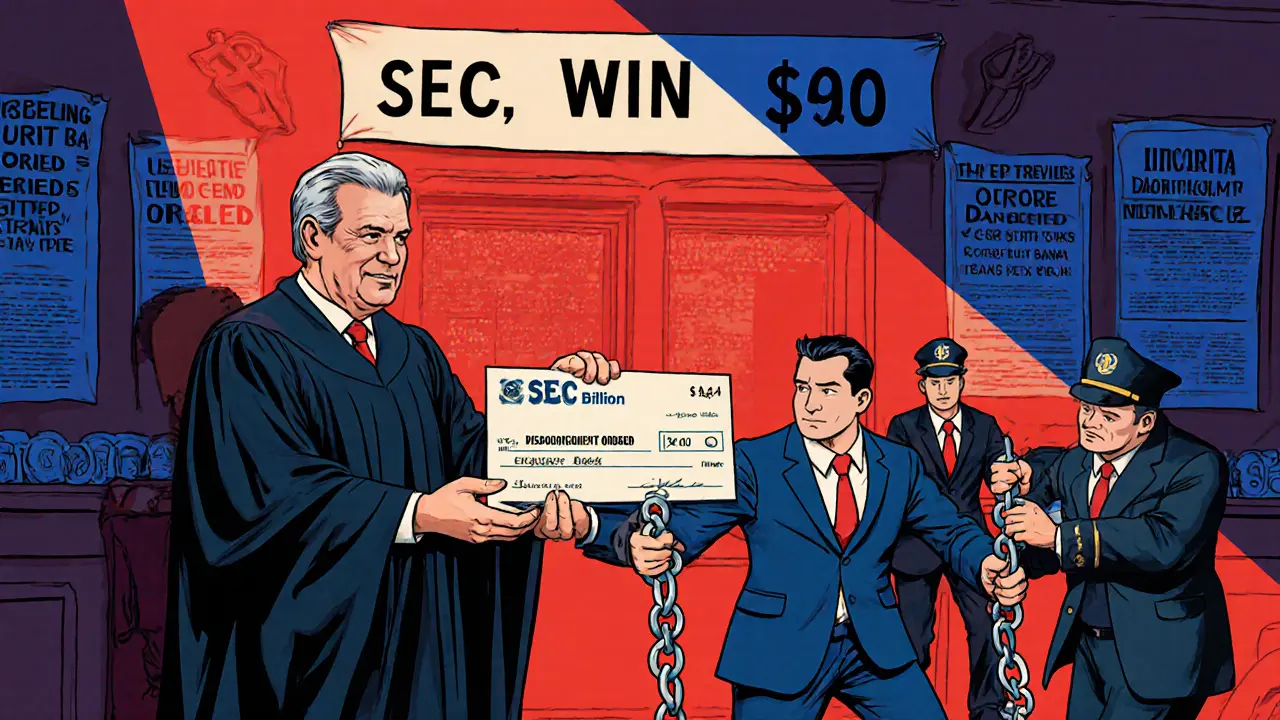
One case dominated the numbers. The SEC won a trial against a crypto platform accused of running a massive fraud scheme - selling tokens as investments while hiding the truth about how the money was used. The court ordered $4.5 billion in disgorgement, interest, and penalties. That one judgment made up 90% of the year’s total penalties. It wasn’t just a fine. It was a precedent. The court agreed with the SEC’s argument that the tokens were unregistered securities. That’s the legal foundation the SEC is building on.Before this, crypto companies could argue they weren’t securities. They said they were currencies, utilities, or decentralized networks. The SEC said no. And the judge agreed. That’s why the fine was so huge. The SEC doesn’t just want money. It wants to shut down the argument that crypto can operate outside securities law.
Who’s Paying the Price?
The targets weren’t random. The SEC went after the biggest names. DeFi platforms, centralized exchanges, and token issuers who raised millions from retail investors. In Q4 2024 alone, the SEC settled a case against a DeFi lending platform for $120 million. That’s not small change. It’s enough to bankrupt a startup. The SEC also froze assets in 31 cases to protect investor funds before trials even ended.What’s more, 85% of the token issuers targeted had never registered or applied for an exemption. That’s not ignorance. That’s choice. And the SEC is punishing that choice. The agency didn’t just fine them. It barred executives from serving as officers in public companies. In 2024, the SEC issued 124 such bars - the second-highest number ever. That’s career-ending.
Why the Increase? Resources, Tips, and Timing
The SEC didn’t get richer overnight. It hired. Its Crypto Assets and Cyber Unit grew by 20% in 2024. More lawyers. More forensic analysts. More people digging into blockchain data. They also got smarter. Whistleblowers gave them over 180 tips - up 25% from last year. Many came from insiders. Former employees. Ex-partners. People who knew the truth.And timing? The biggest actions came in September and October - right before the November election. Why? Because the SEC knew Gensler’s term was ending. They wanted to lock in legal wins before a new administration took over. This wasn’t just enforcement. It was legacy-building.
Settlements vs. Trials: The Real Strategy
Most cases - 44% - were settled without going to trial. Companies paid up. They agreed to stop selling tokens. They paid fines. They promised to follow the rules. But here’s the catch: the SEC didn’t just take cash. It demanded changes. Companies had to hire compliance officers. They had to submit quarterly reports. They had to prove they were no longer selling unregistered securities.The ones that fought? They lost big. The $4.5 billion case was a trial. The SEC won. And now, every other crypto company knows what happens if they go to court. Settlements are cheaper. But trials? They’re financial suicide.
What Happens to the Money?
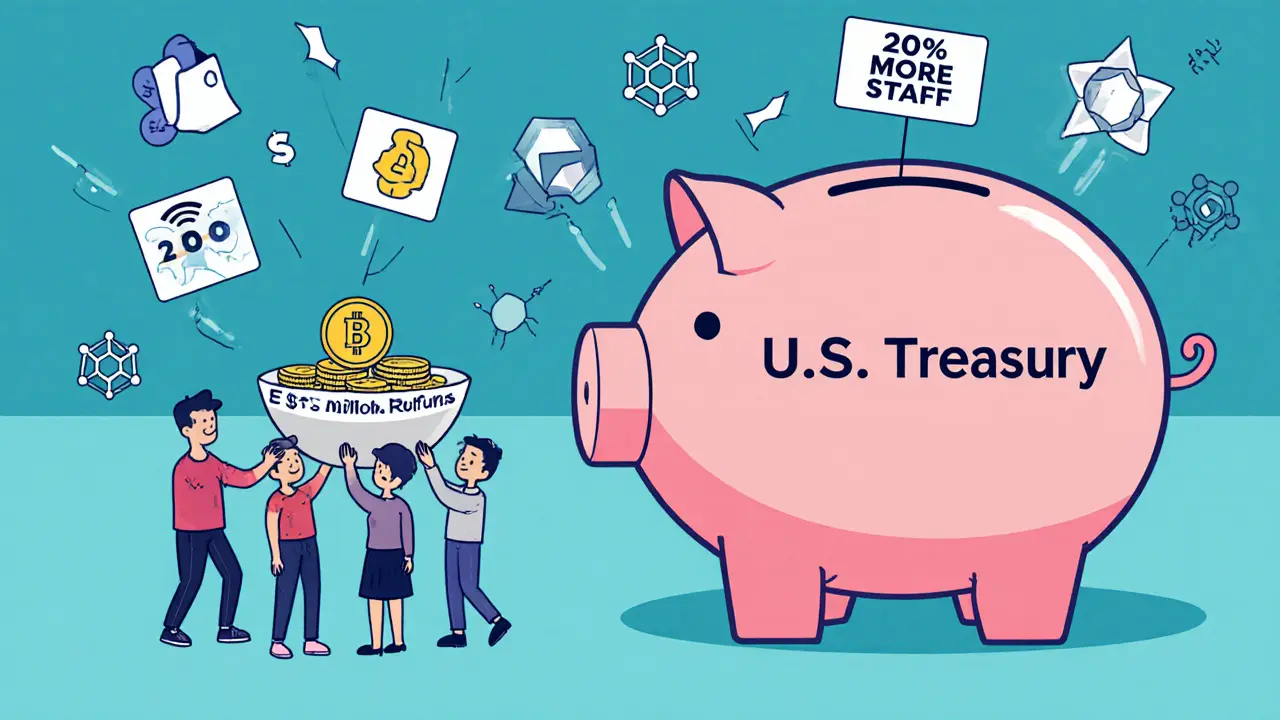
The SEC collected $8.2 billion in total penalties across all industries in 2024. Half of that came from crypto. But here’s the irony: only $345 million went back to harmed investors. That’s down from $930 million in 2023. Why? Because the biggest penalty - the $4.5 billion case - involved a company that had already spent most of the money. There was nothing left to return. The rest? It went into the U.S. Treasury. Investors got crumbs. The government got billions.What’s Next in 2025?
Gensler is gone. The Trump administration is taking over. The SEC announced a new crypto task force. Experts are watching. Will enforcement slow down? Probably not. The legal groundwork is laid. Courts have sided with the SEC on key issues. The whistleblower program is humming. The staff is bigger. The fines are set as a warning.The real question isn’t whether the SEC will keep going. It’s whether crypto companies can adapt. If you’re building a token-based project, you now have two choices: register it as a security or stop selling to U.S. investors. There’s no gray area anymore. The SEC made that clear. The fines aren’t just punishment. They’re a map. Follow the rules. Or pay the price.


Lawal Ayomide
This is straight-up corporate warfare disguised as regulation. They didn't go after fraud-they went after innovation. And they picked the biggest targets to scare everyone else into line. No one's safe now, not even the ones playing by the rules.
Meanwhile, the real criminals? Still out there. But hey, at least the SEC got their trophy case filled.