
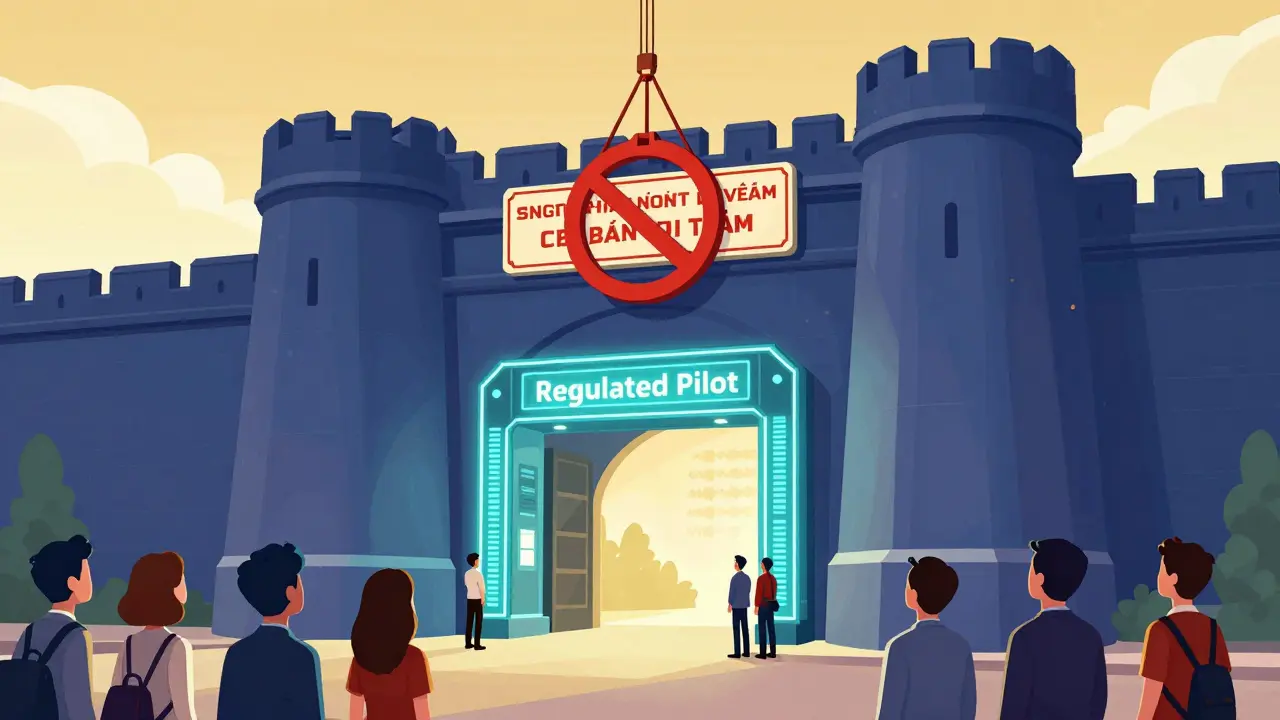
For years, the State Bank of Vietnam (SBV) was the strictest gatekeeper in Southeast Asia when it came to cryptocurrency. If you tried to pay for coffee with Bitcoin or withdraw cash from a crypto trade at a local bank, the answer was a hard "no." But by mid-2026, that narrative has flipped. The SBV hasn't just softened its stance; it has built an entirely new regulatory structure around digital assets. This isn't about wild west speculation anymore. It is about controlled integration.
The shift culminated in June 2025 with the passage of the Law on Digital Technology Industry. This legislation officially legalized cryptocurrencies, categorizing them as "virtual assets." However, legalization does not mean free-for-all trading. The SBV, led by Deputy Governor Pham Thanh Ha, designed a framework that allows ownership and regulated trading while keeping tight control over monetary policy. For investors, businesses, and developers, understanding this new landscape is crucial because the rules are specific, stringent, and still evolving under a five-year pilot program.
The Legal Shift: What Is Actually Allowed?
To understand where we stand in 2026, we have to look at what changed. Before 2025, using cryptocurrency as a payment method was prohibited, and financial institutions were barred from processing any crypto-related transactions. That prohibition remains largely in place for daily commerce. You still cannot use Bitcoin to buy groceries at a local market.
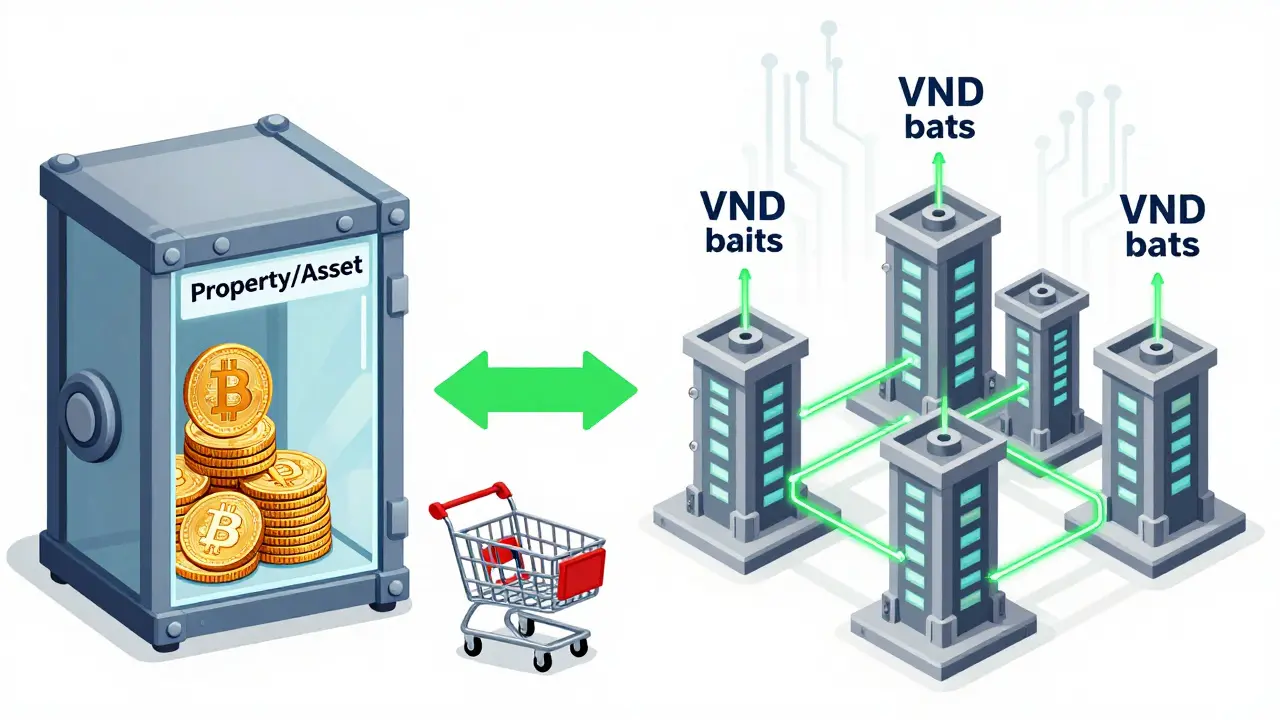
However, the legal status of holding crypto has transformed. Under the new law, Bitcoin (BTC) and Ethereum (ETH) are recognized as property. This means they can be owned, transferred, inherited, and protected by law. This distinction is vital. It moves crypto from the gray area of illegal activity to a recognized asset class, similar to gold or real estate, but with unique digital characteristics.
The core mechanism driving this change is Resolution No. 05/2025/NQ-CP, issued on September 9, 2025. This resolution established the first formal licensing regime for cryptocurrency exchanges in Vietnam. It defines crypto assets as digital assets authenticated through encryption during creation, issuance, storage, and transfer. Crucially, it explicitly excludes securities and fiat currency in digital form. This exclusion keeps traditional stock markets and stablecoins backed by foreign currencies like the US Dollar outside this specific regulatory bucket, maintaining the SBV's control over capital flows.
- Ownership: Individuals and entities can legally hold virtual assets.
- Trading: Trading must occur through licensed platforms within the pilot program.
- Payment: Using crypto as a direct medium of exchange for goods and services remains restricted.
- Issuance: Only Vietnamese companies can issue new virtual assets, and these must be backed by real-world assets, not fiat currencies.
The Five-Year Pilot Program: How It Works
The SBV did not open the floodgates overnight. Instead, it launched a five-year pilot program starting in September 2025. This experimental phase is designed to test the waters, allowing regulators to observe market behavior, identify risks, and adjust rules before making permanent policy. The goal is to integrate digital assets into Vietnam's financial ecosystem without compromising financial stability.
Under this pilot, the government restricts operations to only five licensed exchanges. These are not just any online platforms; they are heavily regulated entities that must meet rigorous standards. The pilot aims to provide clearer guidelines for market participants while keeping the number of entry points manageable for oversight. Foreign investors can access these assets, but only through Crypto Asset Service Providers (CASPs) approved by the Ministry of Finance. This creates a layered approach to international participation, ensuring that foreign capital enters through monitored channels.
A key feature of the pilot is the requirement for all transactions to be denominated in Vietnamese dong (VND). Beginning in 2026, licensed platforms must support trading pairs exclusively in VND. This rule is significant because it prevents crypto from becoming a substitute for the national currency in everyday savings or large-scale domestic transactions. It ensures that the SBV retains visibility into how much value is moving in and out of the crypto sector relative to the local economy.
Stringent Licensing Requirements for Exchanges
If you think opening a crypto exchange in Vietnam is easy, think again. The SBV has set some of the highest barriers to entry in the region. This caution reflects the central bank's priority: protecting consumers and maintaining systemic stability above fostering rapid, unregulated growth.
Companies seeking a license must meet a minimum capital requirement of 10 trillion Vietnamese dong, which is approximately $379 million USD. This is a massive sum intended to ensure that only financially robust institutions can operate. Furthermore, the capital must come from at least two entities drawn from a specific list: commercial banks, securities companies, insurance providers, fund managers, or technology enterprises. This requirement forces collaboration between traditional finance and tech, creating a hybrid model that leverages existing trust and infrastructure.
| Requirement | Detail |
|---|---|
| Minimum Capital | 10 trillion VND (~$379 million USD) |
| Shareholder Composition | At least two entities from banking, securities, insurance, or tech sectors |
| Profitability History | Shareholders must show two consecutive years of profit |
| Trading Pairs | Must support VND-denominated pairs exclusively from 2026 |
| Number of Licenses | Limited to five exchanges during the pilot phase |
Additionally, shareholders and capital providers must demonstrate two consecutive years of profitable business activity before applying. This filter weeds out speculative ventures and ensures that the operators have a track record of success. As of late 2025, no firms had submitted formal applications, suggesting that even major players are cautious about the compliance burden and capital intensity. This hesitation indicates that the market is still assessing whether the potential rewards justify the high costs and strict oversight.
NDAChain: Building Domestic Infrastructure
While regulating exchanges, the Vietnamese government is also building its own technological foundation. In July 2025, the government launched NDAChain, a national blockchain network. Unlike public blockchains like Bitcoin or Ethereum, NDAChain is a permissioned system. This means that only authorized participants can validate transactions and add blocks to the chain.
NDAChain is designed for institutional use cases rather than retail speculation. Its primary goals include the tokenization of bonds, carbon credits, and other real-world assets. By providing a secure, government-backed platform for these activities, Vietnam aims to improve data security, protect personal information, and increase transparency in financial reporting. This initiative represents a strategic effort to balance innovation with regulatory oversight. It allows the country to benefit from blockchain technology-such as faster settlement times and reduced fraud-while maintaining full control over the underlying infrastructure.
For businesses looking to tokenize assets or engage in supply chain tracking, NDAChain offers a compliant pathway. It avoids the volatility and regulatory uncertainty associated with public networks. This dual-track approach-allowing regulated trading of global assets like BTC while promoting domestic blockchain solutions for enterprise needs-shows a nuanced understanding of the technology's diverse applications.

Market Reality: Adoption vs. Regulation
Despite the restrictive framework, Vietnam remains a powerhouse in crypto adoption. According to the 2025 Chainalysis Global Crypto Adoption Index, Vietnam ranks fourth globally. Over 20% of the country's tech-oriented population owns digital assets. This high adoption rate persists despite the lack of widespread licensed exchanges, driven largely by informal trading through peer-to-peer (P2P) platforms like Binance P2P.
This disconnect between official regulation and grassroots usage presents both opportunities and challenges. On one hand, it demonstrates strong demand and a sophisticated user base. On the other hand, it highlights the limitations of the current pilot program. With only five licenses available and high entry barriers, many users continue to rely on offshore platforms or P2P networks, which operate in a regulatory gray area.
Compared to regional neighbors, Vietnam's stance is notably more conservative. Singapore maintains a more open regulatory structure for stablecoins and crypto assets, accelerating formal market development. The Philippines has also moved quickly to attract crypto businesses with favorable tax incentives. Vietnam's stringent controls may slow institutional adoption, as international firms might prefer jurisdictions with clearer, less capital-intensive paths to market. However, the SBV views this caution as necessary to prevent financial instability and money laundering risks.
Economic Goals and Future Outlook
The SBV's policy evolution is not just about risk management; it is tied to broader economic objectives. Deputy Governor Pham Thanh Ha has linked cryptocurrency adoption to credit growth, projecting a 20% increase in credit for 2025 connected to growing crypto adoption and regulatory changes. The bank aims to cut interest rates to boost investment, viewing regulated digital assets as a mechanism to fuel liquidity in global markets.
Vietnamese authorities see the regulated market trial as a way to generate tax revenue, protect investors, and link digital assets more closely with the local economy. There are expectations that digital assets like Bitcoin will eventually be utilized within insurance companies, pension funds, and other institutional vehicles. This would mark a significant step toward mainstream acceptance, moving beyond retail speculation to professional portfolio management.
However, implementation challenges remain. The absence of license applications as of October 2025 suggests that the industry is still digesting the requirements. The government imposes hefty penalties for violations, reflecting its intent to enforce strict risk management. As the five-year pilot progresses, the SBV will likely adjust its rules based on performance data. Success could position Vietnam as a model for other Southeast Asian nations, while failure might lead to further restrictions or a complete overhaul of the approach.
Is cryptocurrency legal in Vietnam in 2026?
Yes, owning and trading cryptocurrency is legal under the Law on Digital Technology Industry passed in 2025. However, using crypto as a direct payment method for goods and services remains prohibited. Trading must occur through licensed exchanges within the five-year pilot program.
Can foreigners invest in Vietnamese crypto exchanges?
Foreign investors can access crypto assets in Vietnam, but only through Crypto Asset Service Providers (CASPs) approved by the Ministry of Finance. They cannot directly open accounts on the limited number of licensed domestic exchanges unless they meet specific residency or entity requirements defined by the CASP regulations.
What is the minimum capital required to run a crypto exchange in Vietnam?
The minimum capital requirement is 10 trillion Vietnamese dong (approximately $379 million USD). Additionally, the capital must be contributed by at least two entities from the banking, securities, insurance, or technology sectors, each with two years of profitable history.
What is NDAChain and who can use it?
NDAChain is a national, permissioned blockchain network launched by the Vietnamese government in 2025. It is designed for institutional use, such as tokenizing bonds and carbon credits. Access is restricted to authorized participants, primarily government agencies and vetted enterprises, rather than the general public.
How does Vietnam's crypto policy compare to Singapore's?
Vietnam's policy is significantly more restrictive. Singapore has a more open regulatory framework that encourages stablecoin issuance and easier market entry for crypto businesses. Vietnam focuses on high capital barriers, limited license numbers, and strict domestic currency denominations to maintain tighter control over financial stability.