
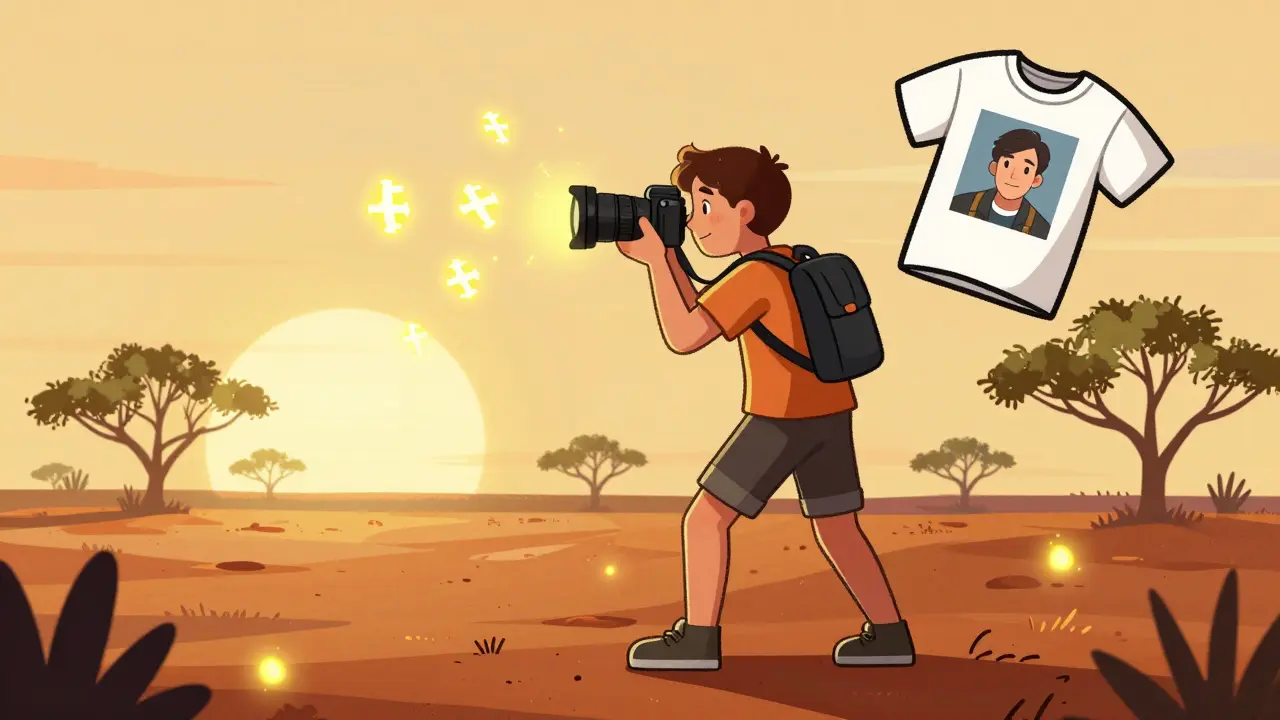
Imagine you’re a photographer. You spend weeks capturing the perfect shot of the Australian outback at sunrise. You upload it online. Within days, you find it on a t-shirt sold by a company in Germany, with no credit, no payment, no permission. You try to file a copyright claim. It takes months. You pay lawyers. You still don’t know if it’ll hold up in court. This isn’t rare. It’s the norm. And it’s why blockchain for IP protection isn’t just tech hype-it’s a lifeline for creators.
How Blockchain Solves the IP Ownership Problem
Traditional copyright systems are slow, fragmented, and expensive. You file paperwork. You wait. You pay fees. You get a certificate that’s stored in a drawer somewhere. But online? Your work can be copied a million times in seconds. And proving you were first? Nearly impossible. Blockchain changes that. It doesn’t replace copyright law. It makes proof of ownership instant and undeniable. When you create something-a photo, a song, a design-you can hash it and record it on a blockchain. That hash becomes a digital fingerprint. It’s time-stamped. It’s permanent. And it’s visible to anyone. This isn’t theoretical. Artists on Ascribe upload their digital art and get a blockchain certificate that proves they created it on a specific date and time. No middlemen. No delays. Just a tamper-proof record tied to their wallet. If someone tries to claim it later, the blockchain shows who was first. Courts may still need to interpret the law, but now they have hard evidence, not just emails and drafts.Smart Contracts: Automating Royalties and Licensing
Licensing used to mean contracts, lawyers, emails, spreadsheets, and missed payments. Royalties for musicians? Often paid late-or not at all. Streaming platforms take 30% or more. Artists get scraps. Enter smart contracts. These are self-executing code blocks on the blockchain. You write rules once: “If this song is played, send 15% to the composer, 10% to the producer, 5% to the lyricist.” Every time the track is used, the money flows automatically. No invoices. No delays. No disputes. Mycelia, a platform built for musicians, uses this exact model. When a song is streamed or downloaded, the smart contract triggers payments in real time. No third-party distributor. No waiting for quarterly statements. The system knows who owns what, and it pays out without human intervention. The same works for software developers, photographers, and designers. KodakOne lets photographers register their images on a blockchain. If someone uses their photo without permission, the system detects it. The creator can then set a license fee. The buyer pays. The money goes directly to the artist. It’s like having a digital notary, accountant, and enforcer all in one.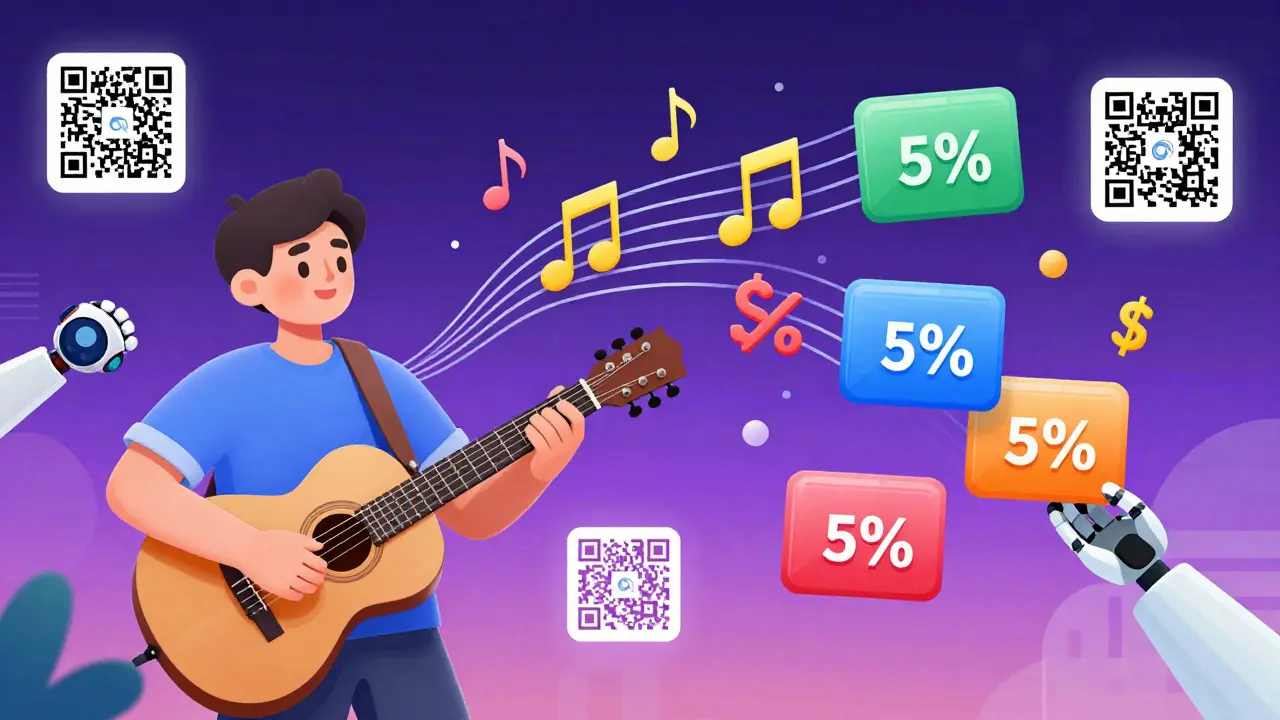
Real-World Use Cases Beyond Art
Blockchain for IP protection isn’t just for creatives. It’s already being used in high-stakes industries. In pharma, counterfeit drugs cost the global economy over $200 billion a year. Companies like MediLedger use blockchain to track every pill from factory to pharmacy. Each batch gets a unique digital ID. If a bottle shows up with a fake ID, it’s flagged instantly. Pharmacists and regulators can verify authenticity in seconds. Luxury goods? Verisart and Everledger authenticate high-value items-paintings, watches, handbags-by linking them to blockchain certificates. Buyers scan a QR code. They see the full history: who made it, when, where, and every owner since. No more fakes sold as originals. Even software code is being protected this way. Developers now timestamp their commits on blockchain networks to prove they wrote a function before a competitor did. In patent disputes, that timestamp can be the difference between winning and losing.Why Blockchain Isn’t a Magic Bullet
Let’s be clear: blockchain doesn’t make your work legal. It doesn’t stop someone from stealing it. It just makes proving ownership easier. Legal recognition varies wildly. In the U.S., copyright exists the moment you create something. In China or Brazil, enforcement is patchy. A blockchain timestamp might help in court, but if the local system doesn’t accept digital evidence, you’re still stuck. There are technical hurdles too. Most blockchains can’t handle millions of transactions per second. Ethereum, the most popular for NFTs, has high fees and slow speeds during peaks. Newer chains like Polygon or Solana are faster and cheaper, but they’re less proven in legal settings. Energy use is another concern. Bitcoin’s proof-of-work model is power-hungry. But most IP platforms now use proof-of-stake chains-Ethereum 2.0, Tezos, Algorand-which use 99% less energy. Still, public perception lags behind tech progress. And then there’s standardization. Right now, Ascribe doesn’t talk to Mycelia. KodakOne doesn’t share data with Verisart. If every platform uses its own format, creators end up managing multiple wallets, keys, and records. That’s not user-friendly. It’s a mess.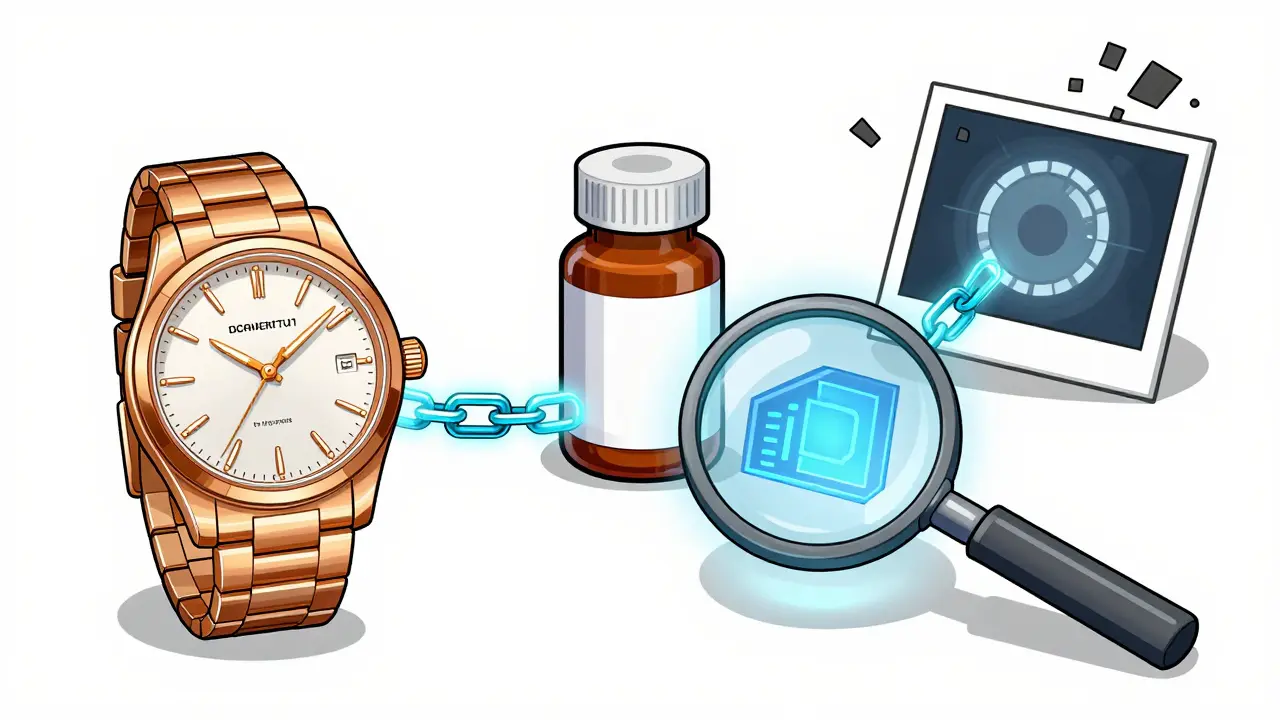
What You Need to Get Started
If you’re a creator and want to protect your work with blockchain, here’s how to begin:- Choose your platform: Ascribe for digital art, Mycelia for music, KodakOne for photos. Pick one that matches your medium.
- Understand the cost: Some charge a one-time fee. Others take a small cut per transaction. Free options exist, but they’re less secure.
- Register your work: Upload your file. The platform hashes it and writes the record to the blockchain. You get a unique ID and a link to the public record.
- Set up smart contracts: If you want royalties, define who gets paid and how much. Most platforms guide you through this.
- Keep your keys safe: Your blockchain identity is tied to a private key. Lose it, and you lose your proof of ownership. Use a hardware wallet.
The Future Is Already Here
The World Intellectual Property Organization (WIPO) has a dedicated Blockchain Task Force. They’re working on global standards so that a copyright record on one chain can be recognized in another country. That’s huge. Soon, you’ll be able to register your IP once, and it’ll be valid across 100+ countries. No more filing separate patents in the U.S., EU, Japan, and Australia. Just one blockchain record. That’s the goal. AI is also getting involved. Tools are being built that scan the web for unauthorized use of your work. When they find it, they automatically trigger a takedown notice or licensing request via smart contract. Imagine your photo being used on a billboard in Tokyo-and within hours, you get paid. This isn’t science fiction. It’s happening now. The tech is mature. The use cases are proven. The only thing holding it back is legal inertia and slow adoption by big institutions. For creators, the choice is simple: wait for broken systems to fix themselves, or take control now. Blockchain doesn’t promise perfection. But it gives you something traditional systems never could: proof. Control. And fairness.Can blockchain replace traditional copyright registration?
No. Blockchain doesn’t replace legal copyright. It enhances it. In most countries, copyright exists automatically when you create something. Blockchain gives you a tamper-proof timestamp and public proof of that creation. Courts may still require official registration for full legal standing, but a blockchain record makes your case far stronger and faster to prove.
Are NFTs the same as blockchain IP protection?
NFTs are one tool used in blockchain IP protection, but not the whole system. An NFT is a unique digital token that can represent ownership of a file. But IP protection also includes licensing, royalty tracking, authentication, and dispute resolution-all handled by smart contracts and registries. You can protect your IP without minting an NFT. Many platforms do it using simple blockchain hashes.
Is blockchain IP protection only for digital works?
No. While digital files are easiest to hash and track, blockchain is also used to protect physical goods. Everledger tracks diamonds and luxury watches. MediLedger tracks pharmaceuticals. Even physical patents can be linked to blockchain records that show the original design, prototype dates, and inventor details. The physical item gets a QR code or NFC chip that points to its blockchain certificate.
What happens if I lose my private key?
If you lose your private key, you lose access to your blockchain record. You won’t be able to prove ownership, transfer rights, or claim royalties. That’s why backups are critical. Use a hardware wallet like Ledger or Trezor. Write down your recovery phrase on paper and store it in a safe place. Some platforms offer recovery services, but most don’t-because blockchain is designed to be decentralized. No one can reset your key for you.
Can I use blockchain to protect a business idea or formula?
Not directly. Ideas and formulas can’t be copyrighted-they need patents. But you can use blockchain to timestamp when you documented the idea, who was involved, and when you shared it. That creates a paper trail that can help prove you were the first to develop it, especially if someone else files a patent later. It’s not foolproof, but it adds weight to your claim.


Chidimma Catherine
Blockchain for IP is the most promising thing to happen to creators since the internet itself. I'm a photographer from Nigeria and I've had my work stolen so many times I stopped posting. Now I use Ascribe and I finally feel like my art has a home. No more begging for credit. No more silence. Just proof. And that's everything.
It's not perfect but it's the first time the system works for me instead of against me.