

By 2025, Proof of Stake (PoS) isn’t just an alternative to mining-it’s the default. Over 18% of the entire crypto market runs on PoS, and that number keeps climbing. If you’re looking to stake your crypto and earn rewards without burning electricity, you’re not just late to the party-you’re right in the middle of it. The big players have settled in, the tech has matured, and the rewards are real. But not all PoS coins are created equal. Some pay you more. Some are easier to join. Some are built to last. Here’s who’s leading in 2025.
Ethereum (ETH): The Heavyweight Champion
Ethereum still owns the PoS throne. With a market cap of $518.74 billion, it’s not even close. Nearly 18 million ETH are staked, locked in as validators keeping the network secure. That’s more than the entire market cap of most other cryptocurrencies combined.
But here’s the catch: you need 32 ETH to run your own validator node. At $4,297 per ETH, that’s over $137,000 upfront. Most people don’t do that. Instead, they use staking pools or liquid staking tokens like Lido or Rocket Pool. These let you stake any amount-even $10-and still earn rewards. The catch? You’re trusting someone else to run the node. The reward? Around 2.48% APR. It’s not the highest, but Ethereum’s security, developer base, and institutional trust make it the safest bet.
Big banks, hedge funds, and even governments are watching Ethereum closely. If you want long-term stability over quick gains, this is your coin.
Solana (SOL): Speed and Simplicity
If Ethereum is the fortress, Solana is the bullet train. It processes over 65,000 transactions per second. Fees? Usually less than a penny. And in 2025, it’s the most popular choice for everyday stakers.
Staking SOL is dead simple. You can do it straight from your Phantom or Solflare wallet. Minimum stake? Just 0.01 SOL-less than $3. No need to lock up your tokens. You can unstake and withdraw anytime. The reward? A solid 7.58% APR. That’s over three times what Ethereum pays.
But Solana’s speed comes with a cost. The network has had outages-four major ones in 2024 alone. Critics say it’s too centralized, with too much control in the hands of a few big validators. Still, for users who care about low fees and fast transactions-especially for NFTs, DeFi, and mobile apps-Solana remains unmatched. If you want high rewards and easy access, SOL is your best bet after Ethereum.
Cardano (ADA): The Research-First Contender
Cardano doesn’t rush. It tests. Every upgrade is peer-reviewed. Every line of code is formally verified. That’s why it’s still here in 2025, with a $37.57 billion market cap and over 24 billion ADA staked.
Staking ADA is just as easy as Solana. You delegate your ADA to a stake pool. No minimum deposit. No lock-up. You keep full control. Rewards? 4.96% APR. Not the highest, but steady. And because ADA is inflationary, your rewards are paid out in new coins, not taken from others. That means your stake grows predictably.
Cardano’s big weakness? It moves slowly. New features take years. While Solana and Ethereum are adding DeFi tools and NFT marketplaces, Cardano is still rolling out its Hydra scaling solution. But if you believe in slow, secure, science-backed development, ADA is the only PoS coin that matches that philosophy.

Avalanche (AVAX): The Customizable Network
Avalanche isn’t one blockchain. It’s a whole ecosystem of blockchains-called subnets-that you can build for specific uses: finance, gaming, supply chains. That’s why institutions like JP Morgan and the World Bank are testing it.
Staking AVAX gives you 9.51% APR, one of the best among top-tier coins. But here’s the catch: to become a validator, you need 2,000 AVAX ($63,200). That’s not for most people. But you can delegate as little as 25 AVAX to a validator and still earn the full reward. That makes it accessible without sacrificing security.
Avalanche’s strength is flexibility. Want a private blockchain for your company? Build it on Avalanche. Want to launch a gaming token with instant finality? Do it on Avalanche. It’s not as big as Ethereum or Solana yet, but it’s growing fast-and the rewards are too good to ignore.
Polkadot (DOT): The Interoperability King
Polkadot doesn’t want to be the biggest blockchain. It wants to connect them all. Its parachain model lets specialized blockchains talk to each other-like Ethereum, Cosmos, and even Bitcoin via bridges.
And it pays the highest APR among the top five: 15.31%. That’s a huge draw. But to become a validator, you need 350 DOT ($1,445). Again, most people delegate. You can stake as little as 1 DOT through platforms like Kusama or Polkadot.js. Rewards are paid weekly, and there’s no lock-up.
Polkadot’s weakness? Complexity. It’s harder to understand than Solana or Cardano. And while it’s technically powerful, adoption lags behind Ethereum and Solana. Still, if you believe the future is multi-chain-not one chain to rule them all-Polkadot is the smartest bet.
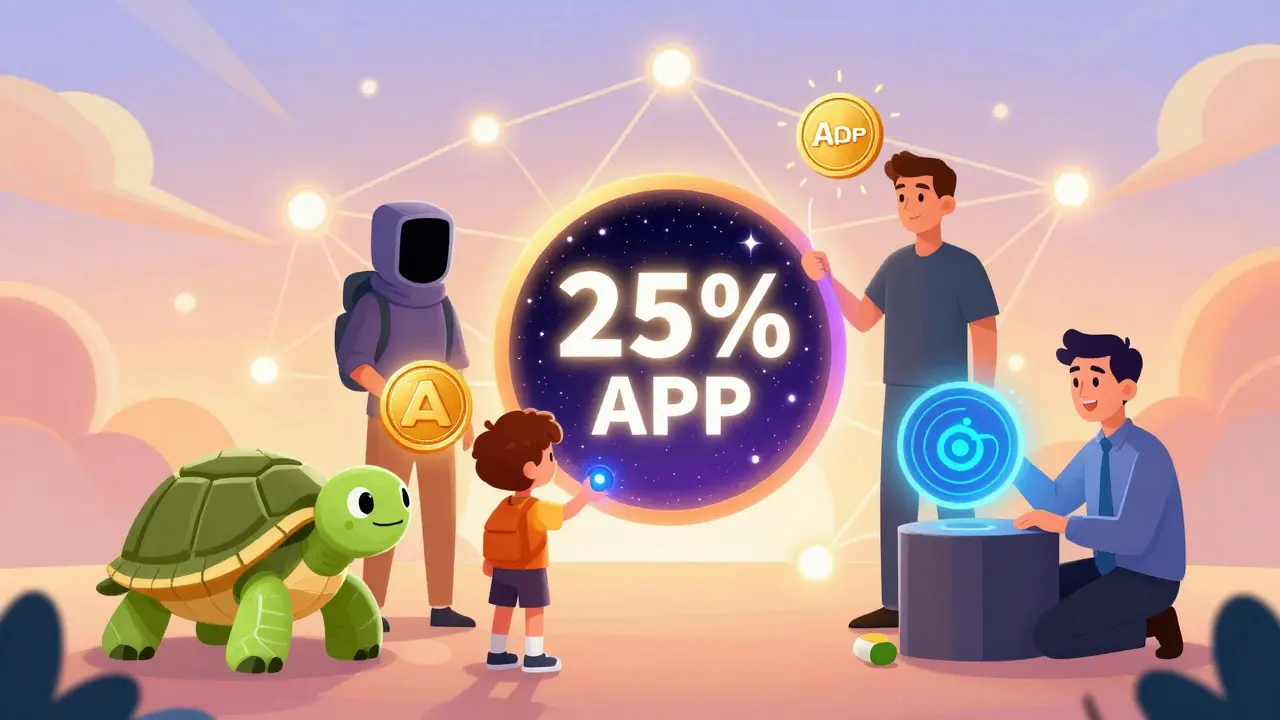
Cosmos (ATOM): The Highest Rewards, Highest Risk
Want 25.17% APR? Cosmos gives it to you. That’s the highest among major PoS coins. And it’s not a gimmick-it’s real. Cosmos uses the Tendermint consensus, which is fast, secure, and designed for inter-blockchain communication.
Staking ATOM is straightforward. You delegate to a validator. Rewards come every 7 seconds. No lock-up. Minimum? Just 1 ATOM.
But here’s the thing: high rewards often mean high risk. Cosmos is a network of independent blockchains. If one chain fails, it can ripple through others. And while the rewards are tempting, inflation is high too. Your 25% APR might look great, but if new ATOM are being printed rapidly, your real yield drops. Still, for experienced stakers who understand the trade-offs, Cosmos is the ultimate high-yield playground.
Who Should Stake What?
- Beginners: Start with Solana or Cardano. Low entry, easy wallets, steady rewards.
- Safety-first investors: Go with Ethereum. It’s the most secure, even if rewards are low.
- High-yield seekers: Try Cosmos or Polkadot. Just understand the risks.
- Enterprise users: Avalanche is the only one built for custom blockchains.
- DeFi lovers: Ethereum and Solana dominate here. Cardano is catching up.
Don’t chase the highest APR. Look at stability, ease of use, and long-term adoption. A 25% return means nothing if the network crashes or the coin loses value.
The Bigger Picture
Proof of Stake isn’t just about earning crypto. It’s about helping secure the network. Every time you stake, you’re voting with your tokens. You’re choosing which blockchains survive.
By 2025, PoS has won. Bitcoin miners are shutting down. Ethereum’s energy use dropped 99.95% after switching. Governments are pushing for green crypto. Staking is becoming as normal as earning interest in a bank.
The winners? The ones with strong tech, real users, and clear roadmaps. Ethereum, Solana, Cardano, Avalanche, and Polkadot aren’t just coins-they’re the foundations of the next internet. And if you stake wisely, you’re not just holding crypto. You’re helping build the future.
What is Proof of Stake (PoS)?
Proof of Stake is a way for blockchains to confirm transactions without using massive amounts of electricity. Instead of mining, users lock up (or "stake") their crypto as collateral to validate transactions. The more you stake, the higher your chance of being chosen to verify the next block-and earn rewards. It’s faster, cheaper, and greener than Proof of Work.
Can I stake Ethereum without 32 ETH?
Yes. You don’t need to run your own validator. Platforms like Lido, Rocket Pool, and Kraken let you stake any amount-even $10. You get a token (like stETH) that represents your stake and earns rewards. You can trade or use these tokens in DeFi while still earning staking rewards.
Are staking rewards guaranteed?
No. Rewards depend on network conditions, total staked amount, and validator performance. If a validator goes offline, you might earn less. Also, if the coin’s price drops, your rewards in USD terms could fall-even if your token balance grows. Always consider both APR and token value.
Which PoS coin has the lowest entry barrier?
Solana and Algorand. You can stake as little as 0.01 SOL or 1 ALGO. Cardano and Cosmos also allow tiny stakes. Ethereum is the hardest-32 ETH is required for direct staking, though pools lower that barrier. For beginners, Solana is the easiest to start with.
Is staking safe?
Staking itself doesn’t risk losing your coins. You never give up ownership. But if you stake through a third-party exchange, you’re trusting them to secure your funds. If the exchange gets hacked or goes bankrupt, you could lose access. For maximum safety, use a non-custodial wallet like Phantom, Keplr, or MetaMask and delegate directly.
Will PoS replace Proof of Work completely?
Almost certainly. Ethereum’s switch in 2022 proved it’s possible. Bitcoin is the last major holdout, but even its ecosystem is shifting-Layer 2 solutions like the Lightning Network and sidechains are adopting PoS. Regulatory pressure, environmental concerns, and cost efficiency are pushing every new project toward PoS. By 2030, PoW will likely be a relic.


roxanne nott
Solana’s down 30% since last month and people still act like it’s a goldmine? lol