

You might think that trading Bitcoin from your phone in Bangkok is just a personal financial choice. Under the new rules enforced in 2025 and continuing into 2026, it’s actually a high-stakes legal minefield if you’re not on a licensed platform. The Securities and Exchange Commission (SEC) of Thailand is the primary regulatory body enforcing strict cryptocurrency compliance through severe financial and criminal penalties for non-compliant entities and users isn’t asking nicely anymore. They are blocking sites, freezing assets, and handing out prison sentences.
If you are a trader, a business owner, or just someone who holds crypto in Thailand, you need to understand exactly where the line is drawn. One wrong move-like using an unlicensed exchange or ignoring a suspicious transaction alert-can cost you thousands of dollars or even your freedom. This guide breaks down the harsh reality of Thailand’s 2025 regulatory framework so you don’t become a statistic.
The New Reality: Royal Decree B.E. 2568 (2025)
Everything changed on April 13, 2025. That’s when the Royal Decree on the Digital Asset Businesses (No. 2) B.E. 2568 is a comprehensive legislative act that established stringent enforcement powers for cryptocurrency regulation in Thailand went live. Before this, there were warnings. Now, there are automatic blocks.
The government didn’t just tweak the old rules; they rebuilt them. The Ministry of Digital Economy and Society (MDES) now has the power to block access to any unlicensed digital platform without needing a court order first. Think about that. In the past, shutting down a shady site took months of legal battles. Now, the MDES can pull the plug instantly.
Why did they do this? Because scams were exploding. But the cure is pretty extreme. The decree targets both local players and foreign giants. If a foreign platform speaks Thai, accepts Baht, or markets to Thais via Google Ads, the SEC says they are under their jurisdiction. It doesn’t matter if the server is in Dubai or Singapore. If you’re in Thailand, you play by Thai rules.
Criminal Penalties: Jail Time and Heavy Fines
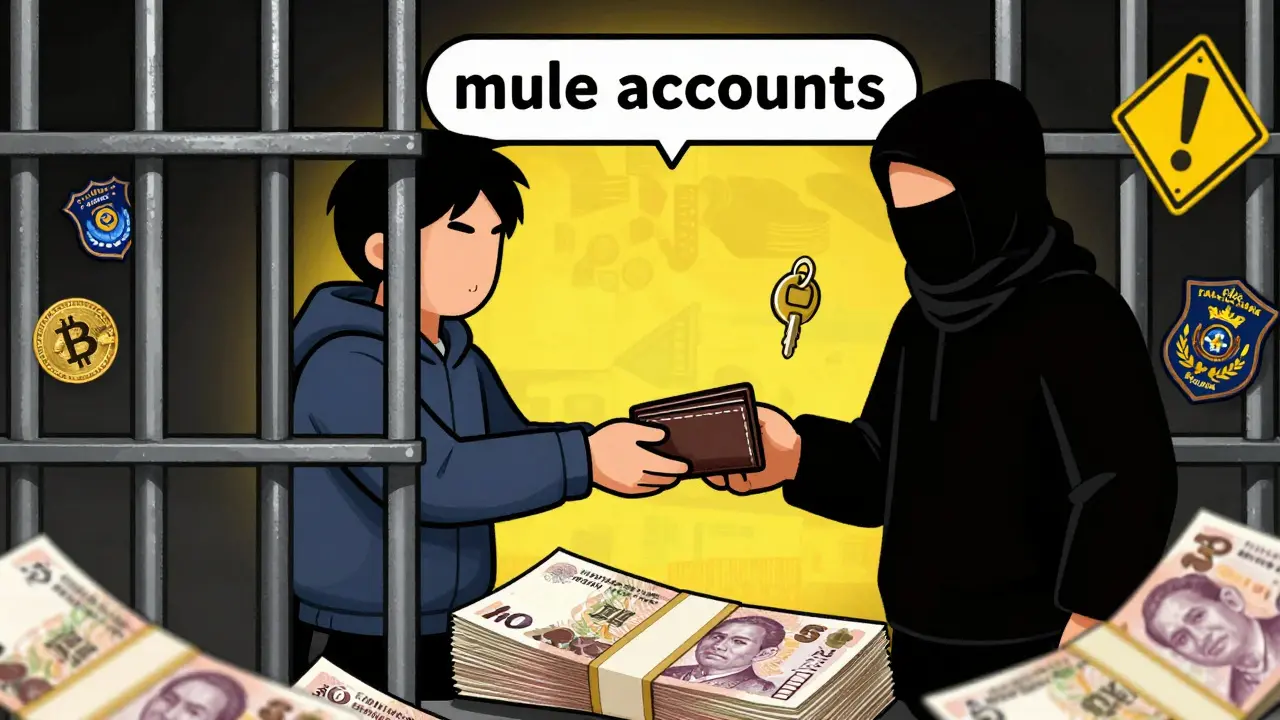
Let’s talk about what happens to individuals. You might hear terms like “mule accounts” thrown around. A mule account is simply a bank account or crypto wallet that you knowingly use to receive money from illegal sources, like scam proceeds. Maybe a friend asked you to hold some funds temporarily. Maybe you sold your wallet address online for a quick fee.
Under the 2025 laws, this is a serious crime. The penalty structure is brutal:
- Imprisonment: Up to 3 years in jail.
- Fines: Up to THB 300,000 (roughly $8,400 USD).
- Both: You can get hit with jail time AND the fine simultaneously.
This isn’t just for big criminals. It’s for anyone facilitating the flow of dirty money. The law assumes that if you’re moving large sums of crypto into traditional banking channels without a clear, legitimate source, you’re part of the problem. The Anti-Money Laundering Office (AMLO) works closely with the police to track these flows. Once flagged, the investigation moves fast.
Platform Liability: The “Joint Responsibility” Trap
For businesses operating exchanges or wallets, the stakes are even higher. The new framework introduces a concept called “joint liability.” This means if a cybercrime happens on your platform, you are legally responsible for the damages, similar to how a bank would be liable for a security breach.
Here is why this scares operators:
- Unlimited Financial Exposure: There is no cap on how much you might have to pay if fraud occurs through your system.
- Mandatory Refunds: Platforms must assist in refunding stolen funds. Even if the hack wasn’t directly your fault, you may be forced to compensate victims.
- License Revocation: Fail to meet Know Your Customer (KYC) standards or monitor transactions properly, and your license gets pulled immediately.
Silk Legal, a Bangkok-based firm specializing in crypto law, notes that this joint liability framework is a departure from global norms. In many countries, platforms are safe harbors if they follow basic procedures. In Thailand, you are on the hook for the bad actors on your network. This has already caused several smaller operators to exit the market entirely rather than risk bankruptcy.
Foreign Platforms: The Localization Mandate
If you run a crypto business outside Thailand but serve Thai clients, you have a deadline ticking. Since January 2025, foreign platforms have had to comply with strict localization rules. You can’t just keep a website open and hope for the best.
To operate legally, you must:
- Establish a legal entity within Thailand.
- Appoint a local Thai director.
- Maintain a Thai bank account.
- Integrate with national Anti-Money Laundering (AML) services.
- Obtain a specific license from the SEC Thailand.
What happens if you don’t? The SEC blocks your site. On June 28, 2025, the SEC executed its first major sweep, blocking five unauthorized platforms. Users were told to withdraw their assets before the deadline. After that date, those users lost access to their funds permanently. The SEC made it clear: if you’re on an unlisted site, your money is trapped.
Legal experts warn that this jurisdictional reach is aggressive. Using Thai-language interfaces or processing payments in Thai Baht is enough evidence for the SEC to claim you are targeting Thai residents. International operators are now spending between THB 500,000 and THB 2,000,000 ($14,000-$56,000) on legal consultants just to navigate the licensing process.
User Experience: Security vs. Convenience
So, what does this mean for you, the everyday trader? The experience on licensed platforms has shifted dramatically. On one hand, you feel safer. Scams are harder to pull off because every transaction is monitored. KYC procedures are stricter, meaning fewer fake accounts and less anonymity for criminals.
On the other hand, convenience has taken a hit. You’ll notice delays in transactions as systems run background checks. Withdrawals might take longer. And because fewer platforms are willing to deal with the heavy compliance costs, competition has dropped. The Association of Digital Asset Businesses (Thailand) reported that licensed platforms fell from 12 to 7 between January and June 2025.
Less competition usually means higher fees. Traders on Reddit and local forums complain about increased trading costs. However, many admit they’d rather pay more than lose their life savings to a rug pull or a hacked exchange. The trade-off is clear: you pay for safety.
Tax Incentives: The Carrot to the Stick
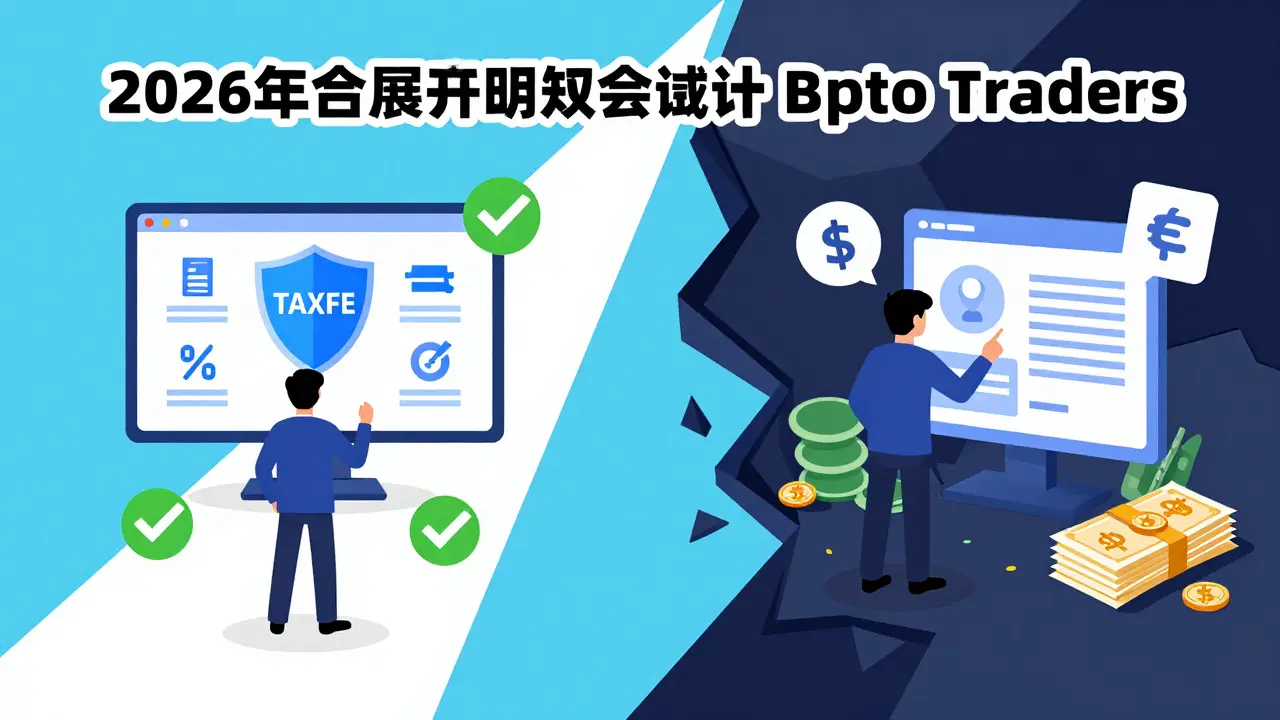
It’s not all bad news. To encourage people to move to licensed platforms, the government introduced a tax holiday. From January 1, 2025, to December 31, 2029, individuals enjoy a five-year exemption on capital gains from trades conducted on licensed exchanges.
This is a massive incentive. If you trade on an unlicensed platform, you not only risk penalties but you also owe taxes on your profits. If you trade on a licensed platform, you keep 100% of your gains for the next five years. It’s a clear signal from the government: come to the light, and we’ll let you keep your money.
However, this creates uncertainty for the long term. What happens after 2029? No one knows yet. But for now, it’s a strong reason to ensure your exchange is fully compliant.
| Feature | Licensed Platforms | Unlicensed Platforms |
|---|---|---|
| Legal Status | Fully Compliant | Illegal / Blocked |
| User Fund Safety | Protected by Joint Liability Laws | No Recourse if Hacked |
| Tax Treatment (2025-2029) | Capital Gains Exempt | Taxable Income |
| KYC Requirements | Strict, Continuous Monitoring | Minimal or None |
| Access Risk | Stable | High (Immediate Blocking) |
Looking Ahead: The Future of Crypto in Thailand
Thailand is setting a precedent for Southeast Asia. The Bank of Thailand continues to ban cryptocurrencies as payment methods, focusing instead on Central Bank Digital Currency (CBDC) pilots. But for investment purposes, the market is opening up-just under a microscope.
Analysts predict that within 12 to 18 months, unlicensed activity will nearly disappear. The penalties are too severe, and the blocking technology is too efficient. This will create a cleaner, more stable market, but likely with less innovation due to the high barrier to entry for new startups.
For you, the takeaway is simple. Check your exchange. Is it on the SEC’s approved list? If not, move your funds now. Don’t wait for a block order. The cost of compliance is high, but the cost of non-compliance is everything you’ve invested.
What is the penalty for using a mule account in Thailand?
Using a mule account, which involves knowingly receiving funds from unlawful sources, can result in imprisonment for up to 3 years, a fine of up to THB 300,000, or both. This applies to bank accounts and crypto wallets alike.
Can the SEC block foreign crypto websites?
Yes. Under the Royal Decree B.E. 2568 (2025), the Ministry of Digital Economy and Society (MDES) can block access to unlicensed platforms without prior court approval. This applies to any site targeting Thai users, regardless of where the company is registered.
Are there tax benefits for trading on licensed exchanges?
Yes. From January 1, 2025, to December 31, 2029, individuals are exempt from capital gains tax on trades conducted on licensed exchanges. This incentive encourages users to move away from unregulated platforms.
What are the localization requirements for foreign crypto platforms?
Foreign platforms must establish a legal entity in Thailand, appoint a local Thai director, maintain a Thai bank account, integrate with national AML services, and obtain an SEC license. Failure to comply results in immediate blocking orders.
Is it legal to use USDT or USDC in Thailand?
USDT and USDC are approved for certain transactions under the Emergency Decree in March 2025. However, they cannot be used for general payments. They are permitted primarily for investment and settlement purposes on licensed platforms.
What happens if my crypto platform gets hacked?
Licensed platforms face joint liability for damages arising from cybercrime. They may be required to refund stolen funds and can face unlimited financial liability, license revocation, and criminal prosecution if compliance failures contributed to the breach.