

For the average trader, this might seem like a corporate headache, but it actually exposes a massive security gap. When an exchange fails at KYC, it creates a playground for money laundering and financial crime. This investigation, led by the Financial Intelligence Unit a specialized agency under South Korea's Financial Services Commission responsible for monitoring financial transactions to prevent money laundering (FIU), wasn't a random raid. It happened during a routine business license renewal. In South Korea, virtual asset exchanges must renew their licenses every three years, and Upbit's latest check-up revealed some pretty disturbing habits in how they onboarded users.
How the Compliance System Broke Down
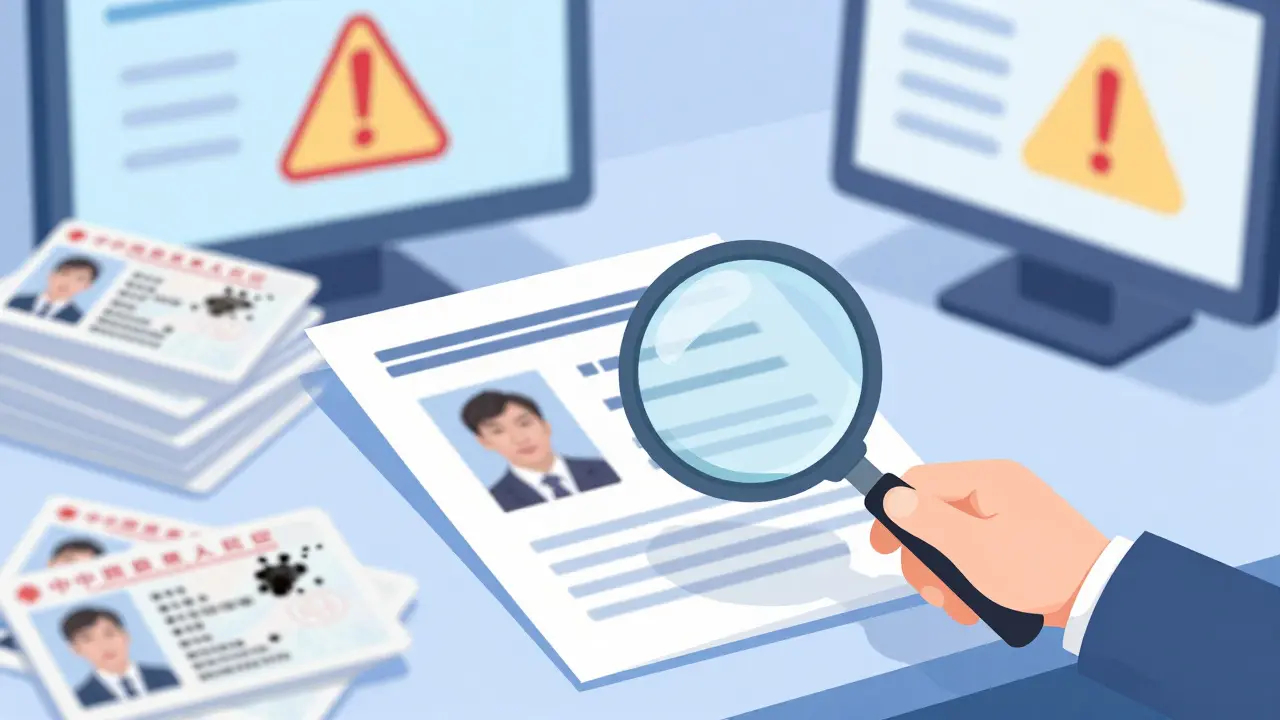
The sheer variety of failures at Upbit suggests that the company prioritized growth over governance. The FIU didn't just find a few errors; they found a pattern of negligence. For example, the exchange was accepting photocopied IDs instead of original documents. In the world of high-stakes finance, a photocopy is essentially a blank check for fraud. Even worse, many accounts were approved with identification details that were blurred or completely obscured.
One of the most glaring issues involved the driving license verification process. In nearly 190,000 cases, Upbit simply checked the personal information provided by the user without ever verifying the card's authenticity through the mandatory encrypted serial number system used in South Korea. It's the digital equivalent of checking if someone's name matches a list but never asking to see their actual ID card.
But the numbers get even more staggering when you look at re-verification. Investigators found over 9 million instances where no official identification documents were collected during the re-verification process. When you combine these failures with the fact that Upbit allegedly facilitated 45,000 transactions with unregistered foreign exchanges, you can see why the Special Financial Transactions Act The primary South Korean legislation governing the reporting and use of specified financial transaction information to prevent money laundering is being invoked so aggressively.
The Financial and Operational Stakes
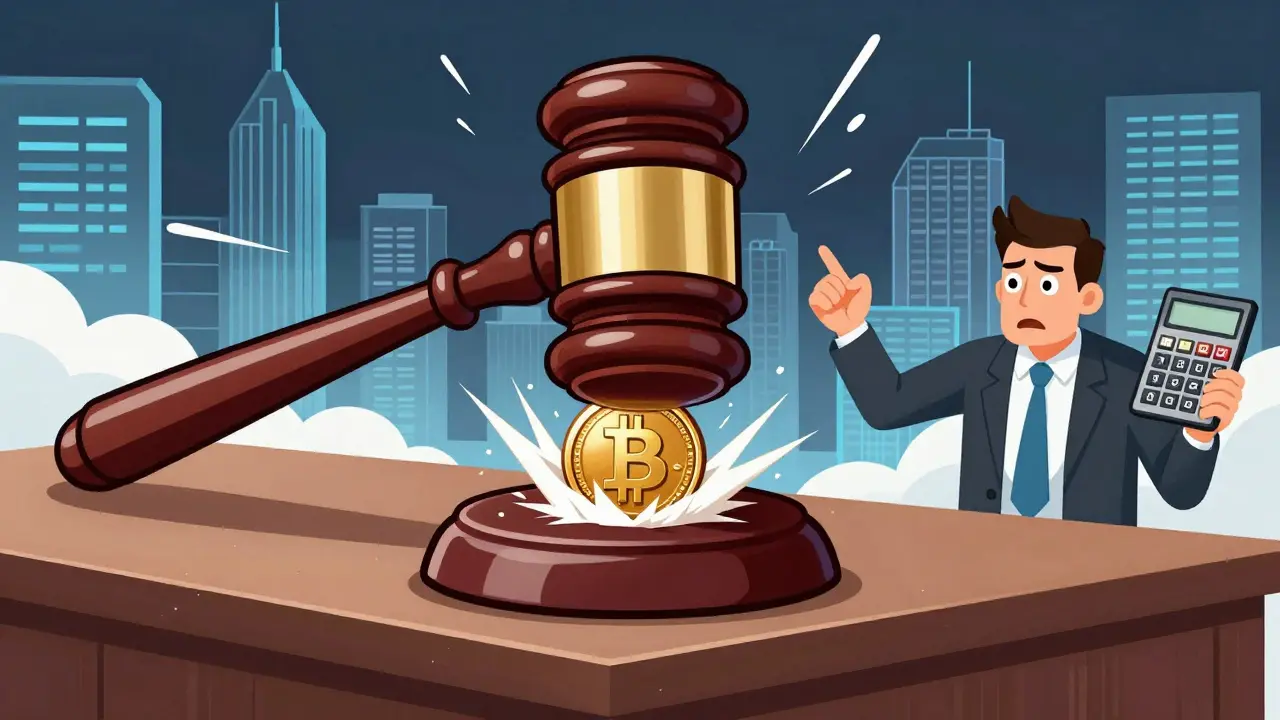
The potential fallout for Dunamu The parent company that operates the Upbit cryptocurrency exchange, the operator of Upbit, is mathematically terrifying. Under current laws, fines can reach up to 100 million Korean won (roughly $68,600) per violation. If you do the math on 500,000 cases, the theoretical fine could hit $34 billion. While most legal experts agree that a negotiated settlement will prevent the company from going bankrupt, the symbolic weight of this penalty is immense.
Beyond the money, the FSC proposed a six-month suspension on new user registrations. For a company that controls about 80% of South Korea's domestic trading volume, stopping growth for half a year is a massive blow to its market dominance.
| Metric | Upbit (South Korea) | Binance (USA Settlement) |
|---|---|---|
| Primary Violation | KYC/Identity Verification | AML/Sanctions Violations |
| Scale of Breaches | 500,000+ suspected cases | Systemic failure across millions |
| Proposed/Actual Penalty | Up to $34B (theoretical) / Registration ban | $4.3 Billion settlement |
| Regulatory Trigger | License Renewal Review | Department of Justice (DOJ) Investigation |
Why This Matters for the Rest of the World
If you trade on an exchange in Europe or the US, you might think this is just a "Korean problem." It isn't. The Upbit case is a watershed moment that signals the end of the "move fast and break things" era for crypto exchanges. Regulators are no longer satisfied with a checkbox saying "KYC Completed." They are now auditing the actual quality of that verification.
This creates a new standard for the industry. We are seeing a shift toward Anti-Money Laundering (AML) A set of laws and regulations intended to stop the practice of generating income through illegal actions protocols that require multi-layer identity checks and advanced document authentication technology. If the FIU is digging into photocopies and encrypted serial numbers, other regulators will likely follow suit.
For users, this means the onboarding process is about to get a lot more annoying. Expect more requests for live selfies, video calls, and deeper probes into your source of funds. While it feels like a hassle, it is the only way to prevent exchanges from becoming conduits for organized crime.
User Reaction and Market Shift
The Korean trading community is currently split. On one hand, you have users who are terrified that their funds might be frozen or that the exchange could shut down overnight. This anxiety has led to a noticeable migration of users toward competitors like Bithumb or international platforms. People are suddenly asking, "How safe is my money if the exchange doesn't even know who its users are?"
On the other hand, some traders view this as government overreach, arguing that the strictness of the Special Financial Transactions Act is stifling innovation. However, the reality is that with over 30% of the adult population in South Korea adopting crypto, the government cannot afford to leave the door open to financial instability.
The Legal Battle Ahead
Dunamu isn't taking this lying down. The company has filed a lawsuit to challenge these sanctions. Their defense likely rests on the argument that their processes were "industry standard" at the time or that the violations weren't intentional.
However, the timeline is tight. With the FSC making final determinations and the company fighting in court, the outcome will set a legal precedent for every other exchange in Asia. If Upbit wins, the regulatory grip might loosen; if they lose, we are entering an era of banking-level compliance for every single crypto account.
Are my funds safe on Upbit during this investigation?
Generally, KYC violations impact the exchange's legal right to operate rather than the actual custody of user assets. However, the risk comes from potential operational freezes or the FSC imposing sanctions that could disrupt service. Most users can still access their accounts, but the uncertainty is why some are moving to other platforms.
What exactly is a KYC violation in this context?
In the Upbit case, it means the exchange failed to properly verify the identity of its users. This included accepting low-quality photocopies of IDs, ignoring blurred text on documents, and failing to use the encrypted serial number system to verify South Korean driving licenses.
Will other exchanges be affected by this?
Yes. This case serves as a "stress test" for the entire industry. Regulators globally are likely to adopt similar intensive audit procedures, meaning other exchanges will need to upgrade their verification tech and increase their compliance spending to avoid similar penalties.
Can Upbit really be fined $34 billion?
The $34 billion figure is a theoretical maximum based on the per-violation fine. In reality, regulators usually negotiate settlements. It is highly unlikely they would impose a fine that would instantly bankrupt the country's largest exchange, but the actual fine will still be significant.
What is the Special Financial Transactions Act?
It is the South Korean law that requires virtual asset service providers to follow strict anti-money laundering (AML) and KYC rules. It mandates that exchanges report suspicious transactions and maintain a valid license, which must be renewed every three years.
Next Steps for Traders
If you are using an exchange that has a high concentration of users in a strictly regulated region, now is the time to audit your own setup. Check if your account is fully verified and if you have updated your documents.
For those specifically using Upbit, keep a close eye on the FSC's final determinations. If you are risk-averse, diversifying your holdings across multiple exchanges (including a non-custodial hardware wallet) is the smartest move. The Upbit saga proves that even the biggest players can have massive holes in their armor, and your funds shouldn't depend on whether a company decided to check a serial number on a driver's license or not.