
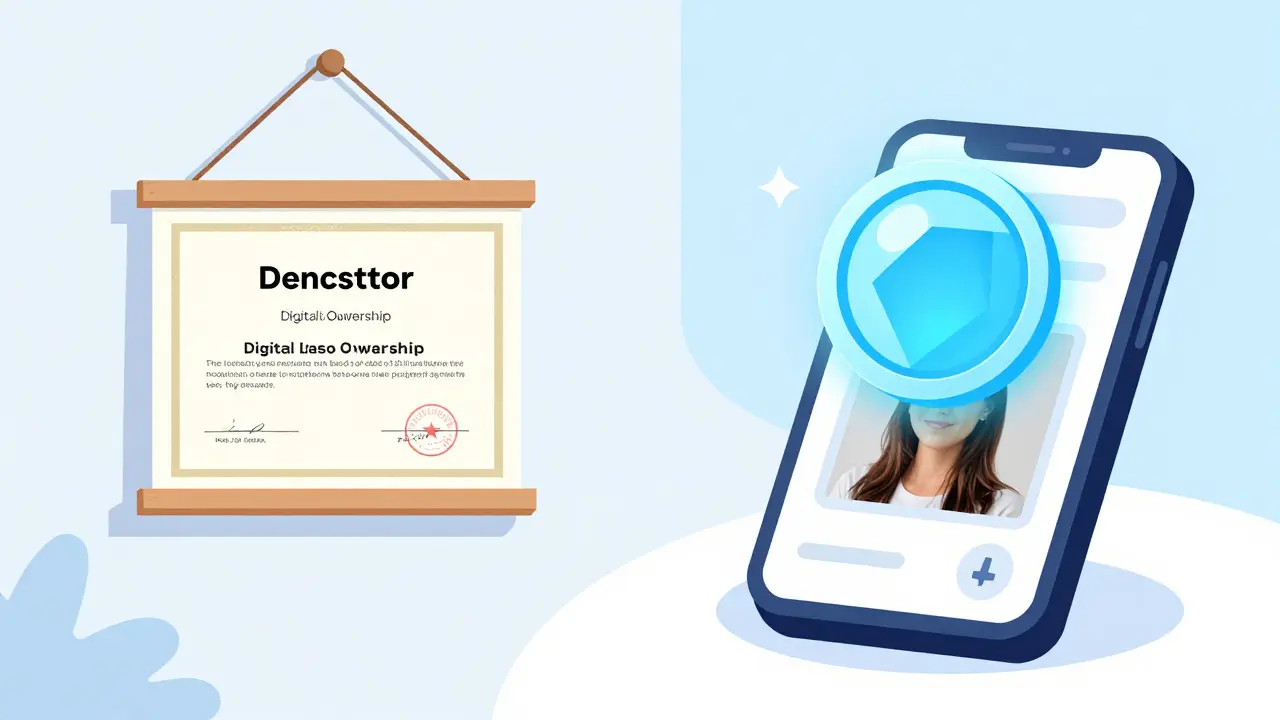
Imagine buying a painting. You get the canvas, the frame, and the certificate of authenticity. Now imagine buying a JPEG image of that same painting on your phone. For years, this felt like paying for air-until NFTs, or non-fungible tokens, changed the rules.
You might have heard the hype, the crashes, and the confusing jargon. But what are NFTs actually doing in the world of cryptocurrency? They aren't just expensive profile pictures anymore. By 2025, they’ve evolved into functional tools for gaming, identity verification, and even supply chain tracking. If you’re trying to figure out whether this is a passing fad or a fundamental shift in how we own things online, you’re not alone.
The Core Concept: Why "Non-Fungible" Matters
To understand NFTs, you first need to understand the word "fungible." Think about a dollar bill. If I trade my $10 bill for yours, it doesn’t matter. Both bills hold the exact same value. That’s fungibility. Now think about the original Mona Lisa. You can’t trade it for a printout from a local copy shop. The original has unique history, provenance, and value. It is non-fungible.
An NFT is simply a digital record that proves you own a specific, unique item. It sits on a blockchain, which acts as an immutable public ledger. This ledger ensures that no one can duplicate, alter, or steal the record of ownership without changing the entire chain-a task that is computationally nearly impossible.
This distinction is crucial. When you buy an NFT, you aren’t necessarily buying the copyright to the image itself (unless explicitly stated). You are buying a verifiable receipt that says, "This person owns this specific token linked to this asset." This solves the biggest problem of the internet: proving scarcity in a world where files can be copied with a single click.
How NFTs Actually Work Under the Hood
Technically, most NFTs live on the Ethereum network, using standards like ERC-721 or the more flexible ERC-1155. These are sets of rules that tell the blockchain how to handle these unique tokens.
Here is the simple breakdown of what happens when an NFT is created:
- Minting: An artist or creator uploads their file (art, music, video) to a marketplace. The system generates a unique code.
- Smart Contract: This code is written into a smart contract. This self-executing program defines the rules-who can sell it, who gets royalties, and what the token represents.
- Metadata Storage: The actual file usually lives off-chain (like on IPFS, a decentralized storage system), while the blockchain stores the link to that file and the ownership history.
- Transaction: When you buy the NFT, you pay with cryptocurrency, and the smart contract updates the owner field to your wallet address.
The beauty of this system is automation. Creators can set royalty rates-typically between 2.5% and 10%-directly in the code. Every time the NFT is resold, that percentage automatically goes back to the creator. Traditional art markets struggle with this; secondary sales rarely benefit the original painter. NFTs fix that loophole programmatically.
Beyond Art: The Real-World Use Cases of 2025
If you only know NFTs from the boom-bust cycle of 2021-2022, you’re missing the current landscape. The market stabilized significantly after the peak revenue of $1.58 billion in 2022. By 2024-2025, annual revenues settled around $600-700 million, but the application* of the technology expanded wildly.
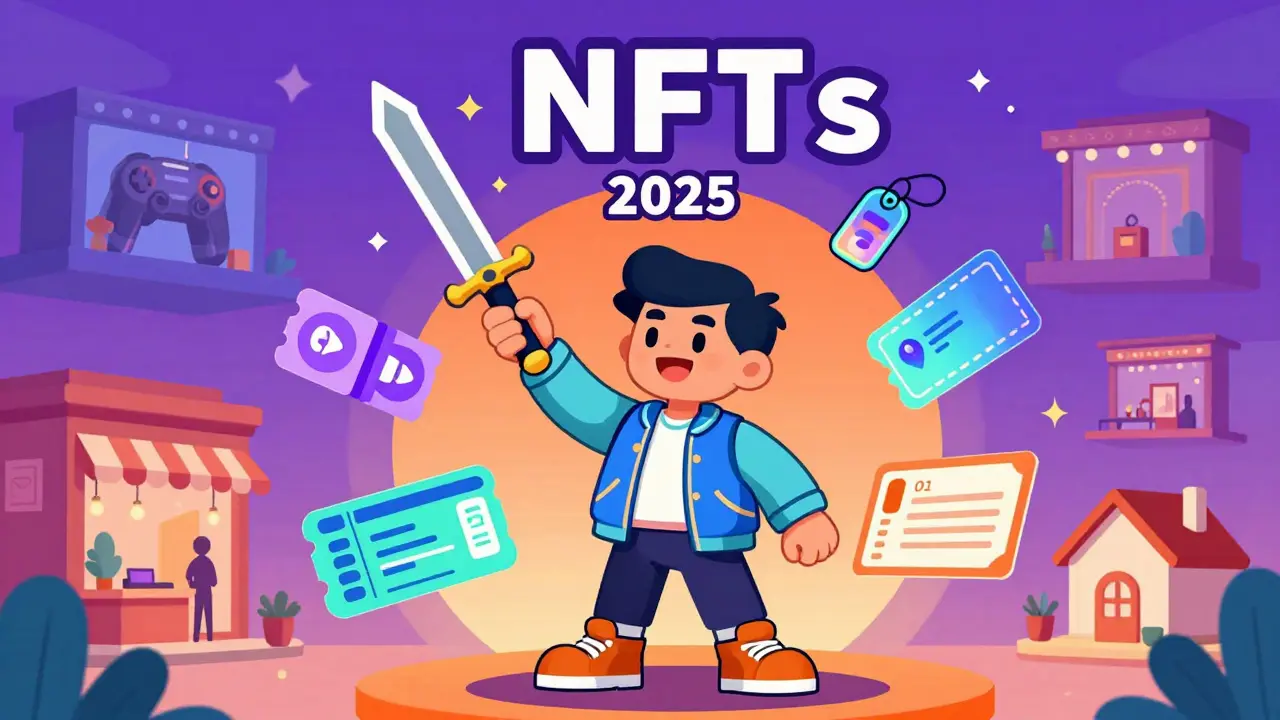
In gaming, NFTs allow players to truly own their swords, characters, or virtual land. Unlike traditional games where you rent assets from the developer, an NFT-based sword belongs to you. You can sell it, trade it, or potentially use it in another compatible game. This interoperability is still early-stage but represents a massive shift in player economics.
In fashion, luxury brands are issuing NFTs as certificates of authenticity for physical goods. Imagine buying a designer jacket that comes with a digital twin. The NFT proves it’s real, tracks its history, and allows you to use the digital version in metaverse environments. This bridges the gap between physical utility and digital presence.
A major trend accelerating in 2025 is the integration of Artificial Intelligence with NFTs. Platforms like Art Blocks and Alethea AI are leading this charge. Instead of static images, we are seeing generative NFTs that change over time based on external data feeds-weather patterns, stock markets, or user interactions.
AI also lowers the barrier to entry for creators. You don’t need to be a master painter to create a unique visual asset. Algorithms can generate complex, responsive artwork that evolves. This has sparked debates about authorship and value, but it has undeniably expanded the creative possibilities. Machine learning algorithms now help optimize metadata, making NFTs easier to discover and categorize within massive marketplaces.
It would be irresponsible to discuss NFTs without addressing the pitfalls. First, there is the issue of legal ownership. Buying an NFT does not automatically grant you copyright to the underlying work. In most cases, you own the token, not the intellectual property. This ambiguity remains a significant hurdle for enterprise adoption.
Second, environmental concerns persist. While Ethereum shifted to Proof-of-Stake in 2022, drastically reducing energy consumption by over 99%, some other blockchains still rely on energy-intensive methods. Always check which network an NFT resides on before engaging.
Third, market volatility is extreme. The NFT market saw a 24% decrease in trading volume in early 2025 compared to late 2024. Prices are driven largely by speculation and community sentiment rather than intrinsic cash flow. If you buy an NFT expecting it to double in price next week, you are gambling, not investing.
Finally, technical barriers remain high. Managing private keys, understanding gas fees, and avoiding phishing scams require a steep learning curve. Losing your seed phrase means losing your assets forever. There is no customer service hotline to reset your password.
Despite the noise, the infrastructure is maturing. Research firms project the NFT market size to grow from approximately $43 billion in 2024 to over $60 billion in 2025, with long-term forecasts reaching hundreds of billions by the end of the decade. This growth isn't coming from speculative monkey pictures alone.
It’s coming from utility. Companies are using NFTs for supply chain verification, ensuring that products move through logistics networks transparently. Governments and organizations are exploring them for secure digital identity management. As user interfaces improve and regulatory frameworks clarify-particularly regarding tax treatment and consumer protection-the friction will decrease.
The future of NFTs lies in invisibility. The best NFTs won’t look like crypto artifacts; they will simply be seamless proofs of ownership embedded in everyday digital experiences.
Yes. Like any speculative asset, NFT values can drop to zero. Many projects fail due to lack of interest, rug pulls (where developers abandon the project), or broader market downturns. Only invest what you can afford to lose. No. Most major marketplaces offer "no-code" minting options where you can upload your file and set details via a user-friendly interface. However, creating custom smart contracts with advanced features requires knowledge of Solidity programming. It depends on the blockchain. Ethereum, the dominant platform, switched to Proof-of-Stake, reducing its energy usage by 99%. Other chains like Solana or Polygon are also energy-efficient. Avoid older Proof-of-Work chains if sustainability is a priority. If the image is stored centrally on a server that goes offline, you may see a broken link. However, reputable projects store files on decentralized networks like IPFS, which ensures the content remains accessible as long as the network exists. Always check where the metadata is stored. In many jurisdictions, including the US, NFTs are treated as property. Selling an NFT for a profit triggers capital gains tax. You must track the cost basis and sale price for each transaction. Consult a local tax professional for specific advice.
Sector
Application
Benefit
Gaming
In-game assets, skins, land
True ownership; trade across platforms
Fashion
Digital wearables, authenticity certs
Prevents counterfeiting; virtual branding
Ticketing
Event access, concert tickets
Eliminates scalping; dynamic pricing
Real Estate
Fractional property ownership
Liquidity for illiquid assets
Identity
Decentralized IDs, credentials
User-controlled data privacy
The AI Revolution in NFT Creation
Risks, Challenges, and Legal Gray Areas
Market Outlook: Where Do We Go From Here?
Can I lose money on NFTs?
Do I need to know coding to create an NFT?
Are NFTs environmentally friendly?
What happens if the website hosting my NFT image shuts down?
How are NFT profits taxed?