
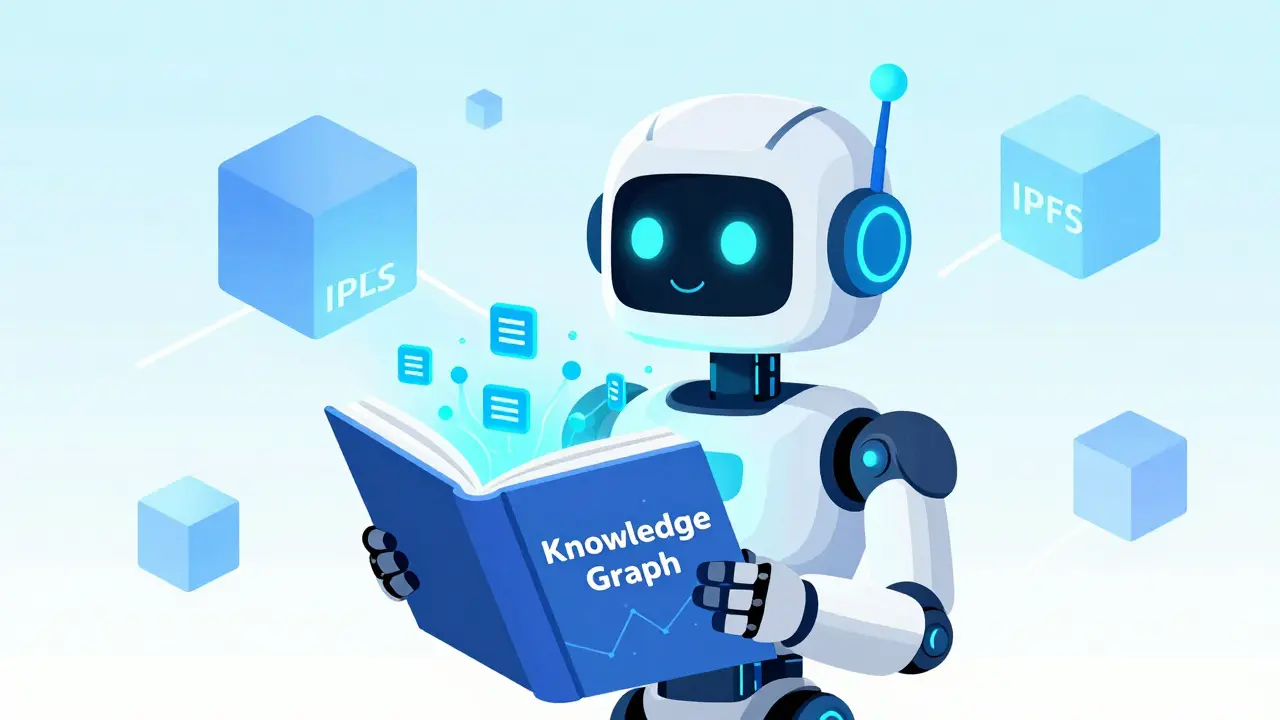
You’ve probably seen the ticker BOOT pop up on a chart or in a forum thread and wondered what it actually does. It’s not just another meme coin chasing hype. Bostrom is a blockchain-based project designed to function as a 'superintelligence bootloader' using a permissionless knowledge graph. But that technical jargon doesn’t tell you much about whether it’s worth your attention-or if it’s a financial trap.
In short, Bostrom attempts to bridge artificial intelligence with blockchain technology. It aims to create a decentralized system where data and intelligence can be shared and verified without central control. However, looking at the numbers from mid-2026, the reality is starkly different from the ambitious vision. The token has suffered massive value erosion, trading volumes are nearly non-existent, and liquidity is dangerously thin. Before you even think about buying a single satoshi of BOOT, you need to understand exactly what this ecosystem is trying to build, why it has struggled, and what the current market data says about its viability.
The Core Concept: What Does Bostrom Actually Do?
To understand Bostrom, you have to look past the price charts and look at the architecture. The project positions itself as a "superintelligence bootloader." That sounds like sci-fi, but in practical terms, it means Bostrom is trying to build the infrastructure layer for decentralized AI. Think of it like an operating system, but instead of running apps on your laptop, it runs intelligent processes across a distributed network.
The heart of this system is a permissionless knowledge graph. In traditional tech giants, companies like Google or Meta hoard data in private servers. Bostrom uses the InterPlanetary File System (IPFS) to store and address content in a decentralized way. This allows anyone to contribute to or access the knowledge base without needing permission from a central authority. The goal is to prevent any single entity from controlling the flow of information that feeds into AI models.
Technically, Bostrom isn’t built from scratch. It leverages the Cosmos SDK, which is a popular framework for building blockchains. This gives Bostrom interoperability within the broader Cosmos ecosystem. It means BOOT can theoretically interact with other chains in the Cosmos network, such as Osmosis, which serves as a major decentralized exchange hub. This integration is crucial because it allows BOOT holders to swap tokens and provide liquidity without leaving the ecosystem, maintaining security while enabling movement.
Token Utility: Governance, Staking, and Dispute Resolution
If the technology is the engine, the BOOT token is the fuel. But unlike Bitcoin, which is primarily a store of value, or Ethereum, which pays for computation, BOOT has specific functional roles within its niche. Understanding these utilities helps explain why the token exists beyond speculation.
- Governance and Voting: BOOT acts as the primary governance token. Holders can vote on proposals that shape the future of the network. This includes decisions on parameter changes, fund allocation, and protocol upgrades. Because the network aims to be decentralized, this voting power is essential to prevent centralized control.
- Dispute Resolution: One of the more unique use cases is in protocols like Beyondfi. Here, BOOT facilitates quick confirmation and resolution of governance disputes. When disagreements arise in decentralized finance (DeFi) structures, BOOT provides the mechanism to settle them transparently on-chain.
- Network Security via Proof of Stake: Bostrom operates on a Proof of Stake (PoS) consensus mechanism. Validators stake BOOT to secure the network and validate transactions. In implementations like the Ares network, BOOT functions as a "super-fluid staking" coin. This means users can stake their tokens to earn rewards and participate in security, but they retain the flexibility to use those staked assets elsewhere in DeFi, rather than having them locked up rigidly.
This multi-faceted utility is designed to create demand for the token. If people want to govern, resolve disputes, or secure the network, they need BOOT. However, utility only creates value if there is active participation-and that brings us to the critical issue of adoption.
Market Reality Check: Price, Volume, and Liquidity Crisis
Here is where the dream meets the harsh reality of the crypto market. As of May 2026, Bostrom is struggling significantly. Let’s look at the hard data, because the discrepancies between exchanges highlight just how illiquid this asset has become.
| Metric | Coinbase | CoinMarketCap | CoinGecko |
|---|---|---|---|
| Price (USD) | $0.0000000012 | $0.0000000003478 | Data Corrupted/Unavailable |
| All-Time High (ATH) | $0.00000017 (April 2022) | $0.00000017 | $0.00000017 |
| Drop from ATH | ~99% | ~99.8% | ~99.8% |
| 24h Volume (USD) | $879.64 | $0 | $172.58 |
| Market Cap Rank | N/A | #6238 | #4441 |
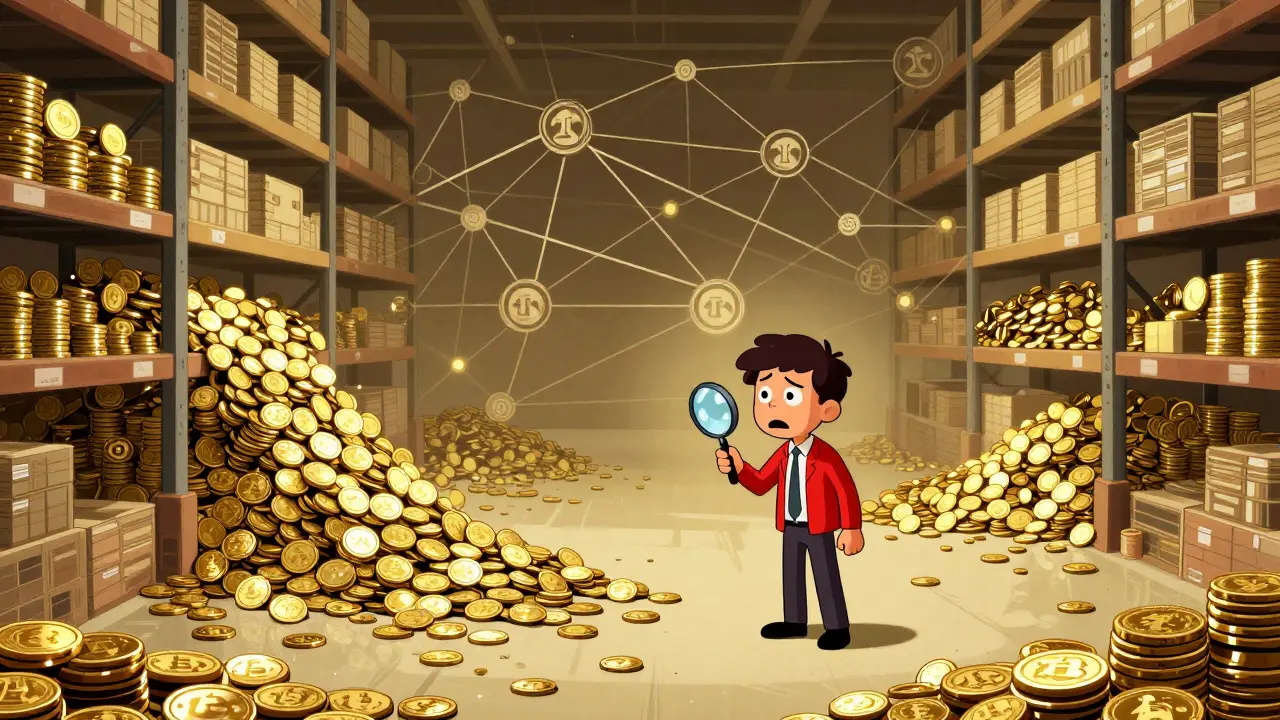
Notice the volume figures. Less than $1,000 in daily trading volume on Coinbase? Zero on CoinMarketCap? This indicates severe illiquidity. If you tried to sell a large amount of BOOT, you would likely crash the price instantly because there simply aren’t enough buyers on the order books. This is a classic sign of a "zombie chain"-a project that still technically runs but has lost almost all investor interest.
The price drop from its all-time high in April 2022 is devastating. A 99% loss means that for every dollar you invested at the peak, you now have one cent left. While some recent micro-gains (like a 9% jump in 24 hours on Coinbase) might look promising on a percentage basis, they are mathematically insignificant when the absolute value is fractions of a penny. These small pumps are often noise rather than genuine recovery trends.

Supply Mechanics: The Quadrillion Problem
One of the biggest red flags for BOOT is its supply metrics. In cryptocurrency, scarcity drives value. Bostrom suffers from the opposite problem: extreme abundance.
Data sources vary wildly, which is common for low-cap tokens, but the scale is consistent. CoinGecko reports a circulating supply of 660 trillion BOOT tokens, with a total supply reaching 1.3 quadrillion. CoinMarketCap lists a total supply of roughly 480 trillion. To put that in perspective, Bitcoin has a hard cap of 21 million. Even Ethereum, with its inflationary model, has a supply in the hundreds of millions.
When you have quadrillions of tokens in existence, each individual token must represent a microscopic fraction of the network’s value. This is why the price is so low. It’s not necessarily that the project is worthless; it’s that the value is diluted across an astronomical number of units. For BOOT to reach even $0.001 per token, its market capitalization would need to explode into the billions-a scenario that seems highly unlikely given the current lack of institutional interest and minimal trading activity.
Where Can You Trade BOOT? Access and Limitations
Finding a place to buy or sell Bostrom is part of the challenge. Major centralized exchanges (CEXs) have largely abandoned the token. KuCoin, once a potential listing partner, explicitly states that BOOT is not supported on their platform anymore, despite keeping informational pages live. Phemex offers some trading guidance, indicating limited availability on select CEXs.
Most trading happens on Decentralized Exchanges (DEXs), particularly within the Cosmos ecosystem on platforms like Osmosis. This requires users to have a compatible wallet (like Keplr) and sufficient understanding of cross-chain swaps. For the average retail investor, this barrier to entry is high. You can’t just log into Binance and click "Buy." You have to navigate the complexities of DEX interfaces, slippage settings, and gas fees.
This limited accessibility contributes to the low volume. Without easy on-ramps for new investors, the token relies on a shrinking base of existing holders who are either HODLing out of hope or slowly exiting due to frustration.
Risks and Red Flags: Why Caution Is Essential
If you are considering investing in Bostrom, you need to weigh several significant risks. This is not a safe harbor investment; it is a high-risk speculative asset with clear warning signs.
- Liquidity Trap: With daily volumes under $1,000, getting out of a position can be difficult. Large sells will slip heavily, meaning you get far less money than the chart price suggests.
- Developer Activity Opacity: There is little public data on community size, developer commits, or social media engagement. A thriving AI project should have visible development updates. The silence suggests stagnation.
- Regulatory Uncertainty: As an AI-focused token with governance features, BOOT could face scrutiny under emerging digital asset regulations. Its lack of clear compliance documentation adds another layer of risk.
- Competition: The AI-crypto sector is crowded. Projects like Render Network, Fetch.ai (now merged into ASI Alliance), and others have stronger ecosystems, higher liquidity, and clearer product-market fit. Bostrom struggles to differentiate itself against these better-funded competitors.
The historical trajectory shows a steady decline since 2022. The all-time low was set in July 2024, and prices have remained depressed since. There is no catalyst currently visible that would reverse this trend. Without a major partnership, technological breakthrough, or exchange relisting, the momentum remains negative.
Is Bostrom Worth Your Attention in 2026?
Bostrom represents an interesting theoretical concept: combining IPFS, Cosmos SDK, and decentralized AI governance. On paper, the architecture makes sense for a permissionless knowledge graph. However, execution matters more than theory in crypto.
For most investors, the answer is no. The liquidity is too thin, the supply is too diluted, and the price action shows no signs of sustained recovery. It sits in the danger zone of crypto markets-where projects linger with minimal activity, hoping for a resurgence that rarely comes.
If you are a researcher interested in decentralized AI architectures, studying Bostrom’s code and governance mechanisms could offer valuable insights. But as an investment vehicle, it carries disproportionate risk compared to established players in the AI or Cosmos sectors. Always prioritize projects with transparent roadmaps, active communities, and healthy trading volumes. In the case of BOOT, the data suggests the party ended years ago.
What is the current price of Bostrom (BOOT)?
As of May 2026, the price of BOOT is extremely low, ranging between $0.0000000003 and $0.0000000012 depending on the exchange. This represents a drop of over 99% from its all-time high in April 2022.
Can I buy Bostrom on Coinbase or Binance?
BOOT is not widely available on major centralized exchanges like Binance. It may be listed on smaller platforms like Phemex or traded via decentralized exchanges (DEXs) within the Cosmos ecosystem, such as Osmosis. KuCoin no longer supports direct trading of BOOT.
What is the total supply of BOOT tokens?
The total supply of Bostrom is estimated to be between 480 trillion and 1.3 quadrillion tokens. This massive supply dilutes the value of each individual token significantly.
How does Bostrom use Artificial Intelligence?
Bostrom aims to create a "superintelligence bootloader" by using a permissionless knowledge graph stored on IPFS. It allows decentralized collection and verification of data for AI models, preventing centralization of information.
Is Bostrom a good investment right now?
Due to extremely low liquidity, high volatility, and a 99% loss from its peak, Bostrom is considered a high-risk asset. Most analysts advise caution due to the lack of active trading volume and unclear future development roadmap.


Filbert Reeves
the whole ai blockchain thing is just a front for the deep state to track our neural patterns while we sleep they want us to think its about decentralization but look at the liquidity its designed to fail so you lose your savings and stay dependent on the system i have seen this pattern before with other projects that suddenly vanish when the regulators get close it is not an accident that the volume is zero someone pulled the plug intentionally