
IncomRWA Yield Calculator
Calculate Your Staking Returns
Estimated USDT Returns
15% APYBased on current yield rate of approximately 15% annualized
Note
This calculator uses IncomRWA's advertised 15% APY. Actual returns may vary based on transaction volume and settlement rates.
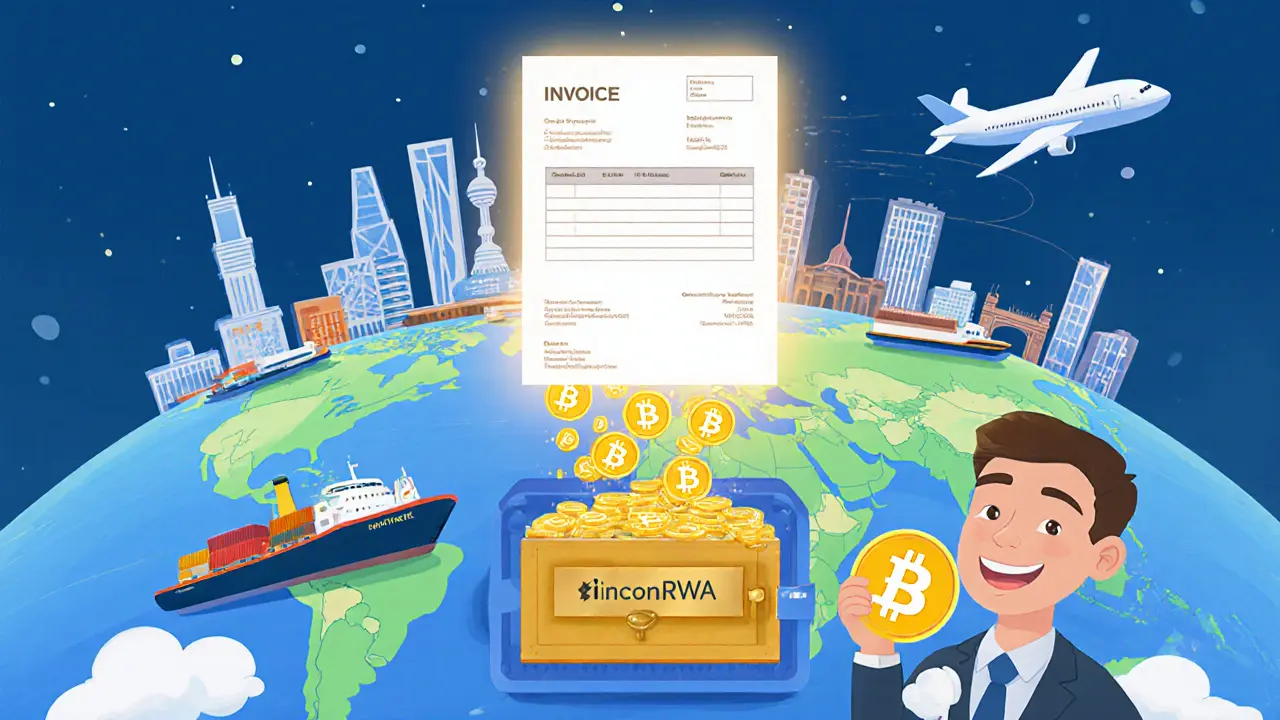
IncomRWA (IRWA) isn't another speculative meme coin. It’s a cryptocurrency built to solve a real problem in DeFi: how to earn stable, predictable returns without risking your capital on unstable yield farms. Launched in 2021 under the name Nexade and later rebranded, IncomRWA uses blockchain technology to bring real-world trade finance into the crypto world. Instead of betting on price swings or inflated token emissions, IRWA lets users earn yields backed by actual invoices from global business transactions - the kind of assets banks have been financing for decades.
How IncomRWA Works: From Invoices to Crypto Yields
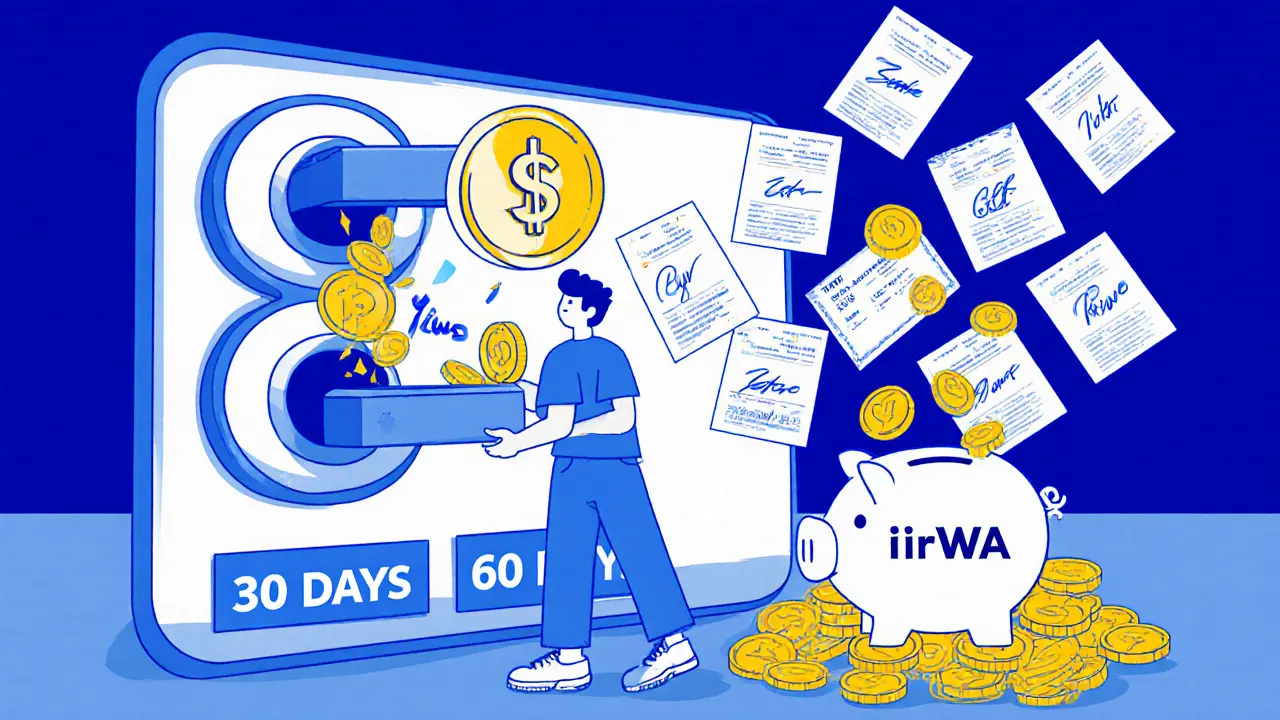
IncomRWA’s core idea is simple: businesses sell goods to other businesses and get paid later through trade invoices. These invoices are essentially IOUs - promises to pay $10,000, $50,000, or more in 30, 60, or 90 days. Traditionally, companies sell these invoices to financial institutions at a discount to get cash fast. IncomRWA digitizes this process. It tokenizes these real invoices on the Ethereum and Base blockchains, turning them into digital assets that generate income.
When you stake your $iRWA tokens, you’re essentially lending money to this invoice financing system. The returns come from the interest paid by businesses when they settle their invoices. Unlike most DeFi protocols that pay you in more tokens (which can crash if demand drops), IncomRWA pays out in USDT - a stablecoin pegged to the U.S. dollar. This means your earnings don’t swing with Bitcoin or Ethereum prices.
The staking terms are fixed: 30, 60, or 90 days. Once you lock in your tokens, you know exactly how much USDT you’ll earn. There’s no compounding, no variable APYs that vanish overnight. According to Phemex and IncomRWA’s own blog, the annual yield starts at around 15%. That’s higher than U.S. Treasury bills but far less risky than most DeFi liquidity pools that offer 50% or 100% APY - and then collapse when the token supply floods the market.
The Token: $iRWA and Its Fixed Supply
The $iRWA token is both a utility and governance token. You need it to access the staking pools. You also need it if you want to vote on future upgrades - like expanding into new types of invoices or adding new blockchain support. The total supply is capped at 100 million tokens. No more will ever be created. This contrasts sharply with many DeFi projects that mint new tokens endlessly to fund rewards, which eventually devalues the coin.
As of November 2025, $iRWA trades between $0.016 and $0.018 on major exchanges like Bitget, Phemex, and CoinCarp. Its market cap sits around $1.82 million. That’s tiny compared to giants like Ondo Finance or Maple Finance, which have billions in assets under management. But for a project focused on a niche within trade finance, it’s not unusual. The 24-hour trading volume hovers near $67,000 - low by mainstream crypto standards, which means large buyers or sellers could struggle to enter or exit positions without moving the price.
Why IncomRWA Stands Out in the RWA Space
There are dozens of Real-World Asset (RWA) projects now. Some tokenize real estate. Others focus on commodities like gold or carbon credits. IncomRWA is different. It picks one specific, proven asset class: trade receivables. These are short-term, high-volume, and already well-understood in global finance. A $10,000 invoice from a U.S. company buying parts from a Vietnamese supplier is a low-risk asset - it’s not speculative, it’s contractual.
This focus gives IncomRWA an edge in stability. While other RWA projects struggle with valuation, legal ownership, and regulatory gray zones around property titles, trade invoices have clear payment terms, standardized documentation, and established legal frameworks. IncomRWA’s entire model relies on this clarity.
Compare it to Ondo Finance, which offers tokenized U.S. Treasuries - safe, but yields are below 5%. Or Centrifuge, which handles a mix of invoice types and real estate - complex, but slower to scale. IncomRWA’s 15% yield sits in the sweet spot: higher than traditional finance, lower than the doomed DeFi farms, and backed by something tangible.
How to Buy and Stake $iRWA
If you want to get involved, here’s how it works:
- Get a crypto wallet that supports Ethereum and Base chains - Binance Web3 Wallet, MetaMask, or Trust Wallet work.
- Buy ETH or USDT on a centralized exchange like Binance or Coinbase.
- Transfer your ETH or USDT to your wallet.
- Go to a decentralized exchange (DEX) like Uniswap or PancakeSwap and swap your ETH/USDT for $iRWA.
- Connect your wallet to the official IncomRWA staking portal (via their GitBook documentation).
- Choose your staking term (30, 60, or 90 days) and lock your tokens.
You’ll start earning USDT rewards within 24 hours of staking. The system is automated. No manual claims needed. The GitBook documentation, though basic, walks you through each step. It’s not beginner-friendly if you’ve never used a DEX before, but if you’ve staked in Uniswap or Aave, you’ll feel right at home.

What You Should Know Before Investing
There’s no sugarcoating it: $iRWA is a high-risk, high-reward play - not because of price volatility, but because of execution risk.
- Liquidity is thin. With only $67,000 traded daily, selling a large amount could take days and cost you 10-20% in slippage.
- Community is small. There’s almost no discussion on Reddit or major forums. Twitter and Telegram are the only active channels, and they’re mostly promotional.
- Regulation is unclear. No public info exists on whether IncomRWA complies with SEC, ASIC, or EU regulations. That’s a red flag for institutional investors.
- Future roadmap is vague. The 2023 roadmap mentioned a DeFi platform and vote-to-earn features, but as of late 2025, there’s no public update on progress.
It’s also worth noting that the October 9, 2025 press release from GlobeNewswire - which announced new trade finance partnerships - is dated in the future. That raises questions about the reliability of their official communications.
Is IncomRWA Worth It?
If you’re looking for a high-yield, low-risk crypto play, IncomRWA is one of the few projects that actually delivers on its promise. The 15% APY isn’t magic - it’s backed by real business transactions. The fixed supply and USD payouts are thoughtful design choices.
But this isn’t a buy-and-hold-for-decades coin. It’s a tactical play. If you believe trade finance tokenization is the future of DeFi - and that smaller, focused projects can outperform bloated competitors - then $iRWA deserves a small position. Allocate only what you can afford to lose. Don’t go all-in.
For now, IncomRWA is a quiet experiment. It’s not the biggest RWA project. It’s not the most talked-about. But it’s one of the few that’s actually generating real income from real business - not just hype.
What is IncomRWA (IRWA) used for?
IncomRWA ($iRWA) is a cryptocurrency token used to access staking pools that generate yield from real-world trade invoices. Users stake $iRWA to earn USDT rewards, with returns backed by payments from businesses settling their trade receivables. It also serves as a governance token, allowing holders to vote on protocol upgrades.
Is IncomRWA a good investment?
It depends on your risk tolerance. IncomRWA offers a rare combination: stable USD-denominated yields (around 15% APY) backed by real trade finance, not token inflation. But it’s a small project with low liquidity, minimal community discussion, and unclear regulatory status. Only invest what you can afford to lose. It’s not a long-term store of value - it’s a yield-generating tool for crypto-savvy investors seeking alternatives to risky DeFi farms.
How do I stake $iRWA tokens?
First, buy $iRWA on a decentralized exchange like Uniswap or PancakeSwap using ETH or USDT. Then, connect your wallet (MetaMask, Binance Web3 Wallet, etc.) to the official IncomRWA staking portal. Choose a staking term (30, 60, or 90 days), approve the transaction, and lock your tokens. You’ll earn USDT rewards automatically during the term. No manual claiming is needed.
Where can I buy IncomRWA (IRWA)?
You can buy $iRWA on decentralized exchanges like Uniswap (Ethereum) and PancakeSwap (Base). It’s also listed on centralized exchanges including Bitget and Phemex. To purchase, you’ll need ETH or USDT in a compatible wallet. Always verify the contract address before trading - scam tokens with similar names exist.
What makes IncomRWA different from other RWA coins?
Most RWA projects tokenize real estate, gold, or art - assets that are hard to value and legally complex. IncomRWA focuses only on trade finance invoices, which are short-term, standardized, and already used by banks worldwide. This makes the underlying assets more transparent, liquid, and legally enforceable. Its yields are paid in USDT, not volatile tokens, and its 100 million token supply is fixed - unlike many RWA projects that mint new tokens endlessly.
Is IncomRWA regulated?
There is no public information confirming whether IncomRWA complies with financial regulators like the SEC, ASIC, or EU authorities. The project operates in a gray area common to many DeFi protocols. While the underlying assets (trade invoices) are legal, the tokenization and distribution model may trigger securities regulations in some jurisdictions. Users should assume regulatory risk and consult a legal professional before investing.
What’s the future of IncomRWA?
According to past roadmaps, IncomRWA planned to launch a full DeFi platform with enhanced liquidity options and a vote-to-earn system. However, as of late 2025, there’s been no public update on these features. The project’s future depends on executing its core promise - delivering consistent, real-world-backed yields - and gaining trust from institutional partners. Without transparency or progress updates, its long-term viability remains uncertain.


Louise Watson
15% yield? Sounds too good to be true.