
You’ve probably seen the ticker MRLN pop up on your exchange app or noticed chatter about a new "all-in-one" Web3 ecosystem. But what exactly is Project Merlin? Is it just another meme coin hoping for a quick pump, or does it actually have infrastructure behind it?
As of mid-2026, Project Merlin positions itself as more than a simple token. It’s a Layer 2 solution and a modular ecosystem designed to solve specific pain points in the decentralized world: finding funding, hiring talent, and governing communities without relying on centralized middlemen. If you are looking to understand whether this project has staying power, you need to look past the price charts and examine the mechanics of its four main pillars.
The Core Concept: An All-in-One Web3 Operating System
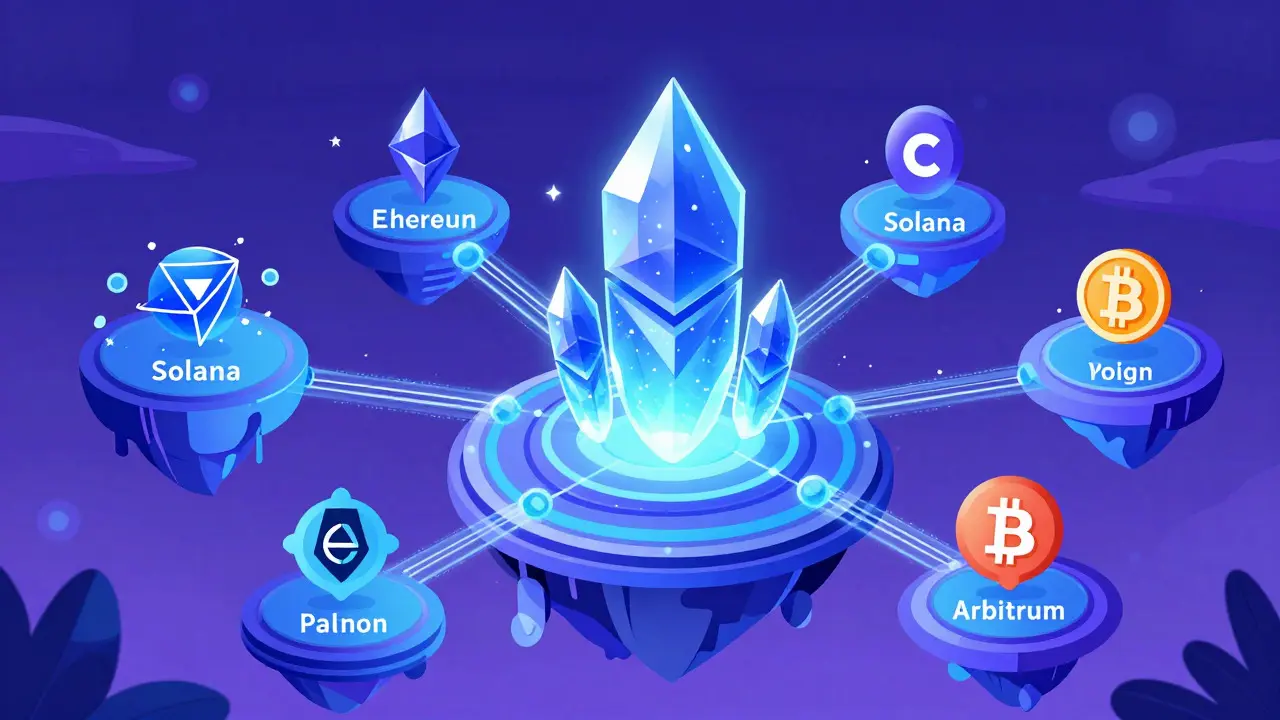
Most crypto projects focus on one thing. Some do lending, others do trading, and some are purely social. Project Merlin tries to bundle these services into a single framework. Launched in Q3 2025, the ecosystem operates across multiple chains, including Ethereum Virtual Machine (EVM) networks like Polygon, Arbitrum, Optimism, BNB Smart Chain, Base, and Avalanche, as well as Solana (SVM). Interestingly, it also functions as a Layer 2 solution on Bitcoin, tapping into the largest blockchain by market cap but adding smart contract capabilities that Bitcoin lacks natively.
This multi-chain approach is crucial. By not locking users into one network, Merlin aims to reduce gas fees and increase accessibility. However, cross-chain interoperability adds technical complexity. The system relies on ZK-Rollups for scalability and decentralized oracles for data verification, ensuring that transactions remain secure even as they hop between different blockchains.
Four Pillars of the Ecosystem
To understand the value of the $MRLN token, you have to understand what it powers. The ecosystem is built on four integrated platforms:
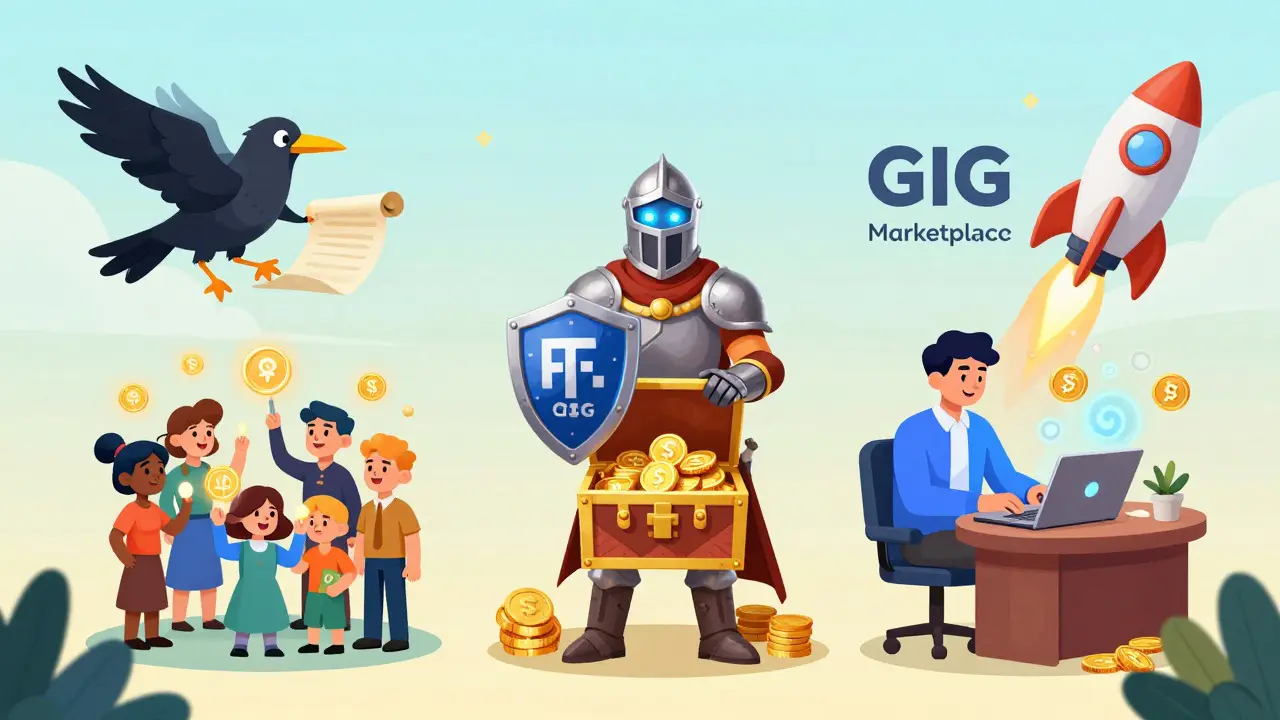
- Crowdfunding via Raven Messages: Startups submit structured proposals. The community votes on-chain using smart contracts. Successful projects can receive up to 25,000 USDC in $MRLN value. This isn't just cash; it includes service credits for other Merlin tools.
- Grant Systems (Camelot & Excalibur): These systems distribute significant funds-reportedly around $100,000 monthly-to selected projects through decentralized voting. This acts as a venture capital alternative, driven by community consensus rather than a few VCs.
- GIG Freelance Marketplace: Platforms like Freelify.io and Taskium.io allow developers, designers, and marketers to find work within the Web3 space. Payments are handled transparently on-chain, reducing friction and intermediary fees.
- IDO Launchpad (Funddex.io): This provides early access opportunities for startups launching within the ecosystem, giving token holders a chance to invest before public listings.
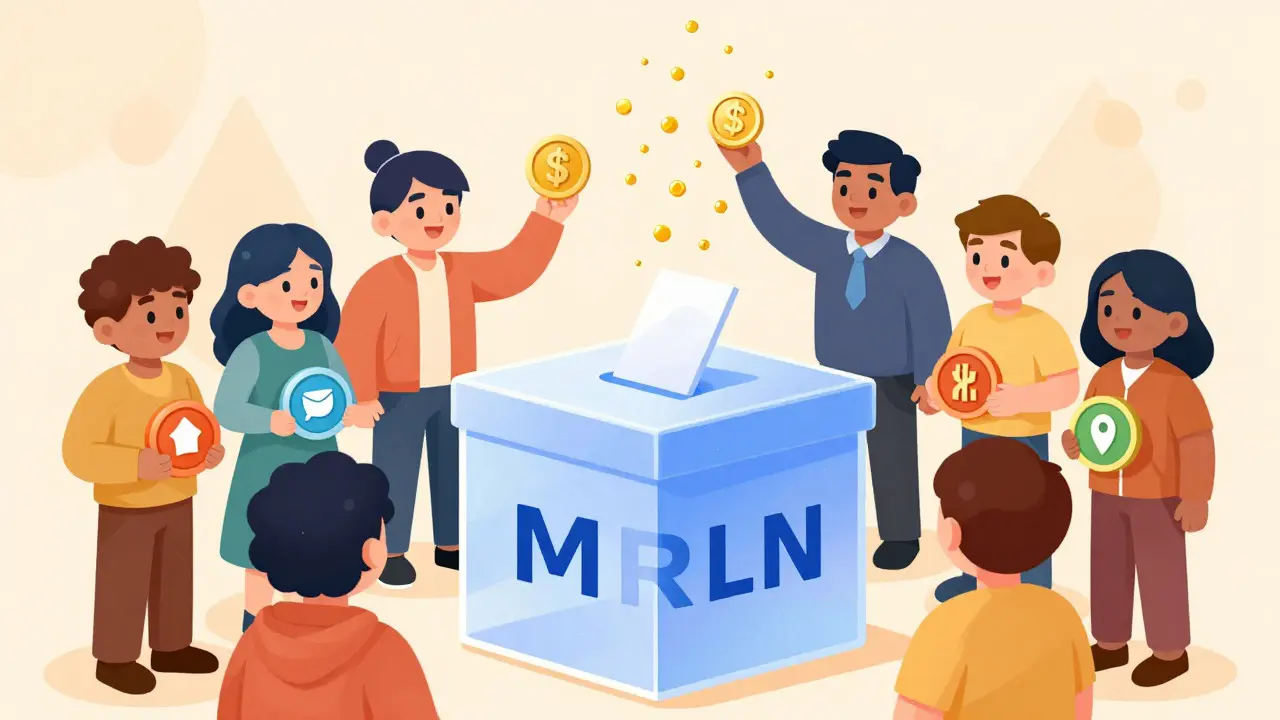
The glue holding these together is the DAO (Decentralized Autonomous Organization) structure. Instead of a CEO deciding which projects get funded, the community holds NFTs that grant voting rights. This shifts power from insiders to active participants.
Understanding the $MRLN Token Utility
A token without utility is just a speculative asset. $MRLN serves several concrete functions within the Merlin ecosystem:
- Governance: Holders vote on grant allocations and platform upgrades.
- Rewards (Vote2Earn): This is a unique mechanism where NFT holders earn points by participating in governance. Once the DAO treasury exceeds 30% of the total supply, these points are redeemable for $MRLN tokens, distributed quarterly.
- NFT Purchases: Community NFTs are essential for accessing discounted proposal fees, airdrops, and partner presales.
- Transaction Fees: Submitting a Raven Message or using freelance platforms may require paying fees in $MRLN, creating constant demand for the token.
The tokenomics are capped at a maximum supply of 1 billion MRLN. As of early 2026, reports indicate that the circulating supply is close to this maximum, though discrepancies exist between exchanges. For instance, OKX reported a circulating supply of 1 billion, while Binance listed it lower at roughly 110 million. This variance highlights the importance of checking multiple sources when analyzing liquidity and market depth.
Market Performance and Liquidity Reality Check
Let’s talk numbers, because that’s what matters if you’re considering buying. Cryptocurrency markets are volatile, and small-cap tokens like MRLN are no exception. As of April 2026, price data varied significantly across major exchanges:
| Exchange | Price (USD) | Market Cap (USD) | 24h Volume (USD) |
|---|---|---|---|
| CoinMarketCap | $0.000155 | Data varies | $196,517 |
| OKX | $0.000162 | $162,850 | Data varies |
| Binance | $0.000196 | $21,723 | $646,568 |
| Coinbase | $0.000196 | Data varies | Data varies |
Notice the disparity in market capitalization figures. Binance lists a much smaller market cap compared to OKX, likely due to differences in how circulating supply is calculated or verified. More importantly, look at the liquidity. On OKX, reported liquidity was under $125. This is critically low. It means that large buy or sell orders could cause massive slippage, drastically affecting the price. For a retail investor, this indicates high risk. You might see a 150% price jump in 24 hours (as reported on OKX), but exiting that position with profit could be difficult without crashing the price.
The holder base is also relatively small, with around 3,460 addresses reported on OKX. While this suggests an engaged early community, it lacks the broad distribution seen in top-tier cryptocurrencies. This makes the token susceptible to manipulation by "whales"-large holders who can move the market with single trades.
Revenue Model and Sustainability
Many crypto projects fail because they burn cash without generating revenue. Project Merlin attempts to address this through a diversified revenue stream flowing into the Merlin Treasury:
- Raven Message Submission Fees: Startups pay to propose their projects for funding.
- NFT Royalties: Secondary sales of Community NFTs incur a 7.5% royalty fee, directly supporting ecosystem sustainability.
- Service Fees: Freelance platforms (Freelify.io, Taskium.io) and the launchpad (Funddex.io) take a percentage of transactions.
This treasury model is vital for the Vote2Earn rewards. Without consistent inflow from fees and royalties, the promise of quarterly token distributions would collapse. Investors should monitor treasury growth reports to ensure the ecosystem is generating real economic activity, not just hype.
Risks and Considerations for New Users
Before diving in, keep these realities in mind:
Complexity Barrier: Navigating a multi-chain ecosystem requires technical know-how. Managing wallets across Ethereum, Solana, and Bitcoin L2s isn’t trivial for beginners. You’ll need to use hot wallets for daily interaction and consider cold wallets for long-term storage to mitigate hack risks.
Regulatory Uncertainty: While Merlin emphasizes regulatory alignment, the crypto landscape in 2026 is still evolving. Changes in SEC policies or international regulations could impact how IDOs and crowdfunding operate.
Early Stage Volatility: With a market cap ranging from $20k to $160k depending on the source, MRLN is a micro-cap asset. It offers high growth potential but carries the risk of total loss. Do not invest money you cannot afford to lose.
How to Get Started Safely
If you decide to participate, follow these steps to minimize risk:
- Verify the Contract Address: Always double-check the official $MRLN contract address on trusted aggregators like CoinGecko or CoinMarketCap. Scammers often create fake tokens with similar names.
- Use Reputable Exchanges: Buy through established platforms like Binance, Coinbase, or OKX. Avoid decentralized exchanges with unverified liquidity pools initially.
- Secure Your Wallet: Transfer tokens to a non-custodial wallet. Enable two-factor authentication (2FA) on all exchange accounts.
- Start Small: Given the low liquidity, start with a small position to test the waters and understand the transaction costs.
Project Merlin represents an ambitious attempt to consolidate Web3 utilities into a single, community-governed ecosystem. Whether it succeeds depends on user adoption of its freelance and crowdfunding tools, not just speculation on the token price. Keep an eye on the volume of Raven Messages submitted and the number of active freelancers on GIG platforms-these are the true indicators of health.
Is Project Merlin (MRLN) a good investment in 2026?
Whether MRLN is a "good" investment depends on your risk tolerance. As a micro-cap token with low liquidity and high volatility, it carries significant risk. However, its multi-functional ecosystem (crowdfunding, freelancing, DAO) offers more utility than many meme coins. Research the team's progress on the Grant Systems and freelance platform adoption before investing.
What blockchain is Project Merlin built on?
Project Merlin is a multi-chain ecosystem. It operates on Ethereum Virtual Machine (EVM) networks such as Polygon, Arbitrum, Optimism, BNB Smart Chain, Base, and Avalanche. It also supports Solana (SVM) and functions as a Layer 2 solution on the Bitcoin network.
How does the Vote2Earn mechanism work?
Vote2Earn allows NFT holders to earn points by participating in DAO governance activities. These points can be redeemed for $MRLN tokens. Rewards are distributed quarterly, provided the DAO treasury holds more than 30% of the total token supply. This incentivizes active community participation over passive holding.
Where can I buy MRLN tokens?
MRLN tokens are available on several major cryptocurrency exchanges, including Binance, Coinbase, OKX, and LBank. You can also track prices and liquidity on aggregators like CoinMarketCap and CoinGecko. Always verify the trading pair and contract address before purchasing.
What is the maximum supply of MRLN?
The maximum supply of Project Merlin (MRLN) is 1 billion tokens. As of early 2026, most of this supply is reportedly in circulation, though exact figures vary slightly between different tracking platforms due to reporting delays or methodological differences.
How does Project Merlin generate revenue?
Merlin generates revenue through submission fees for crowdfunding proposals (Raven Messages), a 7.5% royalty on secondary NFT sales, and service fees from its freelance marketplaces (Freelify.io, Taskium.io) and launchpad (Funddex.io). These funds go into the Merlin Treasury to support grants and rewards.