

Imagine sending money to a friend as easily as texting them a photo. No complex addresses, no waiting for confirmations, and almost zero fees. That is the promise of Toncoin. It is the native cryptocurrency of The Open Network, a blockchain that started with big dreams from Telegram but found its true footing in the community. If you have seen the Telegram Wallet bot or noticed people talking about "TON" in your chats, you are looking at one of the most unique experiments in crypto history.
This guide cuts through the noise. We will explain what Toncoin actually is, how it works under the hood, why it matters now more than ever in 2026, and whether it deserves a spot in your digital portfolio. Whether you are a total beginner or just curious about the hype, this breakdown gives you the facts without the fluff.
The Origin Story: From Telegram’s Dream to Community Power
To understand Toncoin, you have to look back at where it started. In 2017, the team behind Telegram Messenger, led by founders Pavel Durov and his brother Nikolai Durov, envisioned a blockchain integrated directly into their messaging app. They called it the Telegram Open Network. The goal was ambitious: create a high-performance ecosystem that could handle millions of users and transactions seamlessly within the chat interface.
However, the path wasn’t smooth. In May 2020, the U.S. Securities and Exchange Commission (SEC) stepped in, blocking Telegram from issuing the tokens they had sold to investors. Telegram officially pulled out of the project. For many, this looked like the end. But instead of dying, the code lived on. An independent community of developers picked up the pieces, renamed the network to The Open Network (keeping the TON acronym), and continued building. Today, the non-profit TON Foundation guides the development, ensuring the network remains decentralized and open-source.
This shift is crucial. While Telegram still plays a massive role in user adoption, Toncoin is no longer owned by the messaging giant. It belongs to the validators, developers, and users who stake and use it every day. This independence has helped build trust, showing that the network can survive even if corporate interests change.
How Toncoin Works: Speed Meets Simplicity
At its core, Toncoin is a utility token. You need it to pay for transaction fees (gas), secure the network through staking, and access various services within the ecosystem. But what makes it different from Bitcoin or Ethereum? It comes down to architecture.
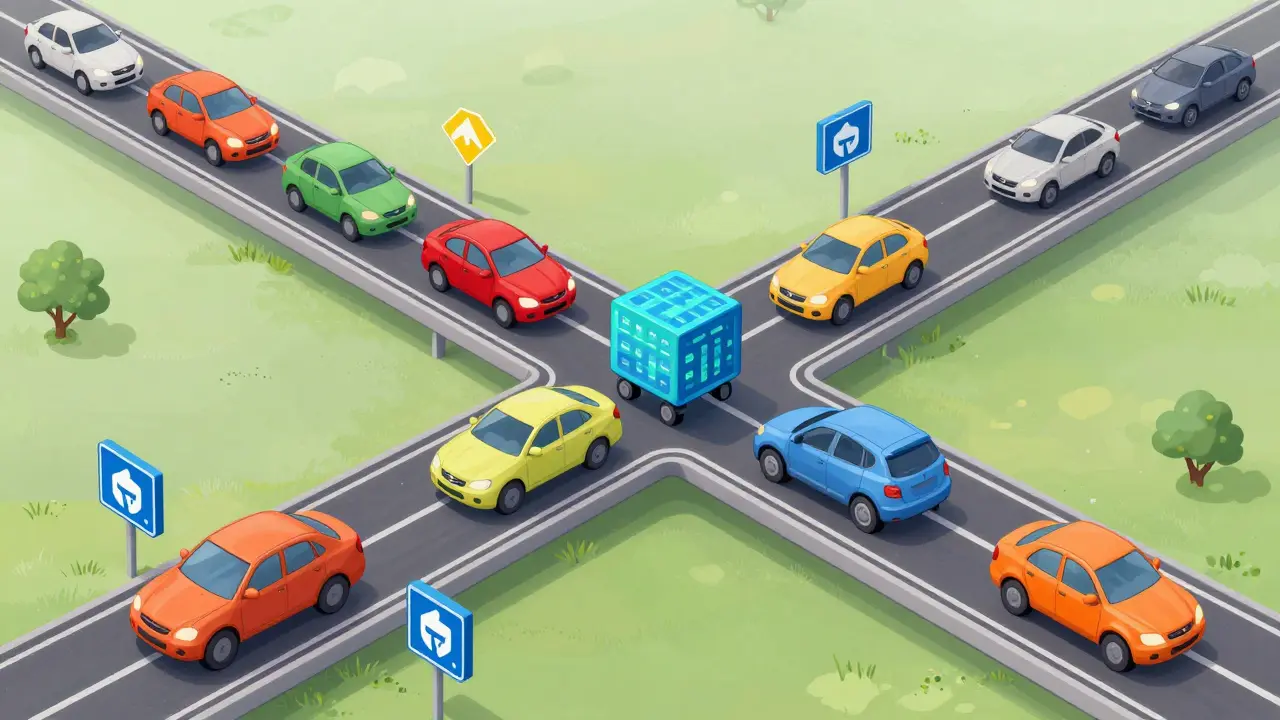
TON uses a technology called Dynamic Sharding. Think of a highway. Most blockchains are like a single-lane road; when too many cars (transactions) try to get through, traffic jams happen, and fees go up. TON is like a smart highway system that automatically adds lanes when traffic increases and removes them when it drops. This allows the network to process up to 100,000 transactions per second theoretically, with actual daily volumes running smoothly in the millions.
The network operates on a Proof-of-Stake (PoS) consensus mechanism. Instead of miners using energy-heavy computers, validators lock up (stake) their Toncoins to help secure the network. In return, they earn rewards. As of late 2025, the minimum requirement to become a validator dropped to 1,000 TON, making it easier for more participants to join and decentralize the network further.
| Feature | Toncoin (TON) | Ethereum | Solana |
|---|---|---|---|
| Consensus Mechanism | Proof-of-Stake | Proof-of-Stake | Proof-of-History / PoS |
| Avg. Transaction Fee | $0.0001 | $1.20+ | $0.00025 |
| Max TPS (Theoretical) | 100,000+ | 15-30 | 2,000-4,000 |
| Primary Use Case | Social/Payments | DeFi/NFTs | High-Freq Trading/Gaming |
| Integration | Native to Telegram | Standalone | Standalone |
Why Telegram Integration Changes Everything
If there is one thing that sets Toncoin apart, it is its relationship with Telegram. With over 900 million monthly active users, Telegram offers a distribution channel that no other blockchain can match. You don’t need to download a separate, confusing wallet app. You just open Telegram, tap the Wallet Bot, and you are ready to go.
This integration solves the biggest hurdle in crypto: user experience. Sending Toncoin to a friend feels exactly like sending a sticker. There are no long alphanumeric addresses to copy-paste. You just type their username. This simplicity has led to rapid adoption, especially among younger users and those in regions where traditional banking is less accessible. In countries like Russia, Vietnam, and Indonesia, TON is becoming a primary tool for everyday payments and remittances.
Beyond simple transfers, this integration powers a booming economy of mini-apps. Developers are building games, marketplaces, and social tools that run directly inside Telegram, all powered by Toncoin. This creates a flywheel effect: more apps attract more users, which attracts more developers, driving demand for the coin.
Toncoin Utility: More Than Just Payments
You might wonder, what else can you do with Toncoin besides send it to friends? The ecosystem is expanding quickly. Here are the key utilities:
- Gas Fees: Every action on the blockchain costs a tiny fraction of TON. Because fees are so low, microtransactions (like paying $0.01 for a digital item) become viable, which is impossible on networks with higher costs.
- Staking Rewards: If you hold TON, you can stake it to help secure the network. Current annual rewards hover around 7.2%, providing passive income for holders while supporting network security.
- TON DNS: Want a human-readable address for your wallet? You can buy a domain like
myname.tonfor about 10 TON per year. This makes receiving funds from anyone, anywhere, much easier. - Decentralized Storage: The TON Storage service allows users to store files on a decentralized network, paid for in TON. This ensures data resilience and privacy.
- Governance: Token holders participate in decisions about the future of the network, voting on upgrades and parameter changes.
Market Position and Risks to Watch
As of mid-2026, Toncoin holds a strong position in the crypto market, often ranking in the top 15 by market capitalization. Its growth has been fueled by both speculative interest and genuine usage. However, like any investment, it comes with risks.
The biggest concern is centralization risk related to Telegram. Even though the foundation is independent, the vast majority of users enter the ecosystem through Telegram. If Telegram were to change its policies or face regulatory pressure that limits crypto features, TON’s growth could stall. Analysts point out that this dependency is a double-edged sword: it drives massive adoption but ties the network’s fate closely to a single corporate entity’s health.
Another factor is ecosystem maturity. While DeFi (Decentralized Finance) on Ethereum is worth hundreds of billions, TON’s DeFi sector is still growing. Projects are launching, but the depth of liquidity and variety of financial products lag behind established chains. For serious traders or institutional players, this lack of mature infrastructure can be a barrier.
Regulatory uncertainty also looms. Governments worldwide are still figuring out how to treat cryptocurrencies. Since TON has such a clear link to a major communication platform, it may face scrutiny regarding anti-money laundering (AML) and know-your-customer (KYC) compliance, especially given Telegram’s historical stance on privacy.

Getting Started with Toncoin
Ready to try it out? The barrier to entry is incredibly low. Here is how most people start:
- Install Telegram: If you don’t have it, download the app. It’s free on iOS and Android.
- Open the Wallet: Search for the official
@walletbot in Telegram. Tap Start. - Create Your Wallet: Follow the prompts to set up a password. You will receive a seed phrase (a list of words). Write this down on paper. Never share it with anyone. If you lose it, you lose your funds forever.
- Buy Toncoin: Inside the wallet, you can buy small amounts using a credit card or bank transfer. Alternatively, you can transfer TON from an exchange like Binance or Bybit to your Telegram wallet address.
- Explore: Try sending a small amount to a friend or exploring one of the many mini-apps available in the Discover tab.
Remember, never invest more than you can afford to lose. Cryptocurrencies are volatile. Do your own research before putting significant capital into any asset.
The Future of Toncoin
Looking ahead, the roadmap for TON is aggressive. Upcoming features include enhanced social networking layers and deeper merchant payment integrations. The vision is to make crypto invisible-to the point where users don’t even realize they are using blockchain technology because it works so seamlessly.
If TON can maintain its momentum and continue to innovate on usability, it has the potential to onboard hundreds of millions of new users into the Web3 world. Whether it becomes the dominant chain for social applications or settles into a niche role remains to be seen, but its impact on how we think about digital identity and payments is already undeniable.
Is Toncoin safe to use?
Toncoin itself is built on a secure, decentralized blockchain. The safety of your funds depends largely on how you manage your private keys. Using the official Telegram Wallet bot is generally safe for most users, but you must protect your seed phrase. Avoid sharing it with anyone, including support staff. For large amounts, consider using a hardware wallet that supports TON for extra security.
Can I mine Toncoin?
No, you cannot mine Toncoin. TON uses a Proof-of-Stake consensus mechanism, not Proof-of-Work. Instead of mining, you can earn rewards by staking your existing TON tokens. This means you lock up your coins to help validate transactions and secure the network, earning a percentage yield in return.
What is the difference between Gram and Toncoin?
Gram was the original name for the token when Telegram was developing the project. After Telegram withdrew from the project in 2020 due to SEC intervention, the community took over and renamed the token to Toncoin and the network to The Open Network. They are essentially the same underlying concept, but Toncoin is the current, active version used today.
Does Telegram own Toncoin?
No, Telegram does not own Toncoin. While Telegram provided the initial codebase and continues to integrate the wallet into its app, the network is governed by the non-profit TON Foundation and secured by independent validators. Telegram’s influence is significant in terms of user acquisition, but it does not control the blockchain’s operations or treasury.
How do I buy Toncoin in Australia?
You can buy Toncoin on major Australian exchanges like CoinSpot, Binance Australia, or Swyftx. Simply create an account, complete identity verification (KYC), deposit AUD via bank transfer or card, and purchase TON. You can then keep it on the exchange or withdraw it to your personal Telegram Wallet for better control.