

Ever scrolled through a list of crypto tokens and stopped at something that just didn't make sense? That’s exactly what happens with WTF Opossum, known by the ticker WTFO. It is a Solana-based meme token launched in July 2024 that combines internet humor with practical tools for traders. Unlike typical meme coins that rely solely on viral trends, this project tries to offer actual utility through its ecosystem.
If you are wondering whether this is a serious investment or just another internet joke, you are not alone. The crypto space is flooded with projects using animal mascots to grab attention. But WTF Opossum claims to be different. It positions itself as the aggregator token for PossumLabs.wtf, a launchpad designed to help new tokens get visibility. Before you decide to buy or ignore it, let's break down exactly what it is, how it works, and why the data around it looks so messy.
The Story Behind Lord Possum
Every successful meme coin needs a strong narrative, and WTF Opossum leans hard into its mascot: Lord Possum. In internet culture, the opossum is famous for playing dead to survive predators. The project uses this trait to symbolize "immortality and resistance to harm." Essentially, they want their community to believe that while other meme coins might die out quickly, WTFO will survive because it is tough and resilient.
This isn't just about cute pictures. The lore connects directly to the project's goal of longevity in a volatile market. By branding themselves as survivors, they aim to build a loyal community that sticks around even when prices drop. This psychological hook is common in meme marketing, but it remains a key part of their identity alongside their technical features.
Utility Beyond the Meme
Most meme coins offer nothing but speculation. WTFO tries to add value by providing specific tools for users and developers on the Solana blockchain. These utilities are central to its claim of being more than just a joke.
- Vote-for-Exposure Telegram Bot: This is the core feature. Token creators can use the bot to accumulate votes from the community. Higher votes mean better placement on a leaderboard, which drives traffic to their projects.
- Contract Scanner: A tool to help traders check the safety of smart contracts before they invest. This addresses a major pain point in DeFi where rug pulls are common.
- Market Details Checker: Provides quick access to essential market information for various tokens.
These tools turn WTFO into a governance and utility token within the PossumLabs ecosystem. You aren't just buying a coin; you are gaining access to a suite of services aimed at making the chaotic world of micro-cap tokens slightly safer and more visible.
Tokenomics and Supply Details
Understanding the numbers is crucial. WTF Opossum operates on the SPL token standard, which is the native format for assets on Solana. Here are the key figures you need to know:
| Attribute | Value |
|---|---|
| Maximum Supply | 1,000,000,000 WTFO |
| Circulating Supply | Approx. 840-885 million WTFO |
| Blockchain | Solana |
| Launch Date | July 31, 2024 |
| Primary Exchange | Raydium (DEX) |
With roughly 84% to 88% of the total supply already in circulation, there is limited inflation pressure compared to some other meme coins. However, the low absolute number of tokens in play contributes to the extreme price volatility seen in recent months.

Why Price Data Is Confusing
If you look up WTFO on different websites, you will see wildly different prices. One site might show $0.00004, while another shows $0.0016. This discrepancy is frustrating but understandable for a micro-cap asset like this.
The issue stems from liquidity fragmentation. WTFO trades primarily on Raydium, a decentralized exchange (DEX). Because the trading volume is relatively low-often ranging from just $6 to $119,000 depending on the day-small trades can cause massive price swings. Different data aggregators connect to different pools or update at different speeds. For example, CoinGecko and CoinMarketCap often report lower market caps (around $33,000) based on conservative liquidity estimates, while platforms like Holder.io or CoinStats might reflect higher peaks (up to $1.6 million) during brief spikes in activity.
This means there is no single "correct" price at any given moment. When trading such assets, you must look at the live order book on the DEX itself rather than relying solely on third-party trackers.
How to Buy and Trade WTFO
Since WTFO is not listed on major centralized exchanges like Binance or Coinbase for direct spot trading, you need to use the decentralized finance (DeFi) route. Here is how you do it:
- Get a Solana Wallet: Download a wallet like Phantom or Solflare. These are free and available on mobile and desktop.
- Fund Your Wallet: Buy SOL (Solana) on a major exchange and send it to your wallet address. You will need SOL to pay for transaction fees (gas).
- Connect to Raydium: Go to the Raydium website and connect your wallet.
- Find the Contract Address: Paste the official contract address (
8C4RygkxmePm9ys1qCcAB46dUCXNQYTaqfxS5mBrpump) into the swap interface. Always double-check this address against official sources to avoid scams. - Swap for WTFO: Enter the amount of SOL you want to trade and confirm the transaction. Be aware of slippage settings; for volatile tokens, you may need to increase slippage tolerance to complete the trade.
Remember, interacting with DEXs carries risks. If you input the wrong address or approve a malicious contract, your funds could be lost. Always verify links from the official wtfo.online website or their verified social media channels.
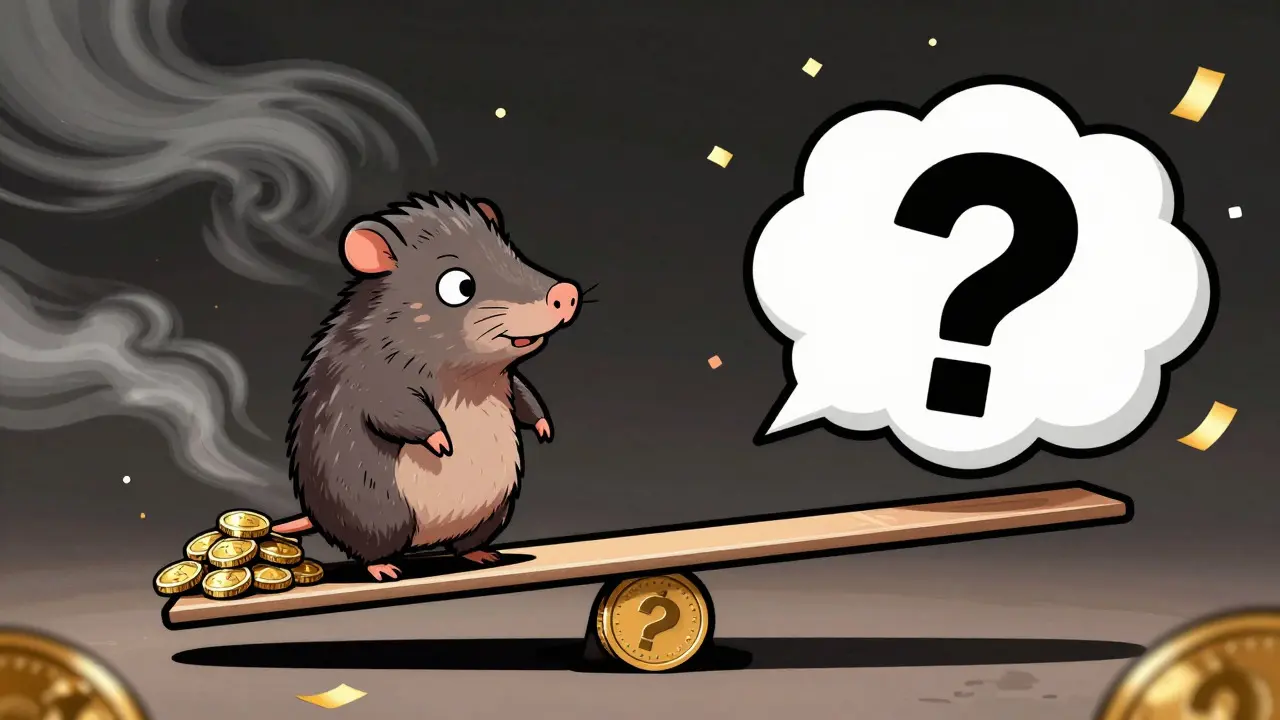
Risks and Market Position
Let's be honest: WTF Opossum is a high-risk asset. It sits in the "long tail" of the crypto market, far removed from giants like Dogecoin or Shiba Inu. Its market cap fluctuates between five-figure and low seven-figure USD values, representing less than 0.01% of the total meme coin market.
The primary risks include:
- Liquidity Risk: With most trading happening on one pool, selling large amounts can crash the price instantly.
- Regulatory Uncertainty: As an unregistered security-like asset, it operates in a gray area with no formal oversight.
- Dependence on Hype: The value is heavily tied to community engagement on Telegram and Twitter. If interest wanes, the price likely follows.
There are no formal analyst reports from major firms like Messari or Delphi Digital covering WTFO. This lack of institutional coverage reinforces its status as a speculative retail play. You are betting on the community's ability to keep the "Lord Possum" narrative alive and the utility tools relevant.
Future Outlook
The future of WTFO depends on its ability to evolve beyond a simple meme. The success of the PossumLabs launchpad and the adoption of its voting bot will determine if it gains sustainable traction. If more developers use their tools to launch tokens, demand for WTFO could grow organically.
However, without listing on major centralized exchanges, accessibility remains a barrier for mainstream investors. For now, it remains a niche experiment in combining meme culture with DeFi utility. Keep an eye on their official announcements for any updates regarding partnerships or new features, but always approach with caution and only invest what you can afford to lose.
Is WTF Opossum (WTFO) a scam?
There is no definitive evidence labeling WTFO as a scam, but it carries high risk. It is a legitimate SPL token on Solana with active development and utility tools. However, like all micro-cap meme coins, it lacks regulatory protection and has extreme volatility. Always verify the contract address and never invest more than you can afford to lose.
Where can I buy WTFO tokens?
WTFO is primarily traded on Raydium, a decentralized exchange on the Solana blockchain. It is not currently listed on major centralized exchanges like Binance or Coinbase for direct trading. You will need a Solana-compatible wallet like Phantom to access Raydium and swap SOL for WTFO.
What is the maximum supply of WTFO?
The maximum supply of WTF Opossum is fixed at 1,000,000,000 (1 billion) tokens. Approximately 84% to 88% of these tokens are currently in circulation, meaning very few new tokens will be issued in the future.
Why does the price of WTFO vary so much between websites?
Price discrepancies occur because WTFO has low liquidity and trades mostly on one decentralized pool. Different data aggregators pull information from different sources or update at different times. Small trades can cause significant price swings, leading to inconsistent reporting across platforms like CoinGecko, CoinMarketCap, and Holder.io.
What utility does WTFO provide besides being a meme?
WTFO serves as the aggregator token for PossumLabs.wtf, offering a vote-for-exposure Telegram bot, a contract scanner, and a market details checker. These tools help traders assess token safety and help new projects gain visibility through community voting.


Dominic Greco
They are watching us through the blockchain 🧐 The opossum plays dead so we can play dumb while they drain our wallets. It is all a psyop designed to distract from the real agenda. Wake up sheeple! 👁️