
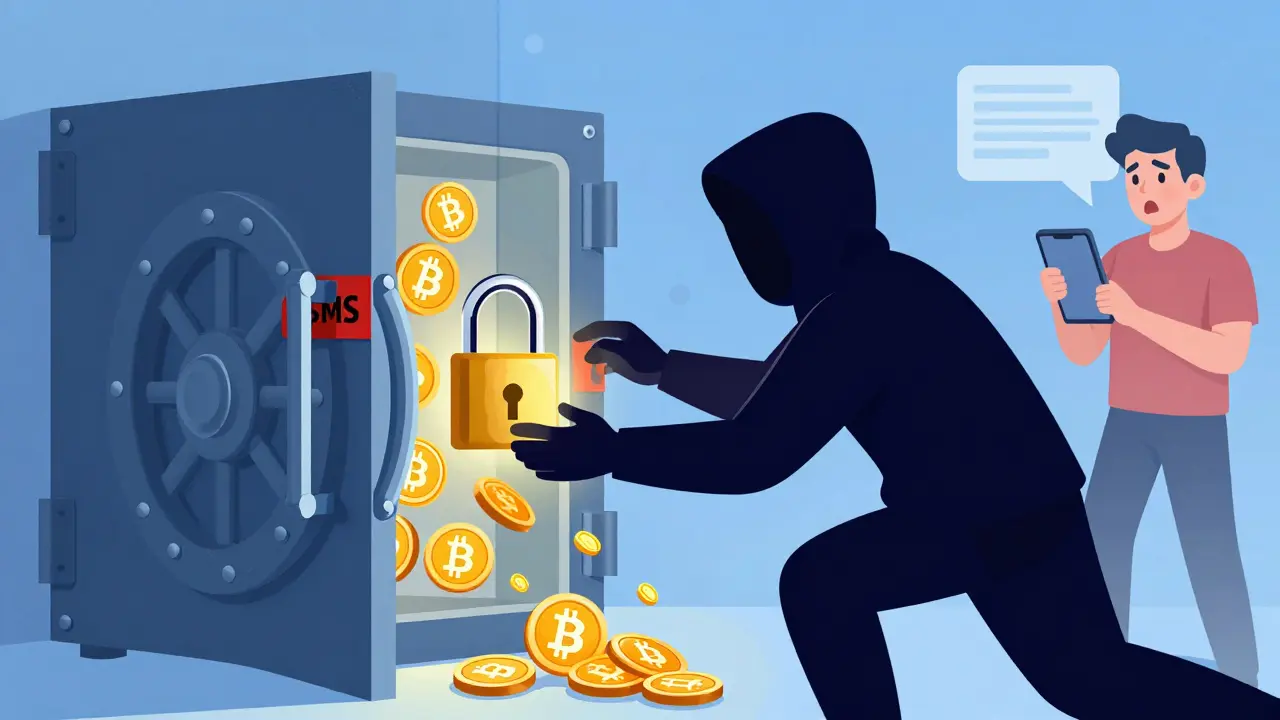
You don't need a hacker to steal your crypto. You just need to lose your phone or fall for a simple phishing link. In the world of digital assets, your password is basically a suggestion. The real lock on your vault is Two-Factor Authentication (2FA). But not all 2FA methods are created equal. Using SMS verification for your Bitcoin wallet in 2026 is like locking your front door with a piece of tape-it gives you a false sense of safety while leaving you wide open to SIM-swapping attacks that cost users $127 million in Q3 2025 alone.
Choosing the right authentication tool isn't just about convenience; it's about matching the security level to your asset size and technical comfort. Whether you're holding a few hundred dollars in Ethereum or managing institutional-grade custody, the app or hardware key you pick determines whether you keep your keys or lose them forever. Here is the breakdown of the best 2FA solutions available right now, ranked by security, reliability, and ease of use.
Why Your Current 2FA Method Might Be Failing You
Before picking a new tool, you have to understand why the old ones are dangerous. For years, SMS codes were the standard. They felt secure because they required something you had (your phone) and something you knew (your PIN). But telecom networks are surprisingly fragile. Attackers can social-engineer customer service reps to port your number to their own device-a process called SIM swapping. Once they have your number, they intercept every login code sent via text.
In 2025, MIT’s Cryptocurrency Security Study confirmed what experts already suspected: proper 2FA reduces account compromise risks by 99.9%. However, SMS-based 2FA ranks last among security experts, scoring only 5.1/10. Ninety-two percent of security professionals surveyed by FinanceFeeds in late 2025 deem SMS unsuitable for crypto. If you are still using text messages for Binance, Coinbase, or your Ledger recovery, you are taking an unnecessary gamble. The shift is toward Time-Based One-Time Passwords (TOTP) generated locally on your device or hardware keys that never leave your physical possession.
The Gold Standard: Hardware Security Keys
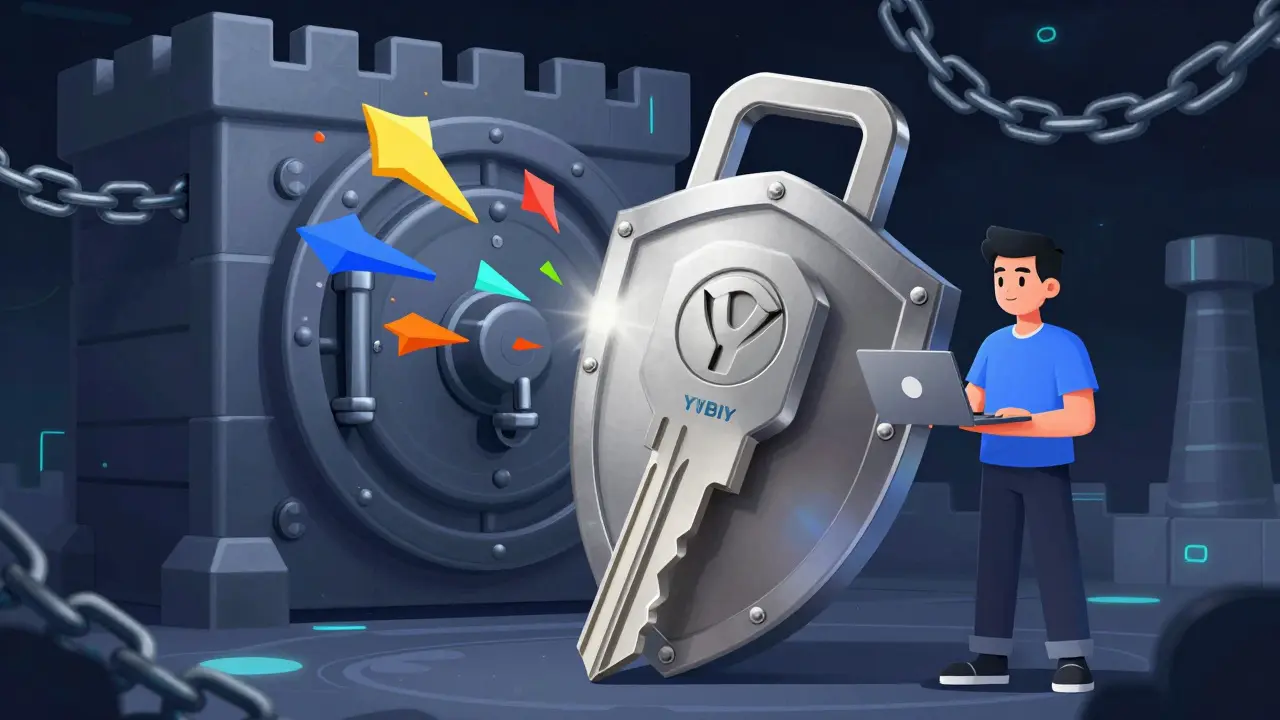
If you hold significant value-let’s say over $50,000-or you manage accounts for others, software apps aren't enough. You need hardware. YubiKey is a hardware security token manufactured by Yubico that provides physical protection against remote attacks. Specifically, the YubiKey 6 series, released in September 2025, dominates this space.
Here is why hardware wins: it uses FIDO2/WebAuthn protocols. This means the authentication happens directly between your browser/wallet and the key. No code is ever typed, no QR code scanned. You just plug it in or tap it via NFC. Because the private keys never leave the device, phishing is virtually impossible. A fake website cannot trick a YubiKey into signing a transaction because the domain name won't match the certificate stored on the key.
| Solution | Type | Security Score | Backup Options | Best For |
|---|---|---|---|---|
| Sentinel Authenticator | Mobile App | 9.7/10 | Decentralized Blockchain Backup | Privacy-focused advanced users |
| Authy | Mobile/Desktop App | 9.2/10 | Encrypted Cloud Sync | Retail investors with multiple devices |
| YubiKey 6 | Hardware Key | 9.0/10 | Physical Device (Buy Spare) | High-net-worth individuals & Institutions |
| Google Authenticator | Mobile App | 8.5/10 | None (Single Device) | Beginners with low-value accounts |
| SMS Verification | Carrier Network | 5.1/10 | N/A | Not recommended for crypto |
Yubico reported that their keys prevented $2.3 billion in potential crypto thefts in 2025. Dr. Elena Rodriguez, Chief Security Officer at Chainalysis, noted that hardware keys reduce compromise risk by 99.98% compared to SMS. The downside? Setup takes 5-7 minutes, and if you lose the key, you are locked out unless you have a spare. It’s also a one-time purchase, usually around $50-$60, which adds friction compared to free apps.
Best Mobile App for Most Users: Authy
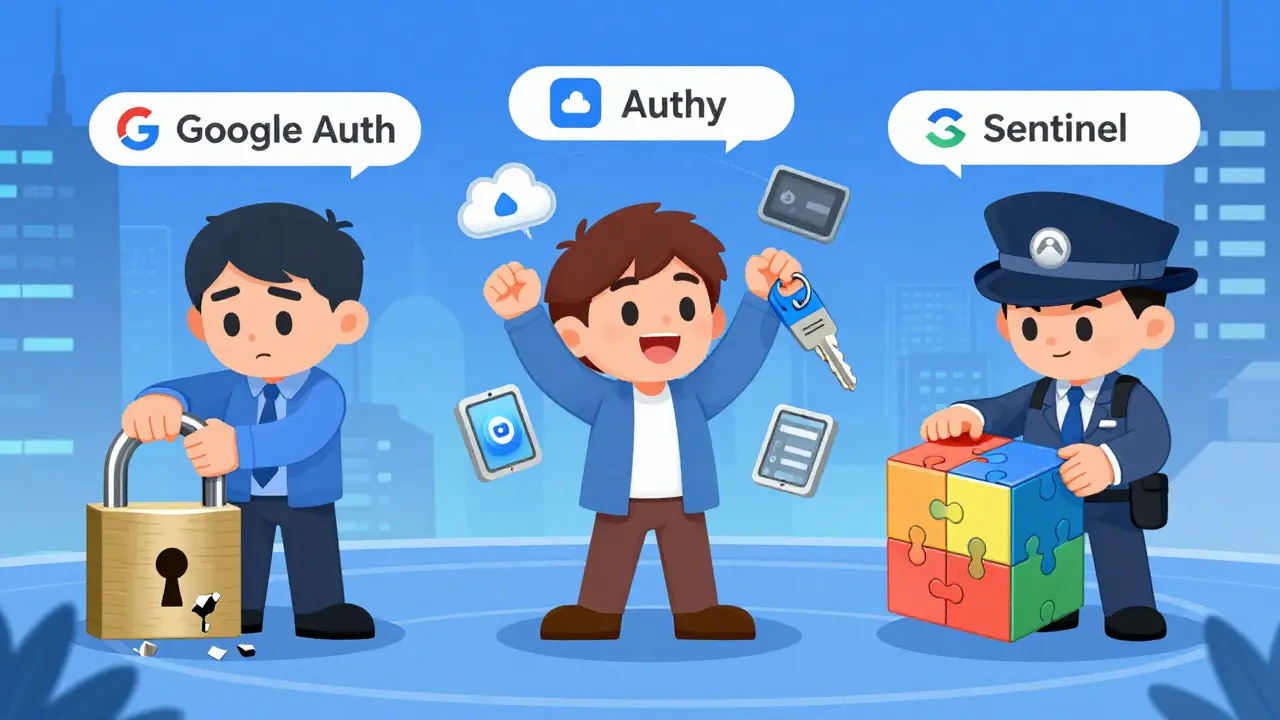
For the average retail investor who moves funds between exchanges and wallets regularly, Authy is a multi-device 2FA application developed by Twilio that offers encrypted cloud backups and seamless synchronization. It solves the biggest pain point of traditional TOTP apps: device loss.
With Google Authenticator, if your phone dies, your codes die with it. With Authy, your secrets are encrypted end-to-end and synced across unlimited devices. If you switch from Android to iOS, or get a new laptop, your codes are there instantly. This feature is critical because Michael Nguyen, Lead Security Researcher at CertiK, found that Authy prevents 87% of account recovery failures seen with non-synced apps.
Authy scored 4.7/5 for user experience in the 2025 Wallet Security Survey. It works flawlessly with major platforms like Coinbase and Binance. The setup takes about 2-3 minutes. Just remember: since it relies on cloud sync, you must set a strong passphrase for your Authy account itself. If someone cracks that passphrase, they can unlock your backups. But for 99% of users, the convenience of not losing access to their crypto outweighs this theoretical risk, provided you use a unique, long password for the Authy master account.
The Privacy Powerhouse: Sentinel Authenticator
If you are tech-savvy and paranoid about centralized servers, Sentinel Authenticator is a zero-knowledge proof based authenticator app featuring quantum-resistant algorithms and decentralized backup systems. Launched in 2022 and updated to version 3.4 in January 2026, it ranks #1 overall in security architecture.
Sentinel doesn’t store your keys on a company server. Instead, it uses decentralized backup systems across multiple blockchain networks. It also implements quantum-resistant algorithms, preparing you for the future where current encryption standards might break. This makes it the favorite among privacy advocates and those worried about long-term data sovereignty.
The trade-off is complexity. Setup takes 8-12 minutes, and the interface requires understanding concepts like zero-knowledge proofs. According to internal metrics, 63% of new users needed 2-3 attempts to set it up correctly. However, once configured, it offers the highest level of privacy and resilience against single points of failure. If you believe the internet will be more hostile in ten years, Sentinel is your insurance policy.
Why Google Authenticator Is Risky for Crypto
Google Authenticator is a widely used TOTP authenticator app known for its simplicity but lacking backup capabilities. It has been around since 2010 and is incredibly easy to use. Scan a QR code, get a code, done. It’s lightweight and works offline.
But here is the catch: it has no backup. No cloud sync. No export function that is easily accessible. Exodus Wallet’s 2025 Security Incident Report documented that 78% of crypto users who lost their primary phone also lost access to their accounts permanently. That is not a glitch; that is a design flaw for high-stakes assets. Google recently added some limited backup features, but they are tied to your Google Account, introducing a central point of failure. If your Google account is compromised, your 2FA seeds could theoretically be exposed. For small, throwaway accounts, it’s fine. For your main exchange account, it’s a liability.
Implementation Tips: Don't Lock Yourself Out
Even the best 2FA app is useless if you configure it wrong. Follow these steps to ensure you stay secure without losing access:
- Enable Withdrawal Whitelists First: Before adding 2FA, set up withdrawal address whitelisting on your exchange. This ensures that even if someone bypasses your 2FA, they can’t move funds to a new wallet immediately.
- Use Separate Devices: Do not use the same phone for both your crypto wallet notifications and your 2FA app if possible. Better yet, use a dedicated burner phone or a hardware key for 2FA.
- Backup Your Backups: If you use Authy, write down your recovery phrase. If you use Sentinel, verify your decentralized backup. If you use YubiKey, buy two and keep one in a safe deposit box.
- Avoid Browser Autofill: Never let your browser save your 2FA codes or passwords. Type them manually every time. This prevents malware from injecting stolen credentials into login forms.
- Test Recovery: Once a year, test your backup method. Delete the app from a secondary device and try to restore it. If you wait until you’re locked out to test, it’s too late.
Future-Proofing Your Security
The landscape is shifting fast. By 2027, regulatory standards like the EU’s MiCA framework will likely mandate strong customer authentication, pushing SMS entirely out of the crypto industry. Meanwhile, Gartner forecasts that by 2028, 45% of crypto security solutions will incorporate blockchain-based identity methods. Tools like Sentinel are already ahead of this curve.
Yubico is planning the YubiKey 7 for late 2026, featuring Bluetooth 5.4 and enhanced biometrics. Twilio is partnering with 12 major exchanges to streamline recovery protocols. The message is clear: static passwords and SMS are dead. Dynamic, hardware-backed, or decentralized authentication is the only way forward. Choose a tool that matches your risk profile, back it up properly, and never underestimate the value of keeping your keys truly yours.
Is SMS 2FA safe for cryptocurrency in 2026?
No. SMS 2FA is highly vulnerable to SIM-swapping attacks, where hackers convince your carrier to transfer your phone number to their device. In Q3 2025 alone, SIM-swapping led to $127 million in crypto losses. Experts recommend using TOTP apps like Authy or hardware keys like YubiKey instead.
What happens if I lose my phone with Google Authenticator?
If you do not have a backup, you may lose access to your accounts permanently. Google Authenticator does not offer built-in cloud synchronization. This is why 78% of users who lost their phones also lost access to their crypto accounts in 2025. Switching to an app with backup features like Authy or using a hardware key mitigates this risk.
Which 2FA method is best for large crypto holdings?
Hardware security keys like the YubiKey 6 are considered the gold standard for high-value accounts. They use FIDO2/WebAuthn protocols, which prevent phishing and man-in-the-middle attacks. Unlike mobile apps, the private keys never leave the physical device, offering a 99.98% reduction in compromise risk compared to SMS.
Is Authy secure for crypto wallets?
Yes, Authy is highly secure and convenient for most users. It uses end-to-end encryption for its cloud backups, meaning Twilio cannot see your 2FA secrets. It allows seamless switching between devices, preventing account lockout. However, you must protect your Authy master account with a strong, unique password and enable 2FA on the Authy account itself.
What is Sentinel Authenticator and who should use it?
Sentinel Authenticator is a privacy-focused 2FA app that uses zero-knowledge proofs and decentralized blockchain backups. It is ideal for advanced users who want to avoid centralized cloud servers and prepare for future quantum computing threats. It has a steeper learning curve but offers superior privacy and resilience against single points of failure.


ravi mahla
lol finally someone said it about SMS. my uncle lost his entire portfolio because he trusted a text message. typical.