

Where you register your blockchain company matters just as much as what you build. In 2026, the gap between jurisdictions that embrace digital assets and those that strangle them with red tape is wider than ever. One country might offer zero taxes and clear licensing paths, while another could freeze your bank accounts or retroactively tax your profits. Getting this wrong doesn't just mean higher costs; it can mean shutting down entirely.
If you are launching a blockchain startup, an exchange, or a DeFi protocol, picking the right legal home is your first strategic move. It dictates your tax bill, your ability to open corporate bank accounts, and whether you can hire talent without visa nightmares. This guide cuts through the hype to show you which jurisdictions actually deliver on their promises and how to evaluate them based on your specific business model.
Key Takeaways
- The UAE leads in regulatory clarity: With zero income tax and dedicated free zones like ADGM and DIFC, it offers the fastest path to legitimacy for international firms.
- Tax benefits vary by holding period: Germany and Portugal offer tax-free status only if you hold assets long-term (12+ months), making them unsuitable for active trading businesses.
- El Salvador is unique but risky: While it has zero capital gains tax and Bitcoin as legal tender, its banking infrastructure remains fragile for traditional business operations.
- Licensing takes time: Don't expect instant approval. Singapore and Bermuda require 3-6 months for full regulatory compliance, while the UAE can be done in weeks.
- Beware of 'tax haven' traps: Zero-tax countries often have strict substance requirements. You need real offices and local staff to keep your license valid.
Why Jurisdiction Choice Defines Your Survival
Many founders think they can launch globally from anywhere. The reality is harsher. Banks use automated systems to screen transactions. If your corporate account is registered in a jurisdiction flagged as high-risk or ambiguous, your payments will bounce. We've seen startups lose millions because their payment processor pulled the plug after noticing their incorporation was in a country with unclear crypto laws.
A Crypto-Friendly Jurisdiction is a country or territory that provides clear legal frameworks, favorable tax policies, and supportive infrastructure for digital asset businesses. It’s not just about low taxes. It’s about predictability. You need to know exactly what rules apply today, tomorrow, and next year. Regulatory certainty allows investors to feel safe putting money into your venture. Without it, you are operating in the shadows, which limits your growth potential.
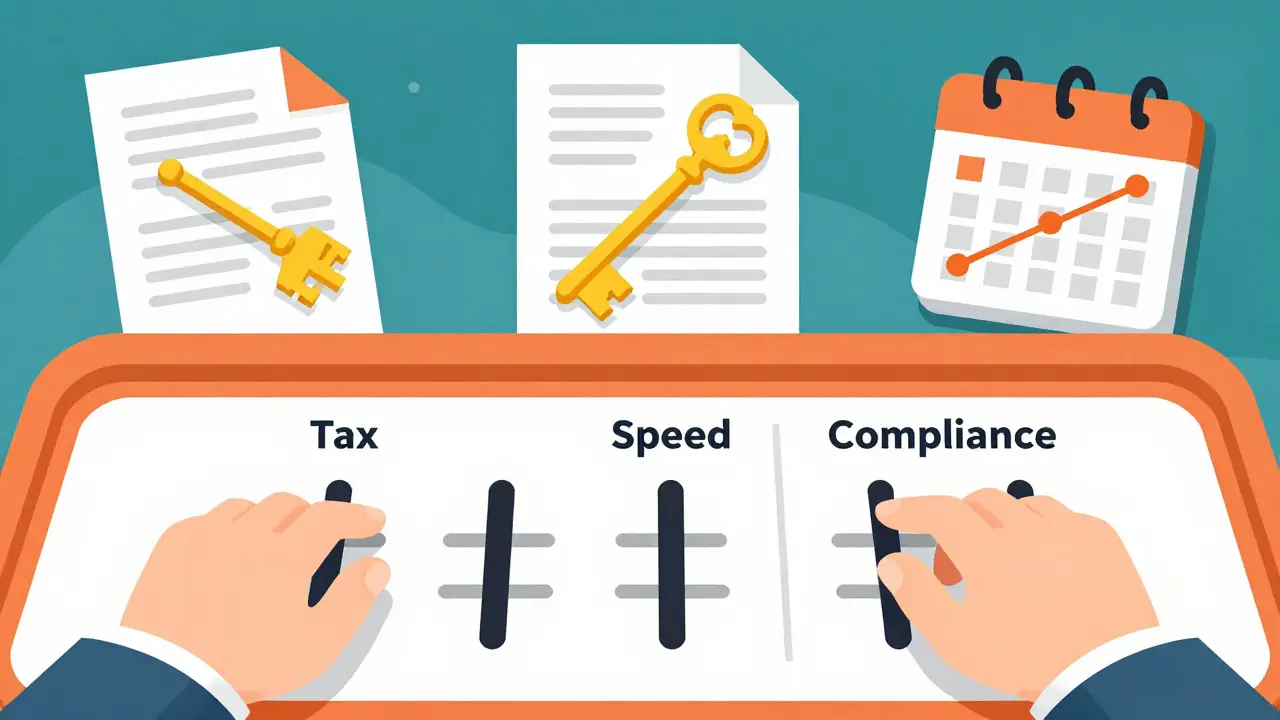
When evaluating options, look at three pillars: Tax efficiency, Regulatory Clarity, and Banking Access. A place with zero tax but no banks is useless. A place with great banks but unpredictable regulators is dangerous. You need a balance.
Top Tier: The Global Leaders in 2026
Not all friendly jurisdictions are created equal. Some are mature financial hubs adapting to crypto, while others are building new ecosystems from scratch. Here is how the top contenders stack up.
The United Arab Emirates: The New Standard
The UAE has aggressively positioned itself as the global hub for crypto business. Cities like Dubai and Abu Dhabi have created specialized free zones-such as the Abu Dhabi Global Market (ADGM) and the Dubai International Financial Centre (DIFC)-that operate under common law and offer distinct advantages.
The biggest draw? Zero personal income tax and zero corporate tax on many crypto activities, provided you meet certain thresholds. More importantly, the Virtual Assets Regulatory Authority (VARA) in Dubai provides explicit guidelines. You know exactly what license you need for an exchange, a wallet provider, or a staking service. Setup can take as little as two to four weeks. For international teams, this speed is invaluable.
Switzerland: The Mature Ecosystem
Switzerland isn't flashy, but it works. Known for its political stability and strong banking sector, Switzerland has been welcoming crypto since the early days. The "Crypto Valley" in Zug is famous for hosting Ethereum Foundation events and major exchanges.
The advantage here is trust. Swiss banks are more likely to work with crypto companies if you follow the rules. The regulatory environment is mature, meaning fewer surprises. However, it comes at a cost. Operational expenses in Zurich or Zug are high. Licensing through FINMA (the Swiss Financial Market Supervisory Authority) is rigorous and can take six to eight months. It’s best for established firms with deep pockets who value stability over speed.
Singapore: The Asian Gateway
Singapore remains the premier choice for accessing Asian markets. It has a sophisticated financial system and English-speaking courts. The Monetary Authority of Singapore (MAS) requires licenses for Virtual Asset Service Providers (VASPs), ensuring a level playing field.
While taxes are reasonable, the real benefit is network effects. Being in Singapore puts you close to investors, partners, and talent across Asia. The downside? Compliance is strict. Recent years have seen tighter rules on advertising and customer protection. Expect a three-to-six-month timeline for full approval. It’s not for quick launches; it’s for serious, long-term players.

Specialized Options: Niche Advantages
Sometimes, the generalist hubs aren't the best fit. Depending on your business model, other jurisdictions offer specific perks.
Bermuda: Built for Digital Assets
Bermuda didn't just adapt to crypto; it built laws for it. The Digital Asset Business Act (DABA) is one of the most comprehensive frameworks in the world. It covers everything from issuance to custody. The Bermuda Monetary Authority (BMA) actively collaborates with fintech firms.
This makes Bermuda ideal for token issuances and institutional-grade services. It has a favorable tax regime, though not always zero tax. The process takes three to four months. If you are launching a complex security token offering (STO) or a regulated fund, Bermuda’s legal precision reduces risk significantly.
Estonia: The Remote Operator’s Dream
Estonia pioneered e-residency, allowing non-citizens to establish and manage an EU-based company online. For solo founders or small teams, this is incredibly attractive. You can get a crypto exchange license within two to three months.
However, be aware of the "substance" requirement. To keep your license, you often need a local board member or significant operational presence. Also, Estonia faces pressure from the European Union to harmonize crypto rules under MiCA (Markets in Crypto-Assets regulation). While still friendly, the landscape is shifting toward stricter EU-wide standards.
El Salvador: The Wildcard
El Salvador adopted Bitcoin as legal tender, making it unique. Foreign investors enjoy zero capital gains tax on Bitcoin profits. It’s a bold statement of support for crypto.
But practical challenges remain. Banking infrastructure is less developed than in Europe or Asia. Sending fiat currency out of the country can be difficult. It’s excellent for Bitcoin-specific projects or mining operations, but risky for broader blockchain businesses needing robust fiat rails. Use it if your product is purely Bitcoin-centric and you have alternative banking solutions.
Tax Implications: Beyond Zero Percent
Tax is often the first thing people look at, but it’s misleading to focus only on the rate. Structure matters.
| Jurisdiction | Income Tax | Capital Gains Tax | Key Condition |
|---|---|---|---|
| UAE | 0% (in Free Zones) | 0% | Must maintain economic substance |
| Germany | Standard Rate | 0% (if held >12 months) | Long-term holding only |
| Portugal | Varies (NHR Program) | 0% (Long-term/NHR) | Requires residency status |
| El Salvador | Varies | 0% on Bitcoin | Bitcoin specific |
| Cayman Islands | 0% | 0% | Ideal for investment funds |
Notice the pattern? Most "zero tax" claims come with strings attached. In Germany, you pay nothing on gains only if you hold the asset for more than a year. If you run a trading bot or a high-frequency exchange, you are taxable every day. In Portugal, the Non-Habitual Resident (NHR) program offers benefits, but you must live there. For a remote-first blockchain team, physical presence adds complexity.
The Cayman Islands remain king for investment funds. No income, capital gains, or corporate tax. But again, you need a local office and staff. Substance rules are enforced globally to prevent shell companies. Plan for these operational costs when calculating your "real" tax savings.
Practical Steps to Establish Your Presence
Once you pick a jurisdiction, the execution phase begins. Here is what to expect.
- Engage Local Counsel Early: Don’t rely on generic advice. Crypto laws change monthly. Hire lawyers who specialize in digital assets in your target country. They will tell you if your token is a security, utility, or payment instrument.
- Prepare for KYC/AML Compliance: Every friendly jurisdiction demands robust Know Your Customer (KYC) and Anti-Money Laundering (AML) procedures. Build these into your product from day one. Regulators will audit them.
- Secure Banking Partnerships: Before incorporating, talk to banks. Ask which ones currently onboard crypto clients. Some jurisdictions have "white-listed" banks that accept crypto revenue. Others do not.
- Plan for Substance Requirements: Rent an office. Hire local staff. Hold board meetings locally. If you don’t prove economic activity in the country, they can revoke your license and impose penalties.
- Apply for Licenses: Submit your application with detailed business plans, technical architecture, and compliance manuals. Be transparent. Hiding features leads to rejection.
Future-Proofing Against Regulatory Shifts
The landscape won’t stay static. The EU’s MiCA regulation is setting a global standard. Countries outside the EU may align with it to facilitate cross-border trade. In 2026, we see increased cooperation between regulators via the Financial Action Task Force (FATF).
This means "regulatory arbitrage"-jumping from one loose jurisdiction to another-is dying. The future belongs to compliant businesses. Choose a jurisdiction that is pro-innovation but also respected globally. Avoid places that are isolated or sanctioned. Your goal is interoperability with the global financial system, not isolation from it.
Keep an eye on emerging markets like Panama and Belarus, which offer tax breaks but lack the institutional depth of the UAE or Switzerland. They are good for short-term plays or specific niches, but risky for core operations.
Conclusion: Match the Jurisdiction to Your Model
There is no single "best" country. If you are a DeFi protocol seeking anonymity and minimal oversight, you might look elsewhere. But if you want to partner with banks, raise VC funding, and scale globally, the UAE, Switzerland, or Singapore are your safest bets. Evaluate your needs honestly. Do you need speed? Go UAE. Do you need prestige and banking access? Go Switzerland. Do you need Asian market entry? Go Singapore. Get the foundation right, and your technology can flourish.
Is the UAE really tax-free for crypto businesses?
Yes, if you operate within designated free zones like ADGM or DIFC, you generally pay zero corporate and personal income tax on crypto activities. However, you must maintain "economic substance," meaning you need a physical office, local employees, and actual management decisions made in the UAE. Shell companies are heavily scrutinized.
How long does it take to get a crypto license in Singapore?
The process typically takes 3 to 6 months. The Monetary Authority of Singapore (MAS) conducts thorough reviews of your compliance framework, technical infrastructure, and management team. Start preparing your documentation early, as delays often occur due to incomplete submissions.
Can I run a crypto business from El Salvador remotely?
Technically yes, but practically it is challenging. While El Salvador offers zero capital gains tax on Bitcoin, its banking infrastructure is limited for international fiat transactions. You may struggle to receive USD payments or pay overseas vendors easily. It is best suited for Bitcoin-only operations with existing offshore banking relationships.
What is the Digital Asset Business Act (DABA) in Bermuda?
DABA is a comprehensive law enacted by Bermuda to regulate digital asset businesses. It provides clear definitions for tokens, custodians, and exchanges, and outlines licensing requirements through the Bermuda Monetary Authority (BMA). It is designed to attract institutional-grade crypto firms by offering legal certainty.
Does Germany's 12-month tax rule apply to business income?
No. The 12-month holding period exemption applies to private individuals' capital gains. If you are running a professional trading business or a crypto exchange, your profits are subject to standard corporate income tax regardless of holding period. Consult a German tax advisor to structure your entity correctly.
Which jurisdiction is best for a decentralized autonomous organization (DAO)?
This is complex as DAOs lack traditional legal personhood. Wyoming (USA) and BVI (British Virgin Islands) have introduced DAO-specific statutes. However, for global recognition, many DAOs incorporate a traditional LLC in the UAE or Switzerland to act as a legal wrapper, providing liability protection and banking access.