
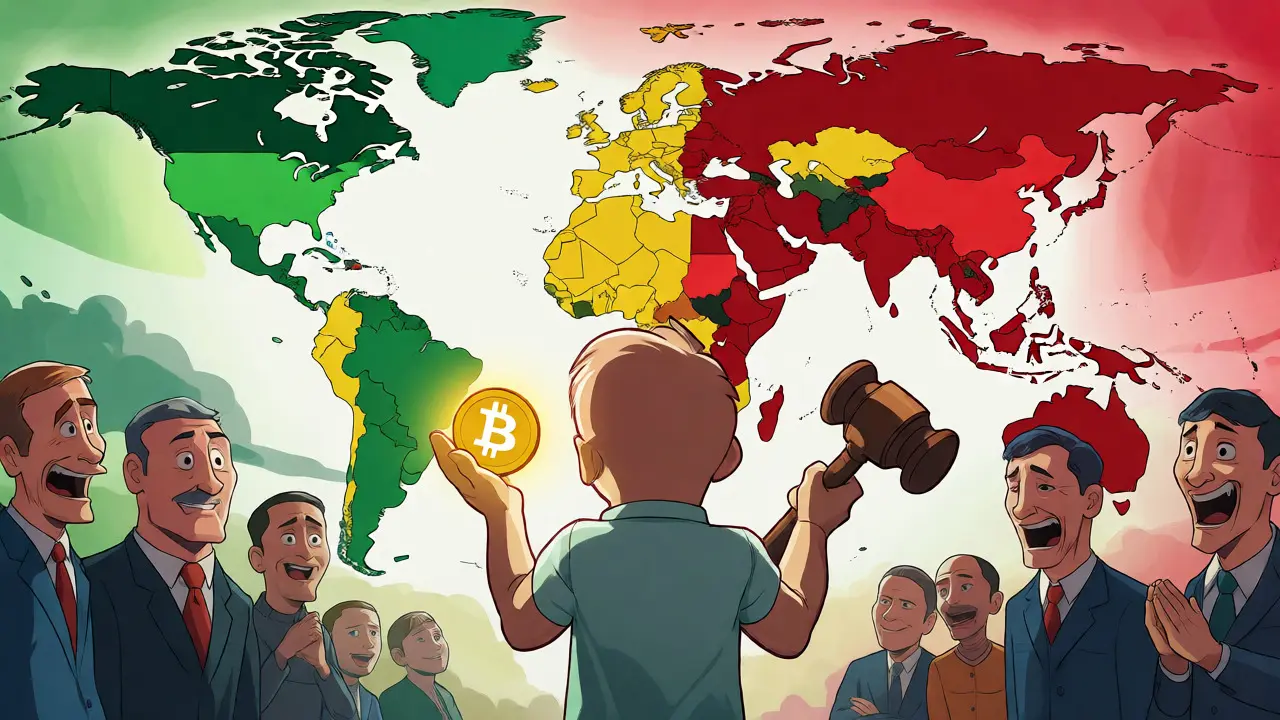
You might think buying Bitcoin in a banned country is like sneaking a candy bar into a movie theater-a minor rule break with no real consequence. But the legal reality is far starker. In some jurisdictions, holding digital assets isn't just frowned upon; it can land you in prison or result in fines that dwarf your initial investment. The gap between what governments write on paper and what actually happens to users is massive, yet the risk remains very real.
As of late 2025, the landscape is fragmented. According to the Atlantic Council's Cryptocurrency Regulation Tracker, out of 75 countries studied, only 45 fully legalize crypto, while 10 impose general bans and 20 have partial restrictions. This article breaks down exactly where those lines are drawn, who gets punished, and how severe the criminal penalties for crypto ban violations really are worldwide.
The Spectrum of Prohibition: From Fines to Prison
Not all bans are created equal. When we talk about "illegal" crypto, we need to distinguish between infrastructure bans (banning exchanges) and user bans (banning individuals). Most strict regimes target the former, but the latter carries heavier personal risks.
In China, for instance, the government implemented comprehensive bans on exchanges, trading, and mining starting in 2021. While individual holders aren't typically thrown in jail for owning Bitcoin, the enforcement machinery targets business operations aggressively. If you're running an unlicensed exchange or facilitating trades, you face serious legal hurdles. Conversely, in countries like Algeria, the law is broader. Article 117 of their official journal explicitly prohibits the purchase, sale, use, and holding of virtual currency. Breach of this provision is punishable under existing laws, though specific penalty amounts often remain vague, leaving room for discretionary enforcement by local authorities.
Morocco presents another layer of complexity. The Office des Changes declared transactions via virtual currencies an infringement of exchange regulations. This doesn't necessarily mean immediate imprisonment for every user, but it exposes traders to fines provided by existing financial laws. Bank Al-Maghrib Governor Abdellatif Jouahri clarified that Bitcoin is not recognized as currency but as a risky financial asset. This classification shifts the burden: you aren't breaking monetary law by using it as money, but you might be violating foreign exchange controls if you move value across borders without declaration.
Who Actually Gets Caught? Enforcement vs. Reality
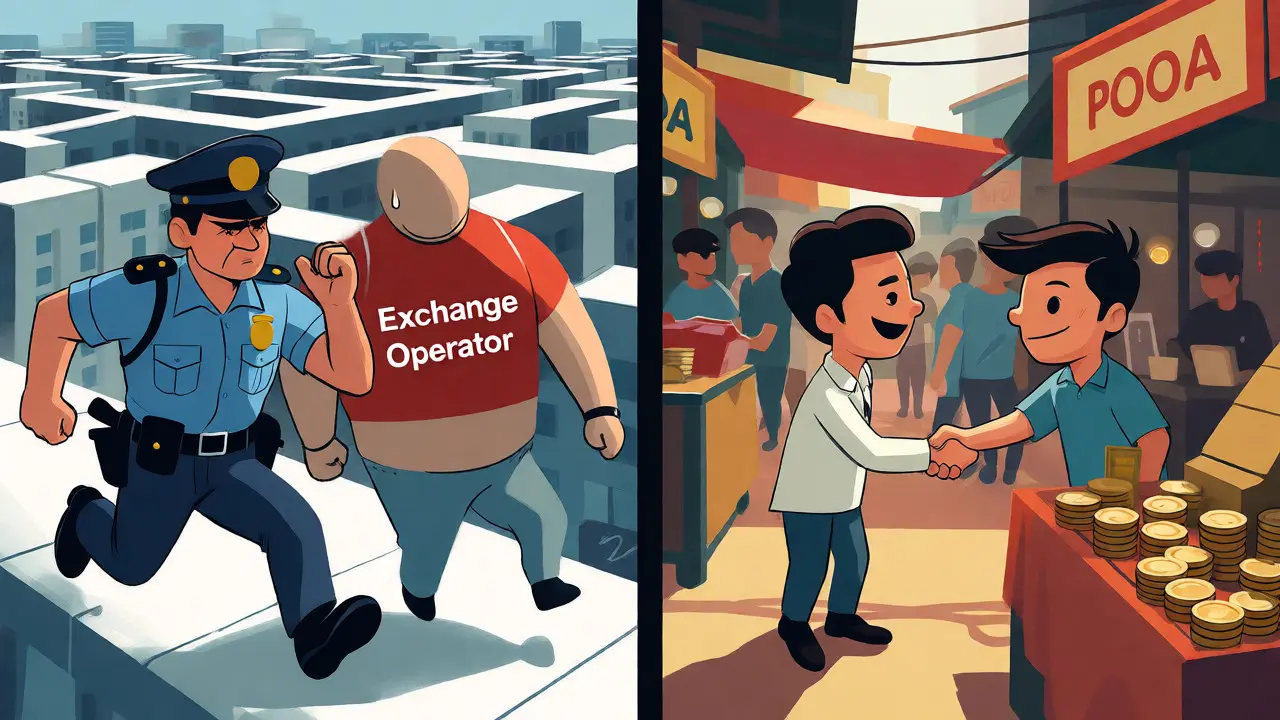
Here is the uncomfortable truth: most people in banned countries don't get arrested for buying Bitcoin. A CoinDesk survey from May 2025 found that only 12% of respondents in jurisdictions with bans reported facing personal legal consequences. Why? Because enforcing a ban on decentralized technology is incredibly difficult.
Users in Morocco, Egypt, and Algeria frequently report using peer-to-peer platforms like LocalBitcoins to bypass restrictions. One trader, u/MaghrebTrader, noted successful usage for 18 months without incident. However, luck isn't a strategy. Enforcement tends to focus on high-volume actors, suspicious flows, or those drawing attention through public displays of wealth or social media.
| Jurisdiction | Ban Type | Primary Target | Risk Level for Individuals |
|---|---|---|---|
| China | Total Infrastructure Ban | Exchanges & Miners | Low (Holders), High (Operators) |
| Algeria | Total Usage Ban | All Transactions | Moderate (Vague Penalties) |
| Morocco | Exchange Control Violation | Cross-Border Transfers | Moderate (Fines) |
| Egypt | Religious & Financial Ban | Dealing in Crypto | Low (Enforcement Gaps) |
| Russia | Sanctions-Linked Restrictions | Illicit Flows | High (If Linked to Sanctions) |
The disparity between official prohibitions and practical enforcement is evident. In many cases, the threat of punishment serves more as a deterrent for institutional investors than a active police tool for retail users. Yet, when enforcement does strike, it hits hard.
Sanctions and Money Laundering: The Real Criminal Triggers
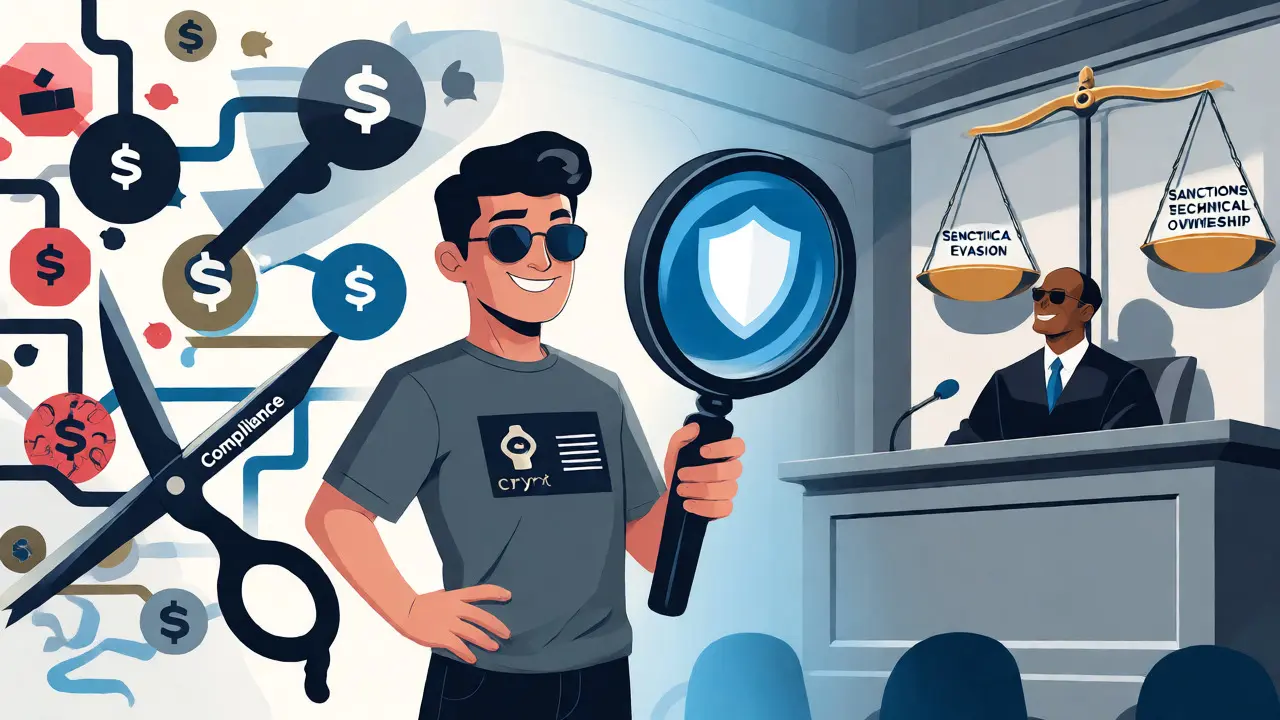
For most Western nations, the primary driver behind crypto regulation isn't moral panic-it's anti-money laundering (AML) and counter-terrorism financing (CTF). The U.S. Department of the Treasury’s Office of Foreign Assets Control (OFAC) has become increasingly aggressive here. They don't ban crypto generally; they sanction specific addresses and entities involved in illicit activities.
The TRM Labs 2025 Crypto Crime Report highlights how sanctions designations function as the modern enforcement mechanism. In 2024 alone, OFAC issued 13 sanctions designations including 86 cryptocurrency addresses targeting Russia-related entities, Hamas, and Hezbollah. Violating these sanctions is a federal crime in the US, carrying heavy fines and potential imprisonment. It’s not about owning Bitcoin; it’s about who you transact with.
Consider the case of Elena Chirkinyan and Khadzi-Murat Dalgatovich Magomedov. They were designated following the UK National Crime Agency’s 'Operation Destabilise' for roles in money laundering and sanctions evasion through crypto channels. Their penalty wasn't for using Bitcoin, but for using it to obscure the origin of funds linked to sanctioned regimes. Similarly, Mustafa Ayash, founder of GazaNow, faced severe repercussions for raising funds for Hamas post-October 7 attacks. These cases show that context matters more than the asset itself.
The Shift Away from Blanket Criminalization
Governments are realizing that blanket bans are hard to enforce and often ineffective. Dr. Sarah Bloom Raskin, former Deputy Secretary of the U.S. Treasury, noted in January 2025 that criminalizing crypto usage creates significant enforcement challenges, especially when adoption rates remain high despite prohibitions. The data supports her view: there is no significant correlation between regulatory restrictiveness and actual cryptocurrency usage levels globally.
This realization has led to a pivot. The U.S. Department of Justice’s April 2025 memorandum, 'Ending Regulation by Prosecution,' re-scoped digital asset enforcement. It prioritized misappropriation of client assets, sanctions evasion, fraud, and unlicensed money transmission. Crucially, it deprioritized using criminal tools to resolve regulatory classification disputes. This means you’re less likely to go to jail for technicalities and more likely to face trouble if you’re actively evading taxes or laundering money.
South Korea offers a middle-ground model worth watching. Instead of banning crypto, they passed the Virtual Asset Users Protection Act in 2023. This law focuses on record-keeping and transparency rather than prohibition. By requiring exchanges to adhere to strict KYC (Know Your Customer) norms, they capture the economic activity without criminalizing the user. This approach reduces the black market incentive and brings crypto into the regulated fold.
Practical Implications for Travelers and Remote Workers
If you’re a digital nomad or remote worker moving between jurisdictions, understanding these nuances is critical. Holding crypto in one country and spending it in another can trigger different legal frameworks. For example, the European Union’s MiCA (Markets in Crypto-Assets) framework, implemented in 2024, establishes strict licensing for service providers but avoids criminal penalties for simple usage. This contrasts sharply with stricter Asian models.
Travelers should note that while possession might be legal in your home country, bringing large sums of crypto-backed value into a restrictive nation can raise red flags at customs. Although physical cash declarations are standard, digital asset holdings are harder to track. However, if you convert crypto to fiat locally using a non-compliant platform, you might inadvertently violate local exchange control laws.
Canada provides another interesting case study. The Canadian Securities Administrators maintain lists of prohibited platforms, including KuCoin and Poloniex. Enforcement here focuses on the platform operators rather than individual users. You can still trade, but you do so on platforms that may lack full regulatory protections. If your account is frozen due to KYC failures-a common complaint in Trustpilot reviews-you lose access to your funds, which is a civil inconvenience rather than a criminal penalty.
Future Outlook: Nuance Over Prohibition
The trend is clearly moving toward targeted enforcement. With over 90% of analyzed countries having active Central Bank Digital Currency (CBDC) projects, governments are preparing their own digital alternatives. This suggests that future bans will likely target private stablecoins that compete with sovereign currencies, rather than all cryptocurrencies broadly.
The GENIUS Act, signed into law in July 2025, exemplifies this shift. It regulates stablecoins as payment instruments, enhancing the Treasury’s ability to combat illicit activities without imposing broad criminal penalties on users. This functional regulation approach-focusing on behavior rather than asset ownership-is likely to become the global standard by 2027.
So, should you fear the crypto police? Only if you’re operating blindly. Stay compliant with local tax laws, avoid sanctioned entities, and keep records of your transactions. The era of wild-west anonymity is ending, replaced by a world where compliance is the best defense against criminal liability.
Can I go to jail for simply holding Bitcoin in a banned country?
It depends on the jurisdiction. In countries like China, individual holders rarely face criminal charges, though infrastructure providers do. In stricter regimes like Algeria, the law technically prohibits holding, but enforcement often focuses on larger transactions or commercial activity rather than small retail holdings. Always check local statutes, as vague laws allow for discretionary enforcement.
What is the difference between a ban on exchanges and a ban on users?
A ban on exchanges prevents businesses from offering trading services, forcing users to use peer-to-peer markets. A ban on users makes the act of buying, selling, or holding crypto illegal for individuals. User bans are rarer and harder to enforce, often resulting in fines rather than imprisonment unless linked to other crimes like money laundering.
How do sanctions affect crypto users?
Sanctions, such as those issued by the US OFAC, target specific wallet addresses associated with illicit activities or sanctioned entities. If you send funds to a sanctioned address, you could face legal penalties for violating sanctions laws, even if crypto itself is legal in your country. Compliance screening is essential to avoid accidental violations.
Are fines worse than prison time for crypto violations?
In most developed economies, fines are the primary penalty for regulatory breaches, while prison is reserved for fraud, money laundering, or sanctions evasion. In some emerging markets with strict capital controls, fines can be substantial relative to income, effectively acting as a severe deterrent even without incarceration.
Does using a VPN protect me from crypto ban penalties?
A VPN masks your IP address, helping you access restricted exchanges, but it does not hide your identity from regulators if you undergo KYC verification. If you withdraw funds to a local bank account, the transaction trail becomes visible to authorities. A VPN is a tool for access, not a shield against legal liability.