

Imagine trying to send a letter from New York to London, but the postal systems don't speak the same language. You'd need a translator who not only translates the words but also guarantees the package arrives intact. In the world of blockchain, cross-chain bridges are that translation layer. They allow digital assets and data to move between separate networks like Ethereum, Bitcoin, and Solana, which otherwise operate in isolated silos. Without them, your Bitcoin would stay on the Bitcoin network, unable to participate in the decentralized finance (DeFi) applications built on Ethereum.
The evolution of this technology has been dramatic. What started as simple custodial wrappers in 2019 has transformed into complex cryptographic protocols by 2026. This shift wasn't just about convenience; it was driven by necessity. As blockchains multiplied, the need for seamless interoperability became the biggest bottleneck in crypto adoption. Understanding how these bridges work-and why their security models matter-is crucial for anyone navigating the multi-chain landscape today.
Quick Summary / Key Takeaways
- Cross-chain bridges have evolved from centralized custodial models to trust-minimized architectures using zero-knowledge proofs.
- Security remains the primary challenge, with historical hacks totaling over $2 billion driving industry consolidation.
- New standards like Chainlink's CCIP prioritize message passing over simple asset transfers, enabling complex cross-chain operations.
- Users should prefer native bridge solutions or those with audited, trust-minimized designs over generic aggregators.
- The future points toward shared sequencing and data availability layers, potentially reducing reliance on traditional bridging.
The Early Days: Custodial Wrappers and Simple Swaps
In the beginning, cross-chain interaction was rudimentary. The most famous example is Wrapped Bitcoin (WBTC), introduced in October 2019. WBTC allowed users to bring Bitcoin onto the Ethereum network. How did it work? A group of trusted custodians-BitGo, Compound, and Kyber Network-held the actual Bitcoin in a cold wallet. In exchange, they minted an equivalent amount of ERC-20 tokens on Ethereum. This is known as a lock-and-mint model.
This approach solved an immediate problem: Bitcoin holders could finally access Ethereum's DeFi ecosystem. By Q2 2022, WBTC held over $1.2 billion in total value locked (TVL). However, the trade-off was significant. Users had to trust a central entity to safeguard their funds. If the custodians were hacked, went bankrupt, or acted maliciously, users' funds were at risk. This "trust me" model worked when volumes were low, but as billions flowed into DeFi, it became a glaring vulnerability.
Other early bridges followed similar patterns. Many relied on multi-signature wallets where a committee of known parties controlled the keys. While slightly more secure than a single custodian, these systems still represented a central point of failure. For users, the experience was straightforward: deposit BTC, wait for confirmation, receive wBTC. But behind the scenes, the architecture was fragile. It was essentially a bank operating within a decentralized system, contradicting the core ethos of crypto.
The Security Crisis: Hacks That Changed Everything
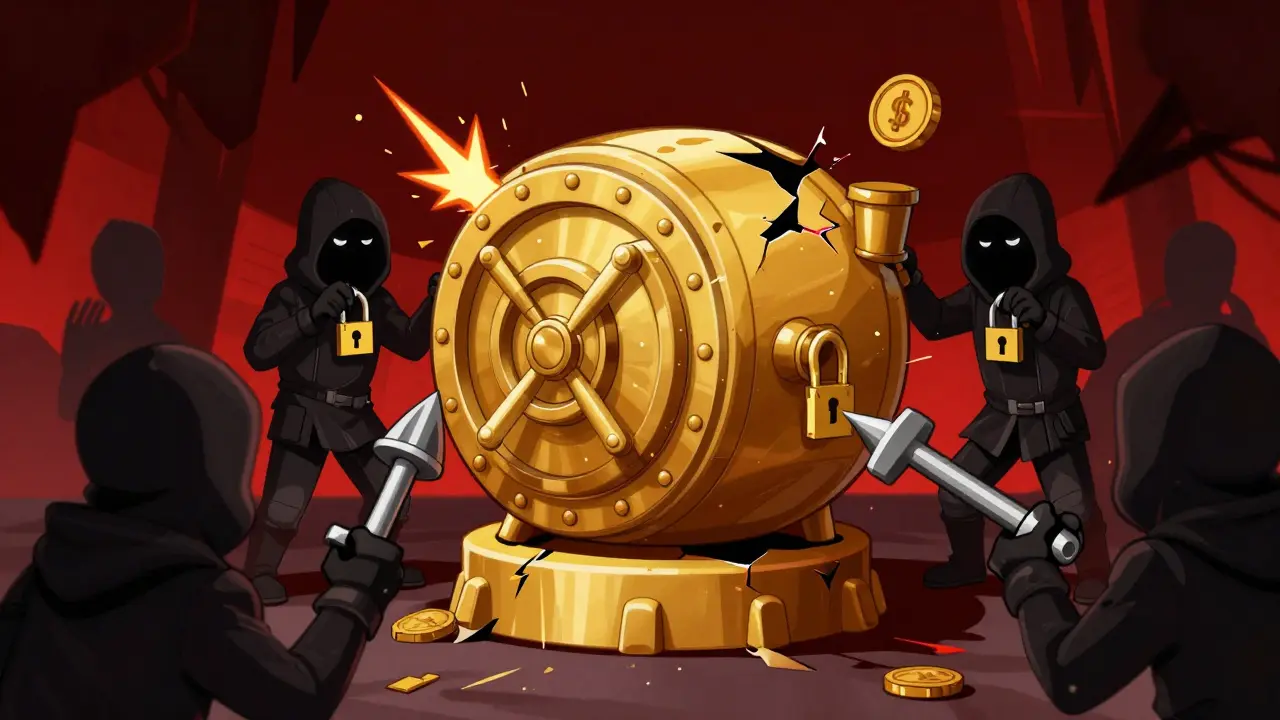
The limitations of custodial bridges became painfully clear in 2022. That year, hackers exploited various bridge vulnerabilities, stealing approximately $2.1 billion. Two incidents stand out as turning points for the industry.
First, the Ronin Bridge hack in March 2022 resulted in losses of $625 million. Ronin was a sidechain for Axie Infinity, and its bridge used a multi-signature setup with five key holders. Attackers compromised four of the five private keys, allowing them to drain funds from the bridge. This event demonstrated that even reputable teams with high-profile investors (like Andreessen Horowitz) were not immune to sophisticated attacks targeting their key management infrastructure.
Second, the Wormhole exploit in January 2022 saw $320 million stolen. Wormhole attempted to be a universal bridge connecting many chains. The vulnerability lay in its signature verification logic, which allowed attackers to forge signatures and mint unauthorized USDC tokens. These hacks weren't just bad luck; they exposed fundamental flaws in the lock-and-mint architecture. When a bridge holds concentrated liquidity, it becomes a "honeypot" for attackers.
The aftermath was severe. Total Value Locked (TVL) in bridges dropped by 63% from its peak of $68.9 billion in December 2021 to around $25.7 billion by late 2023. Users lost faith, and regulators took notice. The EU's MiCA framework began classifying wrapped assets as "asset-referenced tokens," requiring strict backing verification. This regulatory pressure forced developers to rethink their approaches. The era of trusting a few companies with your keys was ending.
Architectural Shifts: Moving Toward Trust Minimization
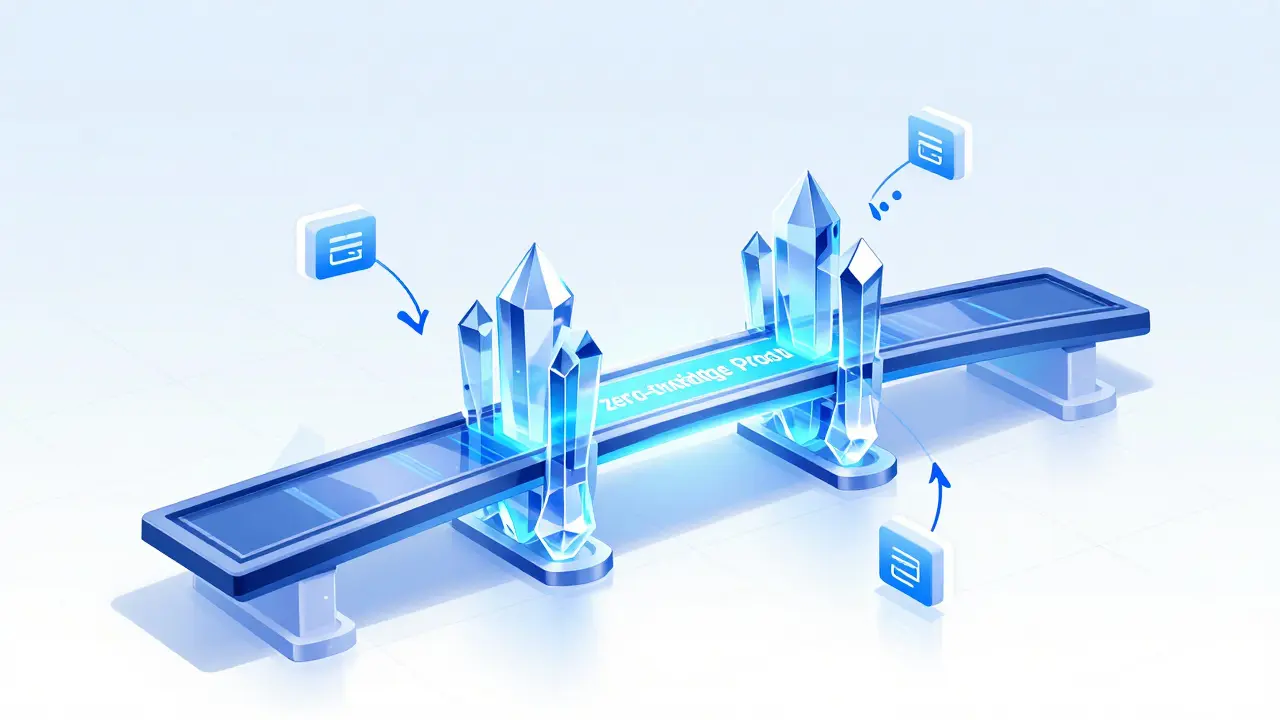
In response to the security crisis, the industry pivoted toward trust-minimized designs. Instead of relying on human custodians, new bridges use cryptography to verify transactions. There are two main types emerging in this space.
One approach is Zero-Knowledge Proofs (ZKPs). Bridges like LayerZero and Stargate use ZK-SNARKs (Succinct Non-Interactive Arguments of Knowledge) to prove that a transaction occurred on one chain without revealing all the underlying data. The destination chain verifies the proof mathematically. If the proof is valid, the asset is released. No custodian holds the funds; the code enforces the rules. This eliminates the risk of insider theft or key compromise. However, generating these proofs is computationally expensive, leading to higher fees-often 30-40% more than older methods.
Another model is Optimistic Verification. Used by Polygon PoS Bridge, this method assumes a transaction is valid unless someone proves otherwise. There is a challenge period (usually 7 days) during which anyone can dispute the transaction if they find fraud. If no one challenges it, the transfer completes. This is cheaper and faster than ZKPs but introduces latency. For large institutional moves, waiting a week is impractical, making optimistic bridges better suited for retail users.
A third category is Native Asset Bridges, exemplified by THORChain. THORChain doesn't wrap assets. Instead, it uses continuous liquidity pools on each chain. When you swap BTC for ETH, you're actually swapping BTC for a pool of BTC, and the other side swaps ETH for a pool of ETH. Slippage is managed by market makers, and there are no wrapped tokens. This preserves the native properties of the asset but requires users to accept price volatility during the transfer. THORChain processed $5.7 billion in Q3 2023 alone, showing strong demand for this model.
| Architecture Type | Security Model | Speed | Cost | Key Risk |
|---|---|---|---|---|
| Custodial (Lock-and-Mint) | Centralized Trust | Fast (minutes) | Low | Custodian Compromise |
| Optimistic Verification | Economic Incentives | Slow (days) | Medium | Fraud During Challenge Period |
| ZK-Proven | Cryptographic Proof | Medium (minutes) | High | Complex Code Vulnerabilities |
| Native Liquidity Pools | Decentralized Markets | Fast (minutes) | Variable (Slippage) | Liquidity Imbalance |
Beyond Assets: The Rise of Message Passing
Early bridges focused solely on moving tokens. But DeFi applications needed more. They needed to trigger actions across chains. For example, a user might want to borrow against their Bitcoin collateral on Ethereum while keeping the Bitcoin on the Bitcoin chain. Or a game might need to update player stats on a gaming chain based on events in a finance chain.
This led to the development of Cross-Chain Interoperability Protocol (CCIP) by Chainlink. Launched in beta in September 2023, CCIP isn't just a bridge; it's a messaging standard. It allows smart contracts on different chains to communicate securely. CCIP processes millions of messages monthly, handling everything from token transfers to arbitrary data payloads. Unlike older bridges that required users to manually initiate transfers, CCIP enables automated cross-chain workflows.
Why does this matter? Because it unlocks composability. Imagine a yield aggregator that automatically moves your funds between Arbitrum, Optimism, and Base to chase the highest interest rates. CCIP makes this possible by ensuring that the "move" command is executed reliably across disparate networks. In September 2023, CCIP processed 1.2 million cross-chain messages across 12 networks, signaling a shift from manual user-driven transfers to protocol-driven automation.
Another major player is Cosmos Inter-Blockchain Communication (IBC). IBC is a protocol designed specifically for Tendermint-based chains. It offers near-zero custodial risk because it relies on light clients that verify headers directly. As of October 2023, 56 chains used IBC. However, its limitation is that it only works between chains using the same consensus mechanism. This restricts its reach compared to universal bridges like CCIP or LayerZero, but for the Cosmos ecosystem, it remains the gold standard for security.
User Experience: Friction vs. Security
For the average user, the technical nuances often boil down to one question: "Will my money get stuck?" User experiences highlight a persistent tension between ease of use and safety.
According to a University of California, Berkeley study published in August 2023, novice users take 45-75 minutes to complete their first cross-chain transaction. The friction comes from several sources. First, users must hold gas tokens for both the source and destination chains. Forgetting to buy MATIC before bridging to Polygon is a common error. Second, wrapped assets can be confusing. Redeeming wBTC back to BTC requires sending it to a specific burn address, a process that feels irreversible and risky to newcomers.
Community sentiment reflects this anxiety. On Reddit, threads discussing bridge hacks frequently top r/ethfinance. One user reported losing $22,500 in the Nomad Bridge hack, a story that garnered hundreds of upvotes and highlighted the lack of recourse for victims. Conversely, positive reviews often praise "seamless MetaMask integration" and "clear status tracking." Platforms like Across Protocol have improved UX by offering instant quotes and guaranteed arrival times, absorbing the slippage risk themselves.
Despite improvements, support remains a weak point. Negative reviews frequently cite "lack of customer support" and "unexpected transaction failures." When a bridge fails, users are often left waiting hours or days for a resolution, with some smaller bridges lacking dedicated support channels entirely. This underscores the importance of choosing established platforms with robust documentation and active communities.
The Future: Consolidation and Native Interoperability
Where do we go from here? The trajectory points toward consolidation and deeper integration. The World Economic Forum predicts that by 2025, the market will consolidate to 15-20 major bridge protocols. Small, un-audited bridges will likely disappear as users and institutions demand higher security standards.
Two competing visions dominate the long-term outlook. The first is shared sequencing. Projects like EigenLayer and Celestia aim to create a shared data availability layer. If multiple chains share the same sequencer, they can communicate natively without needing a bridge. This would eliminate the attack surface entirely. Ethereum co-founder Vitalik Buterin has advocated for this approach, calling bridges a "necessary evil" in the short term but a liability in the long run.
The second vision is bridge maturation. Chainlink co-founder Sergey Nazarov argues that bridges will evolve into critical internet infrastructure, similar to DNS. He believes that as cryptographic techniques improve, trust-minimized bridges will achieve security parity with native chains. By 2026, trust-minimized bridges are expected to capture 75% of the market share, according to Consensys-Morgan Stanley projections.
For now, users must navigate a fragmented landscape. The best practice is to stick to native bridges provided by the chains themselves (e.g., Arbitrum Bridge, Optimism Bridge) or well-established, audited protocols like THORChain or CCIP. Avoid unknown aggregators that promise lower fees but obscure their security models. In the world of cross-chain tech, security is not a feature-it's the product.
What is the safest type of cross-chain bridge?
Trust-minimized bridges using Zero-Knowledge Proofs (ZKPs) or native liquidity pools like THORChain are considered the safest. They remove centralized custodians from the equation, relying instead on cryptographic verification or decentralized markets to secure assets.
Why did so many bridges get hacked in 2022?
Most hacks targeted custodial bridges that held large amounts of value in multi-signature wallets. Attackers compromised private keys or exploited vulnerabilities in the smart contract logic that managed these keys, highlighting the risks of centralized control in decentralized systems.
What is the difference between a wrapped asset and a native asset?
A wrapped asset (like wBTC) is a token on one chain that represents an asset on another chain, backed by custody. A native asset is the original token itself, moved via liquidity pools or direct transfers, maintaining its original properties and governance rights.
How does Chainlink's CCIP differ from traditional bridges?
CCIP is a messaging protocol that allows smart contracts to communicate across chains, not just transfer tokens. It enables automated, programmable cross-chain interactions, whereas traditional bridges primarily focus on manual asset transfers initiated by users.
Are cross-chain bridges regulated?
Regulation is evolving. The EU's MiCA framework treats wrapped assets as asset-referenced tokens, requiring strict backing. In the U.S., the SEC has indicated that bridges creating wrapped securities may fall under existing securities laws, though specific regulations are still being defined.