

Remittance Cost Comparison Tool
Compare traditional bank remittance fees with P2P crypto trading fees when sending money to Egypt or abroad
Most people think if a country bans crypto, trading stops. That’s not true in Egypt. Even though the Central Bank of Egypt outlawed unlicensed crypto trading in 2020, millions of Egyptians are still buying and selling Bitcoin, Ethereum, and other coins-every single day. They’re not using banks. They’re not using local exchanges. They’re using P2P trading, hidden in plain sight.
Why Banks Won’t Touch Crypto
Egypt’s banking system is locked down. If you try to send money to Binance or Bybit through a local bank, the transaction gets blocked. Your account might even get flagged. The Central Bank of Egypt (CBE) doesn’t just discourage crypto-it legally prohibits any institution from facilitating it without a license. And no one has gotten that license. Not one local exchange exists. So when Egyptians want to buy Bitcoin, they can’t just log into a local app like they would in Nigeria or South Africa. They have to go underground.How P2P Trading Works in Egypt
Peer-to-peer (P2P) trading is the backbone of Egypt’s crypto economy. Instead of buying crypto from a centralized exchange, you buy directly from another person. You agree on a price, choose a payment method, and complete the trade. The platform holds the crypto in escrow until you confirm payment. It’s simple, but it works.Bybit P2P is the most popular platform among Egyptian traders. Why? Because it’s free. Zero fees. You can deposit Egyptian pounds (EGP) via bank transfer, mobile wallet, or even cash. The interface is in Arabic. There are Shariah-compliant trading options. And it supports over 1,700 coins. Binance is close behind, with its own P2P marketplace and multiple EGP deposit routes. Bitget and Rain are also used, especially by traders looking for niche altcoins.
Here’s how a typical trade goes:
- You open Bybit P2P and search for sellers offering BTC for EGP.
- You pick a seller with a 98%+ trade completion rate.
- You send EGP via mobile money (like Vodafone Cash or Etisalat Cash) or direct bank transfer.
- The platform holds the Bitcoin until you click ‘Payment Sent’.
- The seller releases the crypto once they confirm receipt.
No bank touches the crypto. No exchange holds your funds. It’s direct, fast, and invisible to regulators.

Who’s Trading-and Why
It’s not just speculators. It’s doctors, teachers, freelancers, and small business owners. Many use crypto to protect their savings from inflation. The Egyptian pound lost over 50% of its value against the dollar in the last two years. Crypto isn’t just an investment-it’s a lifeline.Bitcoin is the most traded asset. It’s seen as digital gold: scarce, decentralized, and outside the government’s control. But traders also move into stablecoins like USDT to preserve value while waiting for better entry points. Some use crypto to receive payments from overseas clients without waiting weeks for bank clearance. Others trade to send money to family abroad, avoiding high remittance fees.
According to data from Chainalysis, Egypt leads North Africa in crypto value received. In 2025, the market is expected to hit $690 million in trading volume. That’s not small. That’s a massive underground economy operating with no legal protection, no consumer rights, and no safety net.
The Hidden Risks
Trading crypto this way isn’t risk-free. You’re dealing with strangers. Payment scams happen. Someone might send you a fake bank screenshot. Or worse-they might show up at your door demanding cash after you’ve sent crypto. There’s no central authority to call if things go wrong. No customer service hotline. No government insurance.Traders have learned to protect themselves. They only deal with sellers who have hundreds of completed trades and high ratings. They use escrow services religiously. They avoid cash meetups unless they’re in a public place with witnesses. Two-factor authentication is mandatory. Most use hardware wallets or cold storage for long-term holdings.
Even then, the legal gray zone is dangerous. The CBE could, at any moment, start prosecuting individuals. There have been no public cases yet-but the threat hangs over every trade. Traders stay quiet. They don’t talk about it on social media. They use encrypted apps like Signal to coordinate trades.
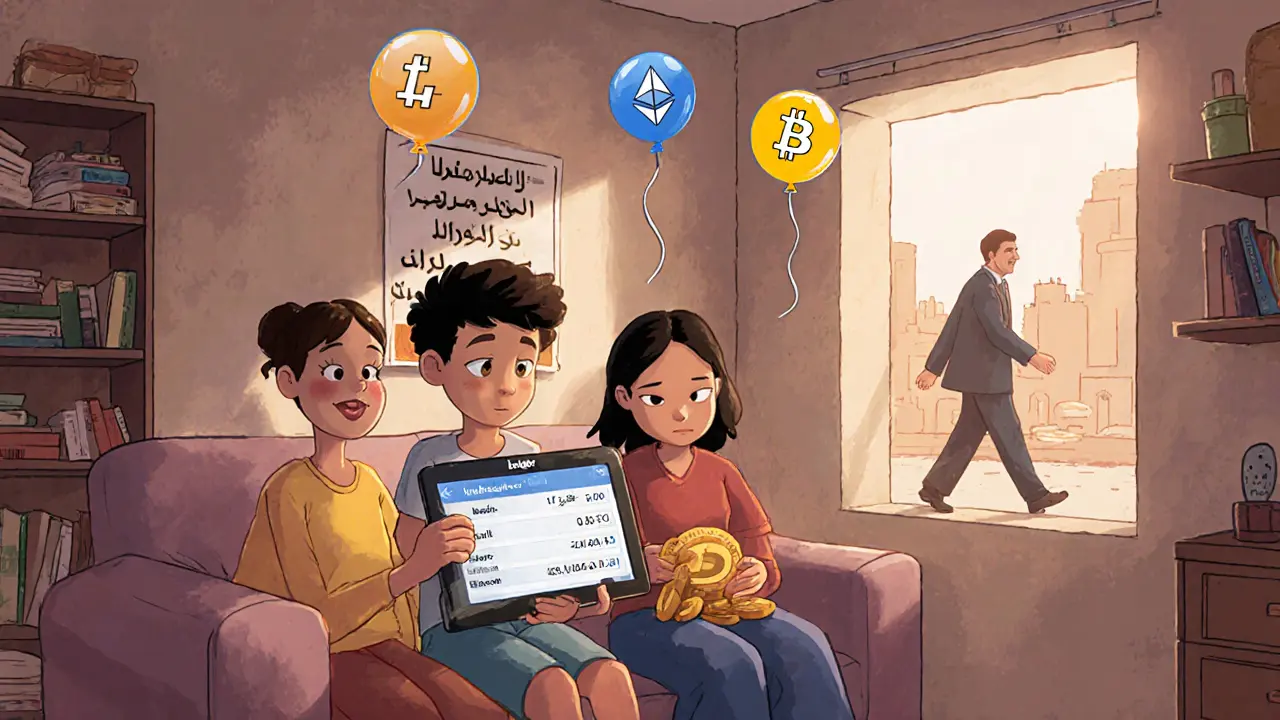
Why It’s Not Going Away
The government talks about blockchain for land records and digital IDs. That’s smart. That’s useful. But they’re not opening the door to crypto trading. Why? Because it undermines their control over money. And until they change their mind, P2P trading will keep growing.People aren’t trading because they want to break the law. They’re trading because the system failed them. Banks won’t serve them. Inflation eats their savings. Wages don’t keep up. Crypto is the only tool left that works.
And it’s getting easier. Platforms are adding more EGP options. More Arabic support. More localized customer help. Even if the government cracks down harder, traders will adapt. They’ll move to new platforms. Use new payment methods. Find new ways to hide.
What’s Next?
The market will keep growing. More people will join. More traders will get smarter. The average user now knows how to spot a scam, how to use escrow, and how to protect their keys. They don’t need a bank. They don’t need a license. They just need a phone and a Wi-Fi connection.Meanwhile, the Central Bank keeps insisting crypto is illegal. But numbers don’t lie. In 2025, nearly 11.3 million Egyptians-almost 10% of the population-are using crypto. That’s not a fringe group. That’s a movement. And it’s not going to vanish just because the government says so.
The future of crypto in Egypt isn’t in a regulated exchange. It’s in the hands of everyday people, trading peer-to-peer, quietly, securely, and without permission.
Is it legal to trade crypto in Egypt using P2P platforms?
No, it’s not officially legal. The Central Bank of Egypt banned unlicensed crypto trading in 2020 under Law No. 194. But it’s also not explicitly criminalized. This gray area means individuals aren’t being prosecuted yet, but they have no legal protection. Trading via P2P is tolerated by default because the government lacks the resources to monitor millions of private transactions.
Can I use Egyptian pounds (EGP) to buy crypto on P2P platforms?
Yes. Platforms like Bybit and Binance allow direct EGP deposits through bank transfers, mobile wallets (Vodafone Cash, Etisalat Cash), debit cards, and even Apple Pay. These methods bypass banks’ crypto blocks because the transaction appears as a regular payment-not a crypto purchase. Sellers then send crypto once they confirm receipt of EGP.
Which P2P platform is safest for Egyptian traders?
Bybit is currently the most trusted for Egyptian users. It has zero P2P trading fees, Arabic language support, Shariah-compliant options, and over 1,700 cryptocurrencies. Its escrow system is reliable, and its seller ratings are transparent. Binance is a close second, especially for users who want access to DeFi and staking. Avoid platforms with poor reviews or no EGP deposit options.
What payment methods do Egyptian traders use besides bank transfers?
Mobile wallets like Vodafone Cash and Etisalat Cash are extremely popular because they’re fast, widely used, and don’t trigger bank filters. Some traders use cash deposits at currency exchange shops or even meet in person for cash-for-crypto trades. Others use prepaid cards or international payment apps like PayPal (if linked to a foreign account). The key is avoiding direct bank transfers labeled as crypto-related.
Why is Bitcoin the most traded crypto in Egypt?
Bitcoin is seen as digital gold-scarce, decentralized, and outside government control. With the Egyptian pound losing value rapidly, people trust Bitcoin more than local currency. It’s also the most liquid crypto on P2P platforms, meaning you can always find buyers or sellers quickly. Altcoins are traded too, but Bitcoin remains the go-to for savings and remittances.
Are there any local Egyptian crypto exchanges?
No. Not one. The Central Bank of Egypt has not issued a single license for a domestic crypto exchange. All trading happens on international platforms like Bybit, Binance, and Bitget. This forces users into P2P methods because centralized exchanges can’t legally operate in Egypt.
Can the government shut down P2P crypto trading?
They can try, but it’s nearly impossible. P2P trading doesn’t rely on a central server that can be blocked. Transactions happen between individuals using encrypted apps and mobile wallets. Even if platforms like Bybit restrict Egyptian users, traders will migrate to new ones or use decentralized methods. The demand is too high, and the infrastructure is too decentralized to shut down completely.
How do Egyptian traders protect their crypto from hackers?
Most use hardware wallets like Ledger or Trezor for long-term storage. For daily trading, they keep small amounts on trusted platforms with two-factor authentication (2FA) enabled. They avoid sharing private keys, never click suspicious links, and use encrypted messaging apps like Signal to communicate with traders. Many also split holdings across multiple wallets to reduce risk.