

You want to trade cryptocurrency in Latin America. You see a name you recognize from the early days of the region’s boom: Let'sBit. But before you deposit a single peso or dollar, you need to know the truth. As of mid-2026, Let'sBit is effectively a ghost town. It shows zero trading volume, has no active markets on major trackers like CoinMarketCap, and its support channels are silent. If you are looking for a place to park your money right now, this is not it.
This isn't just my opinion. Data aggregators mark the platform as "untracked." Expert reviewers call it a "shell." Users report frozen funds. So why does the site still exist? And if you have old accounts there, what should you do? Let’s break down exactly where Let'sBit stands today, why it failed, and which exchanges actually work for users in Argentina and the rest of Latin America.
The Current Status: A Platform in Limbo
Let'sBit is a cryptocurrency exchange platform founded in 2020 by an Argentinean team with the specific mission to democratize cryptocurrency access across Latin America. That was the promise. The reality in 2026 is starkly different.
If you check CoinMarketCap or CoinGecko today, you won’t find any active trading pairs for Let'sBit. There is no liquidity data. There is no volume metric. In the crypto world, no volume means no business. An exchange without traders is just a website. Traders Union, a reputable review body, assigns Let'sBit a legitimacy score of only 2.1 out of 5. They categorize it as "performing slightly below average," but that feels generous given the silence.
Here is what the data tells us about the platform's current health:
- Trading Activity: Zero verifiable volume on major aggregators.
- Support Response: No response within standard industry timeframes (72+ hours).
- App Availability: No functional apps on iOS or Android stores.
- Last Verified Review: A Trustpilot entry dated July 1, 2025, suggests some residual user interaction, but it’s an outlier in a sea of silence.
The domain infrastructure is minimally maintained. There are no GitHub updates since early 2022. For a tech company, especially one handling financial assets, that level of stagnation is a massive red flag. It suggests the engineering team has moved on, leaving the backend to rot.
Why Did Let'sBit Fail?
It wasn’t always this way. When Let'sBit launched, it had a clear advantage: localization. While global giants like Binance were trying to figure out how to serve Argentina, Let'sBit was built by locals for locals. They offered localized language support and region-specific payment methods. This lowered the barrier to entry for everyday Argentines who wanted to hedge against inflation using Bitcoin or stablecoins.
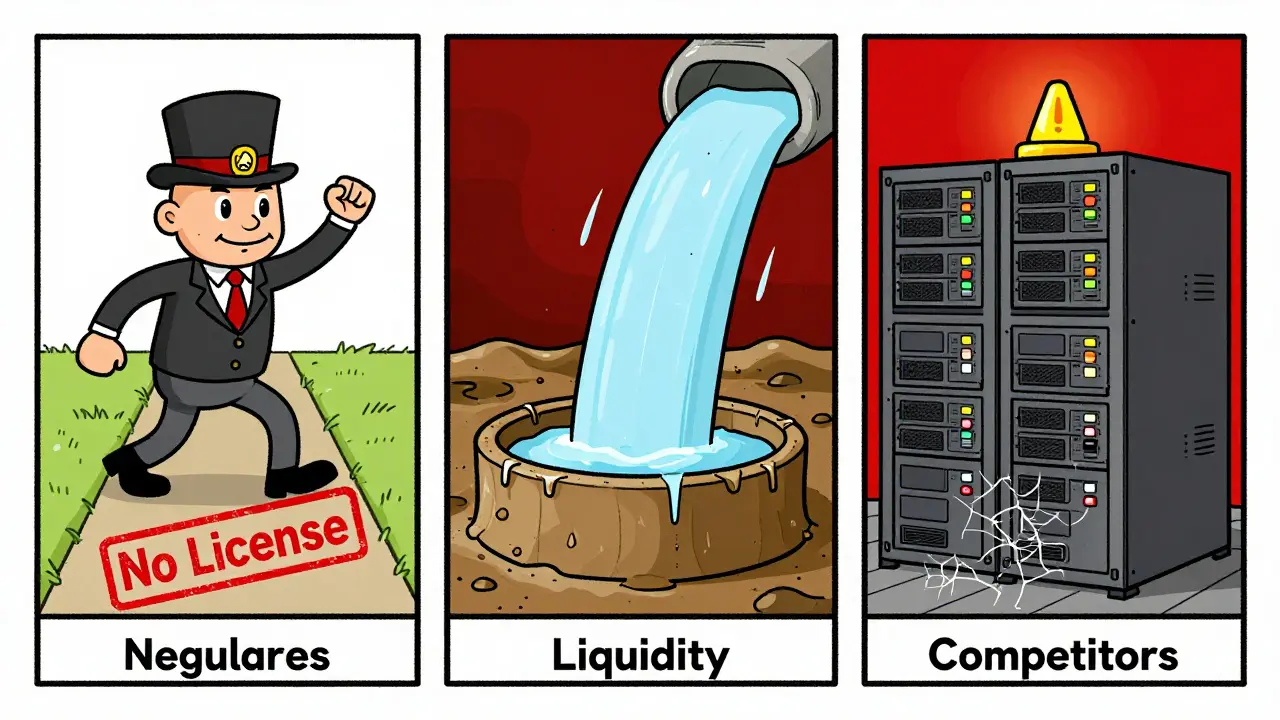
So, what went wrong? Three main factors killed the momentum.
1. Lack of Regulatory Certainty Argentina’s financial landscape is complex. The Central Bank of Argentina (BCRA) maintains restrictive policies on crypto-fiat conversions. Successful exchanges like Bitso and Ripio navigated this by partnering with traditional financial institutions. Let'sBit appears to have failed to secure these critical compliance certifications from authorities like the CNV (Comisión Nacional de Valores). Without regulatory backing, banks refuse to process payments, and users lose trust.
2. Liquidity Crisis Crypto exchanges thrive on network effects. More users mean more liquidity, which means better prices, which attracts more users. Let'sBit never broke through to scale. According to CryptoQuant’s regional analysis for Q1 2024, the Argentine market is dominated by Ripio (45% share), Buenbit (32%), and Bitso (15%). Let'sBit held less than 1%. Without deep order books, traders experienced high slippage and poor execution, driving them away to competitors.
3. Operational Neglect The most damning evidence is the lack of maintenance. Security audits, proof-of-reserves reports, and API documentation are all missing. In an industry where hacks and insolvencies happen regularly, transparency is currency. Let'sBit spent none of it. Experts at CER.live note that inactive exchanges represent significant counterparty risk because you cannot verify if user funds are actually safe.
User Experience: The Polarized Reviews
If you look at Trustpilot, the picture is confusing. Out of 19 reviews, 52% gave 5 stars, while 37% gave 1 star. There were almost no middle-ground ratings. This polarization usually tells a story of a platform that worked well briefly, then collapsed.
The positive reviews mention "easy onboarding" and "good customer support during active periods." These likely date back to 2021-2022 when the platform was live. The negative reviews are recent and brutal. Users report "funds frozen for months" and "sudden platform shutdown without notification."
Reddit threads from r/BitcoinArgentina show a similar pattern. Early mentions were hopeful. Later posts describe withdrawal difficulties. Today? Silence. No active community discussions. No help center articles. Just a void.
| Feature | Let'sBit | Bitso | Ripio |
|---|---|---|---|
| Status | Inactive / Dormant | Active | Active |
| Monthly Volume | $0 (Untracked) | $1.2B+ (Q2 2023) | Dominant in ARS pairs |
| Regulatory Compliance | None Verified | High (Mexico/Argentina) | High (Argentina) |
| User Base | Negligible | Large & Growing | Largest in Argentina |
| Mobile App | Unavailable | iOS & Android | iOS & Android |
Security Risks: Should You Withdraw?
If you have an account with Let'sBit, you need to act now. Do not assume your funds are safe. The absence of proof-of-reserves means we don’t know if your balance exists on-chain or just in a database that might be offline.
Here is your action plan:
- Attempt Withdrawal: Try to withdraw your entire balance to a personal wallet (like MetaMask or Ledger). Do not leave it on the exchange.
- Contact Support: Send a ticket. If you get no reply in 72 hours, document the timestamp. This is evidence of abandonment.
- Check Social Media: Look for official announcements on X (Twitter) or Telegram. Beware of scams-only trust verified handles.
- Prepare for Loss: If withdrawals fail, consider the funds lost. File a complaint with local consumer protection agencies if possible, though recovery chances are low.
Never deposit new funds into an inactive exchange hoping they will "restart." That is gambling, not investing.

Better Alternatives for Latin America in 2026
You don’t need Let'sBit. The market has matured. Several robust platforms serve Latin America with security, liquidity, and regulatory compliance. Here are the top choices depending on your needs.
For Argentinians: Ripio and Buenbit Ripio is the heavyweight champion in Argentina. They handle roughly 45% of peso-crypto transactions. They offer P2P trading, fiat on-ramps via bank transfer, and a solid mobile app. Buenbit is another strong contender, known for ease of use and competitive fees for small traders.
For Regional Access: Bitso Founded in Mexico, Bitso expanded aggressively into Argentina and Brazil. With over $1.2 billion in monthly volume, their liquidity is deep. Their interface is clean, and they have strong institutional backing. If you want to trade larger amounts without slippage, Bitso is a safer bet than Let'sBit ever was.
For Global Reach: Binance Binance remains the king of volume. They support many Latin American countries and offer localized payment options. However, regulatory scrutiny varies by country. Check if Binance is fully compliant in your specific jurisdiction before signing up.
For Beginners: Coinbase If you prefer simplicity and US-based regulatory standards, Coinbase is available in select Latin American countries. It’s less feature-rich for advanced traders but extremely secure and easy to navigate.
What Happens Next for Let'sBit?
Is there hope for a comeback? Unlikely. ICO Rankings states clearly: "Until it shows real markets and active engagement, Let'sBit remains speculative." The window for relaunch closed years ago. The technology stack is outdated. The user base has migrated. The regulatory environment has tightened.
Any sudden activity on the platform in late 2025 or 2026 should be viewed with extreme skepticism. It could be a final cash grab before total disappearance, or a phishing attempt targeting old users. Stay vigilant.
The Latin American crypto market is booming. Argentina ranks 3rd globally in crypto adoption according to the Chainalysis 2023 Index. Brazil is 5th. But growth favors the prepared. Exchanges that ignored security, regulation, and consistent service paid the price. Let'sBit is a cautionary tale. Learn from it, choose a proven platform, and keep your keys private.
Is Let'sBit safe to use in 2026?
No. Let'sBit is currently inactive with no verifiable trading volume, no responsive support, and no proof of reserves. Using it poses a high risk of losing your funds due to frozen withdrawals or platform abandonment.
Can I withdraw my money from Let'sBit?
You should try immediately, but success is not guaranteed. Many users report frozen funds. Attempt to withdraw to a personal wallet. If the system rejects the request or support doesn't respond, consider the funds at high risk.
Why did Let'sBit shut down?
Let'sBit likely failed due to a combination of low liquidity, lack of regulatory compliance in Argentina, and inability to compete with larger players like Ripio and Bitso. The absence of technical updates since 2022 suggests operational collapse.
What is the best crypto exchange for Argentina in 2026?
Ripio and Buenbit are the leading local exchanges for Argentina, offering strong peso integration and regulatory compliance. Bitso is also a top choice for regional users seeking higher liquidity and professional tools.
Does Let'sBit have a mobile app?
No. As of 2026, there are no functional Let'sBit applications on the Apple App Store or Google Play Store. Any app claiming to be Let'sBit may be a scam.
Is Let'sBit regulated?
There is no public evidence that Let'sBit holds valid regulatory licenses from Argentine authorities like the CNV or BCRA. This lack of oversight increases the risk for users.


Tawny Holmes
Let'sBit is dead. Ripio dominates Argentina. Bitso for Mexico. Binance for global volume. Don't waste time on ghost exchanges.