
You put $1,000 into a trade. The market moves against you by just 10%. Suddenly, your account is empty. You didn't lose $1,000 because the price dropped; you lost it because of liquidation. This is the harsh reality of leveraged trading in cryptocurrency and traditional finance. If you are using borrowed money to amplify your trades, understanding margin calls and the automatic forced closure of positions when equity falls below maintenance levels is not optional-it is survival.
Most beginners think leverage is a magic multiplier for profits. It isn't. It is a time accelerator for losses. When you borrow funds from an exchange or broker, you enter a contract where they own the downside risk if you can't pay them back. A margin call is their warning shot. Liquidation is the bullet. Let's break down exactly how these mechanisms work, why exchanges trigger them, and how you can avoid becoming a statistic in the next market crash.
What Is a Margin Call?
A margin call is a demand from a lender requiring a trader to deposit more funds or close positions to meet minimum equity requirements. Think of it as a red light on your dashboard. Your engine (your capital) is overheating, and the system is telling you to stop before it blows up.
In traditional stock markets, regulated by bodies like FINRA, brokers must maintain strict rules. Under Regulation T, you must fund at least 50% of a purchase with cash. But in the wilder world of crypto, the rules are set by individual exchanges. Platforms like Binance.US or Coinbase Pro have their own thresholds. For example, Binance.US might issue a margin call when your maintenance margin ratio hits 130%, while Coinbase Pro triggers it at 125%. These numbers sound abstract, but they represent the exact moment your safety buffer runs out.
When you receive a margin call, you usually have two choices:
- Deposit more collateral: Add fresh cash or crypto to boost your equity above the required level.
- Close positions manually: Sell part of your trade to reduce the debt and bring your account back into compliance.
If you do neither, the exchange takes control. That is when liquidation happens.
The Mechanics of Liquidation
Liquidation is the process where the exchange forcibly closes your open positions to repay the borrowed funds. It is not malicious; it is mathematical. The exchange needs to ensure they get their money back, regardless of what happens to your remaining balance.
Here is how the calculation works in simple terms:
- Initial Margin: The amount you put up to open the trade.
- Maintenance Margin: The minimum equity you must keep in the account to keep the trade open.
- Mark Price: The reference price used to calculate whether you are still solvent (often an average of multiple exchanges to prevent manipulation).
When your account equity drops below the maintenance margin requirement, the liquidation engine kicks in. On platforms like Kraken, this happens automatically. They will sell your assets at the best available market price. In a calm market, this might be fair. In a panic-driven crash, "best available" often means a price significantly lower than the last quoted price.
Consider the March 2020 market crash. Data from the SEC showed that 68% of margin accounts at retail brokers faced liquidations. Many traders lost their entire principal because prices gapped down overnight. By the time they woke up and saw the email alert, their positions were already gone, sold at prices 15-25% worse than the previous close.
Crypto vs. Traditional Finance: Key Differences
While the concept is the same, the execution differs wildly between Wall Street and crypto exchanges. Understanding these differences is crucial for risk management.
| Feature | Traditional Broker (e.g., Fidelity) | Crypto Exchange (e.g., Binance.US) |
|---|---|---|
| Regulation | Fully regulated (FINRA, SEC) | Varies by jurisdiction; often less stringent |
| Maintenance Margin | Typically 25-30% | Often lower, sometimes under 10% for high leverage |
| Response Time | 24-48 hours (sometimes 4 days) | Instantaneous (algorithmic) |
| Liquidation Method | May sell specific securities | Sells entire position or uses auto-deleveraging |
| Volatility Impact | Market halts can protect traders | No circuit breakers; 24/7 trading increases gap risk |
The biggest danger in crypto is the lack of pause. Stock markets have circuit breakers that halt trading during extreme volatility. Crypto markets never sleep. If Bitcoin drops 10% in ten minutes, your liquidation price is hit instantly. There is no "next morning" to fix the problem. The algorithm doesn't care about your feelings; it cares about solvency.
Why Do Liquidations Happen So Fast?
You might wonder why exchanges don't give you more time. The answer is counterparty risk. When you use 10x leverage, you are borrowing 9 units for every 1 unit you own. If the market moves 10% against you, your 1 unit is wiped out. The exchange is now holding a bag of worthless assets and is owed 9 units of value.
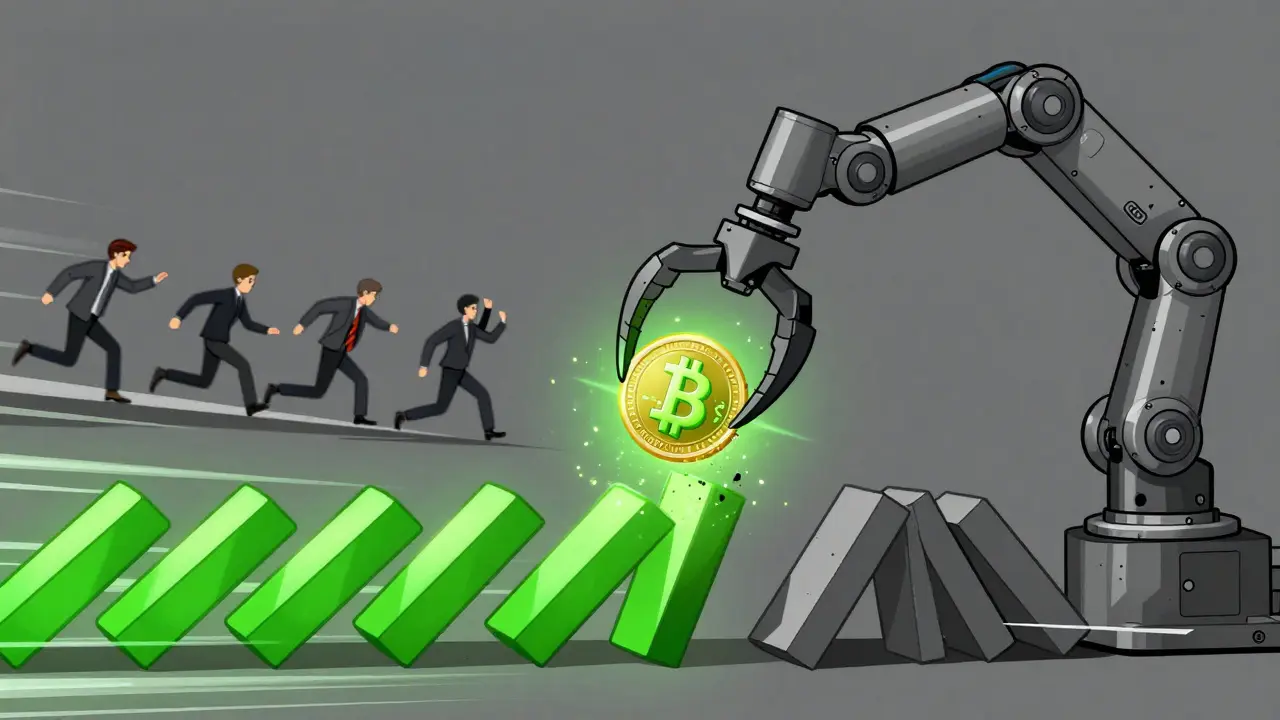
To prevent this, exchanges use a mechanism called Auto-Deleveraging (ADL) or a system where highly leveraged profitable traders' positions are reduced to absorb the losses of liquidated traders. If the insurance fund (a pool of fees collected from traders) is exhausted, the exchange might force-close other people's winning trades to cover your loss. This creates a domino effect known as a "liquidation cascade."
We saw this in the Archegos Capital Management collapse in 2021. Forced liquidations triggered a $15 billion chain reaction across major banks. In crypto, we see smaller versions of this daily during volatile news events. One large whale gets liquidated, pushing the price down, which triggers the next whale, and so on. Retail traders caught in the middle get swept up in the flood.
How to Avoid Getting Liquidated
Avoiding liquidation isn't about predicting the market perfectly. It is about managing your exposure. Here are practical steps to stay alive in leveraged trading:
1. Lower Your Leverage
This sounds obvious, but most new traders go straight for 50x or 100x leverage. This is gambling, not trading. At 10x leverage, a 10% move wipes you out. At 2x leverage, you can withstand a 50% drop. Professional traders rarely use more than 3x-5x leverage, and even then, only for short-term hedges.
2. Use Stop-Loss Orders
A stop-loss is a pre-set order to close your position if the price hits a certain level. It acts as a circuit breaker for your account. Set your stop-loss slightly above your liquidation price. Yes, you will take a small loss. But that small loss preserves your capital so you can trade another day. Never rely solely on the exchange's liquidation engine to save you.
3. Maintain a Liquidity Buffer
Financial Edge Training recommends keeping a buffer of at least 15% above the minimum maintenance requirement. If the exchange requires 25% equity, aim to keep 40% in your account. This gives you room to breathe during sudden spikes in volatility without triggering a margin call.
4. Monitor Real-Time Metrics
Don't just look at the P&L (Profit and Loss). Look at your Margin Ratio or Maintenance Margin Percentage. Most platforms display this in real-time. If you see it creeping toward 100%, act immediately. Add collateral or reduce position size. Don't wait for the email alert; by the time you get it, it might be too late.
The Psychology of Margin Calls
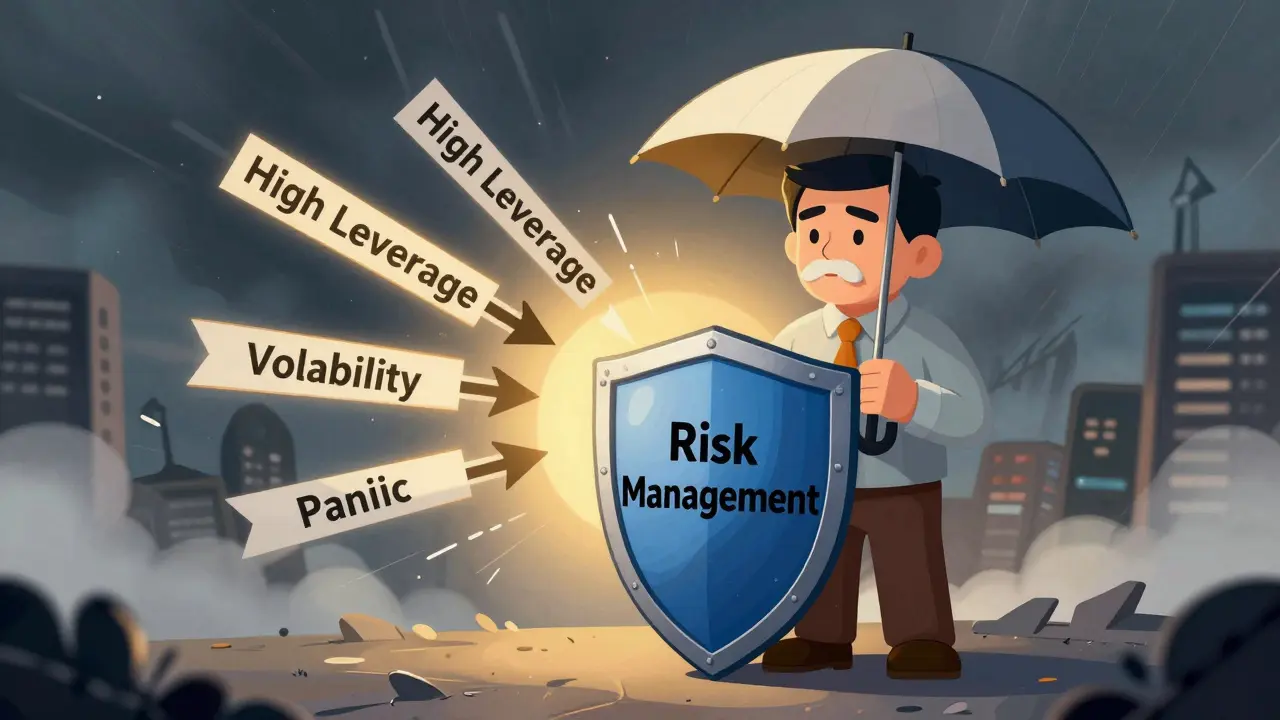
There is a psychological trap that catches many traders. When a margin call hits, the natural instinct is to "hope" the market will bounce back. This is dangerous. Hope is not a strategy. Dr. Robert R. Johnson, a finance professor, notes that margin calls crystallize paper losses into real losses at the worst possible moment-usually when panic selling has driven prices to irrational lows.
Traders often add more money to a losing position to avoid liquidation, thinking they are averaging down. In a strong downtrend, this is like throwing good money after bad. You are increasing your exposure to an asset that is actively destroying your wealth. Recognizing when to cut losses is a skill that separates successful traders from those who blow up their accounts.
Conclusion: Respect the Leverage
Margin trading offers incredible opportunities for profit, but it demands respect. The system is designed to protect the lender, not the borrower. A margin call is a sign that your risk parameters have been breached. Liquidation is the final enforcement of that breach. By understanding the math behind these mechanisms, using lower leverage, and maintaining healthy buffers, you can navigate the volatile world of crypto and stock trading without getting wiped out. Remember: the goal isn't to make one huge win; it is to stay in the game long enough to let compounding work in your favor.
What happens if I ignore a margin call?
If you ignore a margin call, the exchange or broker will automatically liquidate your positions. This means they will sell your assets at the current market price to repay the borrowed funds. You may lose your entire initial investment, and in some cases, if the liquidation proceeds are insufficient to cover the debt, you could owe additional money (though most crypto exchanges use auto-deleveraging to prevent negative balances).
Is there a difference between a margin call and liquidation?
Yes. A margin call is a warning or demand to add more funds to your account because your equity has fallen below a required level. Liquidation is the actual event where the exchange forcibly closes your trades to recover the loaned amount. A margin call gives you a chance to act; liquidation removes that choice.
How much leverage should a beginner use?
Beginners should ideally avoid leverage altogether until they understand market dynamics. If you must use it, stick to low leverage ratios like 2x or 3x. High leverage (10x, 50x, 100x) amplifies losses rapidly and can lead to total account wipeout with very small market movements.
Can I get my liquidated assets back?
Generally, no. Once a position is liquidated, the transaction is final. The assets are sold to cover the debt. Some exchanges offer "insurance funds" that might return a small portion of the fee paid during liquidation, but the principal loss is permanent. Always check the specific terms of your exchange.
Why do crypto liquidations happen faster than stock market ones?
Crypto markets operate 24/7 and lack circuit breakers (temporary halts during extreme volatility). Additionally, crypto exchanges use automated algorithms to execute liquidations instantly to manage risk. In contrast, traditional stock brokers may allow a grace period of 24-48 hours to respond to a margin call, and market halts can provide a pause during crashes.