
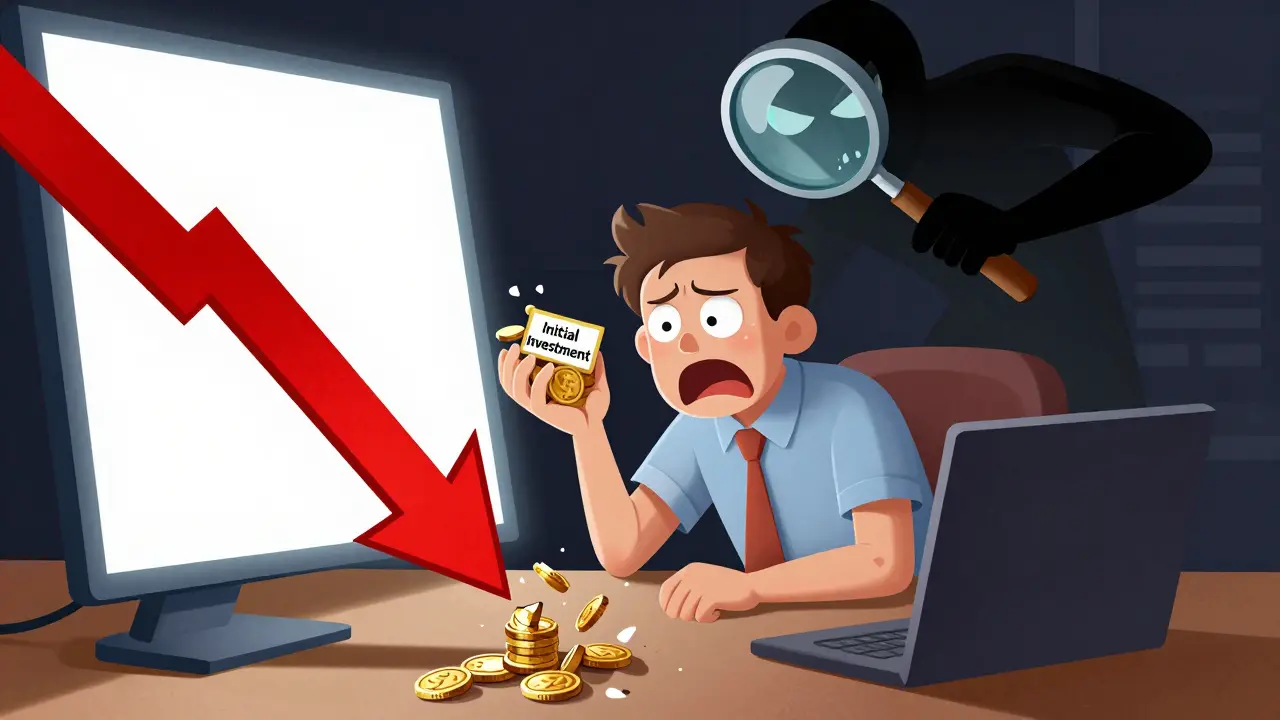
You borrow money to buy Bitcoin. The price drops 10%. Suddenly, your entire position is gone. You didn't just lose your initial investment; you might even owe the exchange more money. This isn't a glitch. It's how liquidation works.
If you trade with leverage-whether on crypto exchanges like Binance or Coinbase, or traditional brokers like Fidelity-you are playing with fire. Most retail traders don't understand the mechanics of margin calls until it’s too late. They think they have time to react. They don't.
This guide breaks down exactly what happens when your account equity falls below the line. We’ll look at the math, the rules, and why "paper losses" turn into real cash lost in seconds.
What Is a Margin Call?
A margin call is a formal demand from your broker or exchange to deposit more funds into your account because your current equity has fallen below the required minimum level.
Think of it as a warning shot. Your broker lent you money to open a larger position than your cash balance allowed. That loan is secured by your assets (collateral). If the value of those assets drops, the collateral becomes insufficient to cover the loan plus potential future volatility.
In traditional finance, this system was formalized after the 1929 stock market crash. The Federal Reserve established Regulation T in 1934 to prevent excessive speculation. Today, bodies like FINRA (Financial Industry Regulatory Authority) enforce these rules. For example, FINRA Rule 4210 requires investors to maintain a minimum equity of 25% of the total value of securities in their margin accounts.
However, crypto exchanges operate differently. They are less regulated and often move faster. A margin call in crypto is rarely a phone call. It’s an automated alert on your screen or an email saying: "Your account is at risk. Deposit now or we sell everything."
The Math Behind the Trigger
To survive leveraged trading, you need to understand two key metrics:
- Initial Margin: The amount of money you must put up to open a position. Under Regulation T, you typically fund 50% of the purchase price in cash.
- Maintenance Margin: The minimum equity you must keep in your account to keep the position open. This is usually lower than the initial margin, often ranging from 25% to 40% depending on the asset's volatility.
Here is how the calculation works in practice: Imagine you want to buy $10,000 worth of Ethereum. You use 2x leverage. You put up $5,000 of your own money (initial margin) and borrow $5,000 from the exchange. If the price of Ethereum drops by 10%, your position is now worth $9,000. Your equity is now $4,000 ($9,000 value - $5,000 debt). If the maintenance margin requirement is 25%, you need to maintain $2,250 in equity (25% of $9,000). Since you have $4,000, you are safe. But if the price drops another 15%, your position is worth $7,650. Your equity is $2,650. You are getting dangerously close to the line. Once your equity hits that maintenance threshold, the margin call triggers.
Margin Call vs. Liquidation: What’s the Difference?
People often use these terms interchangeably, but they represent two different stages of disaster.
- Stage 1: The Margin Call. The system detects your equity is low. It sends an alert. In traditional markets, you might have 24 to 48 hours to deposit more cash or sell some assets manually. In crypto, this window can be minutes or seconds.
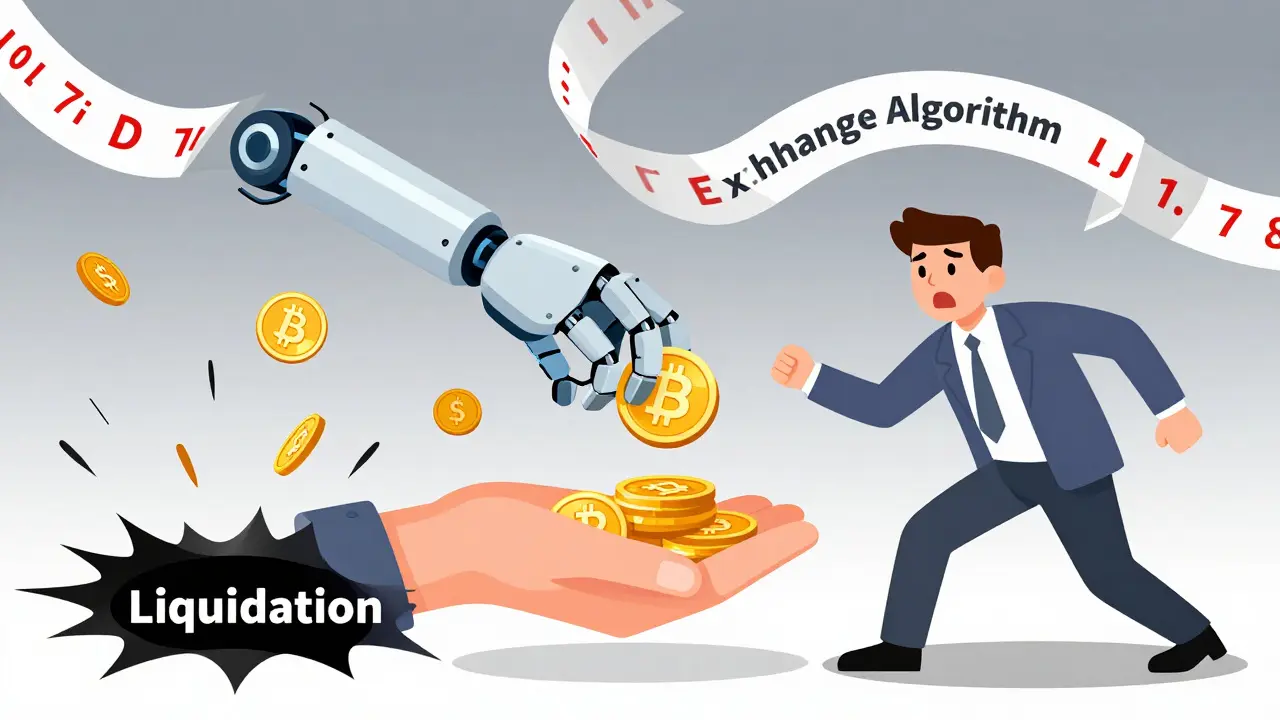
- Stage 2: Forced Liquidation. You failed to meet the margin call. Or the price dropped so fast there was no time to act. The exchange automatically sells your assets to pay back the borrowed money. You get nothing left. Sometimes, if the price gaps down during the sale, you still owe the difference.
Liquidation is final. The position is closed. The profit or loss is realized. As Dr. Robert R. Johnson, Professor of Finance at Creighton University, notes, margin calls "crystallize paper losses into real losses at precisely the worst moment for investors."
Why Crypto Liquidations Are More Dangerous
Crypto markets never sleep. Stocks have closing bells. Bitcoin trades 24/7/365. This creates unique risks for leveraged traders.
| Feature | Traditional Broker (e.g., Fidelity) | Crypto Exchange (e.g., Binance.US) |
|---|---|---|
| Maintenance Margin | Typically 25-30% | Varies widely (often 25%+) |
| Response Time | 24-48 hours (FINRA allows 4 days) | Seconds to Minutes (Automated) |
| Liquidation Method | May sell specific positions | Market order (best available price) |
| Regulation | Fully regulated (FINRA/SEC) | Lightly regulated / Self-regulated |
The biggest danger in crypto is volatility. During high-stress events, like the March 2020 market crash, prices can drop 20% in minutes. If you are highly leveraged, a 5% drop can wipe you out. Because crypto exchanges execute liquidations at the "best possible market price," you might get filled at a price significantly worse than the last traded price due to lack of liquidity.
Data from the SEC’s 2020 Market Structure Report showed that during extreme volatility, 68% of margin accounts experienced liquidations at prices 15-25% worse than pre-crash levels. In crypto, this slippage can be even higher.
Real-World Examples: When It Goes Wrong
Let’s look at a scenario from Reddit’s r/Daytrading community. User u/TradeWithCaution held an $85,000 Tesla position on margin. At 12:17 AM EST, bad news hit. The stock gapped down overnight. The user had 28% account equity, which seemed safe. However, Schwab’s automated system detected the breach before the user could read the email alert. The system liquidated the position instantly. The result? A $28,500 loss. The user couldn’t react because the reaction time was zero.
This highlights a critical flaw in human psychology: we assume we have control. In leveraged trading, algorithms have control. They do not care about your financial situation. They only care about protecting the lender’s capital.
How to Avoid Getting Liquidated
You can’t stop the market from dropping. But you can manage your risk. Here are three proven strategies used by professional traders:
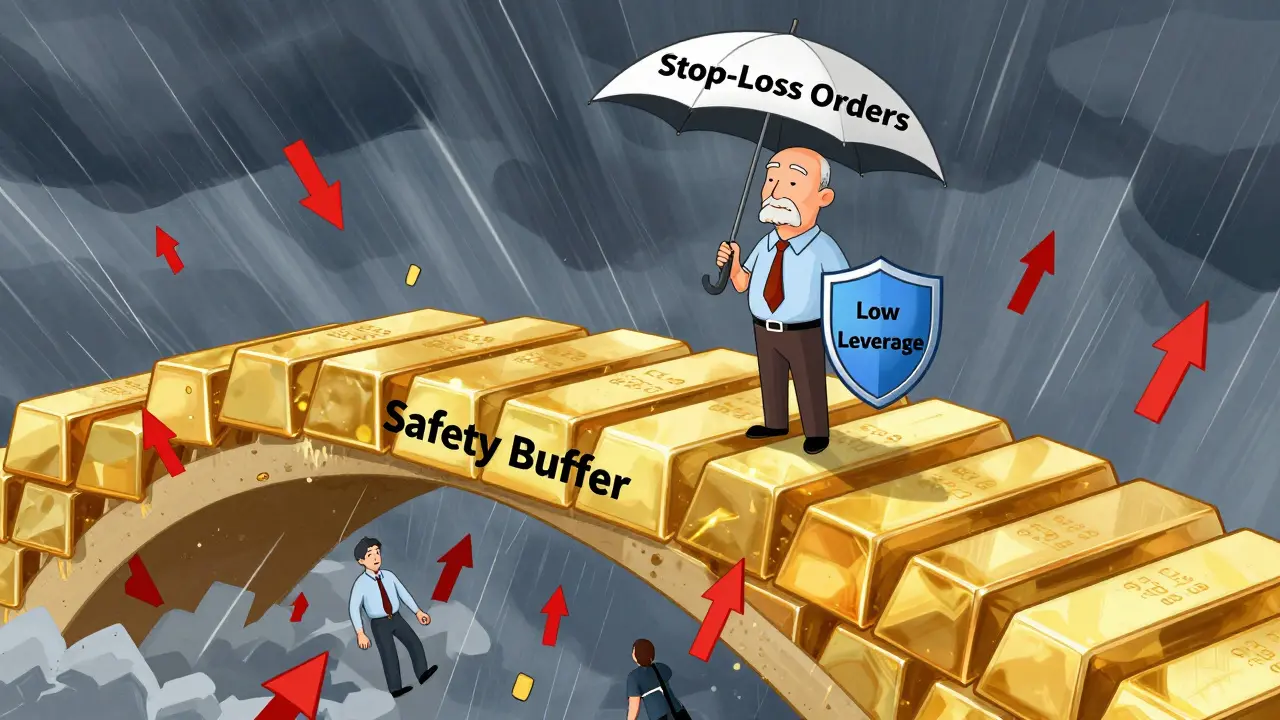
- Lower Your Leverage. High leverage (10x, 20x, 50x) is gambling, not investing. A 20% decline in a 4:1 leveraged position triggers a 100% loss. Stick to 2x or 3x if you must use leverage. Charles Schwab data shows that most new margin account holders fail within 3-6 months because they over-leverage.
- Maintain a Liquidity Buffer. Don’t hover near the maintenance margin. Financial Edge Training recommends keeping 15% more equity than the minimum requirement. In their study of 500 active traders, this simple buffer reduced margin call incidents by 63%.
- Use Stop-Loss Orders. A stop-loss sells your position automatically if the price hits a certain level. This gives you *some* control over the exit price, rather than letting the exchange decide when and how to liquidate you. Note: In fast-moving crypto markets, stop-losses can also suffer from slippage.
The Future of Margin Trading
Regulators are watching. The SEC issued 147 deficiency letters to broker-dealers in 2022 regarding inadequate margin call procedures. FINRA proposed new rules in 2023 requiring real-time margin utilization percentages on platforms, aiming for compliance by 2024. Exchanges are also adapting. Interactive Brokers launched a "Margin Escape" feature that automatically converts eligible positions to cash upon a margin call for a small fee, helping users avoid full liquidation. This suggests a shift toward tools that help traders survive volatility rather than just punishing them.
However, the core risk remains. As Dr. Darrell Duffie of Stanford University warned, the interconnectedness of margin systems creates systemic risk. When one large player gets liquidated, it pushes prices down, triggering more liquidations in a cascade effect. We saw this in the Archegos Capital collapse in 2021, where $15 billion in forced sales shook global markets.
Understanding margin calls and liquidation isn't just about avoiding loss. It's about respecting the power of leverage. Use it wisely, or it will use you.
What happens if I ignore a margin call?
If you ignore a margin call, the broker or exchange will initiate forced liquidation. They will sell your assets without your permission to recover the borrowed funds. In traditional markets, you may have a short grace period (24-48 hours), but in crypto, liquidation can happen in seconds if the price moves against you.
Can I go into debt after liquidation?
Yes. This is called a "negative balance." If the market crashes rapidly and your assets are sold at a price lower than expected (slippage), the proceeds may not cover the loan. In traditional brokerage accounts, you are legally liable for the remaining debt. Some crypto exchanges offer "auto-deleveraging" or insurance funds to prevent this, but it is not guaranteed.
How much margin do I need to maintain?
In the US, FINRA requires a minimum maintenance margin of 25% for most securities. However, individual brokers often require more (30-40%) for volatile stocks. In crypto, maintenance margins vary by exchange and asset, typically ranging from 0.5% to 25% depending on the leverage tier and coin volatility.
Is margin trading legal in crypto?
It depends on your jurisdiction. In the US, major exchanges like Coinbase and Kraken offer margin trading but with strict regulations. In other countries, regulations vary. Always check local laws and the specific terms of service of the exchange you are using.
What is the safest way to use leverage?
The safest way is to use low leverage (2x or less), maintain a significant cash buffer above the maintenance margin, and always use stop-loss orders. Never trade with money you cannot afford to lose, and avoid holding leveraged positions over weekends or during major economic announcements when volatility spikes.