
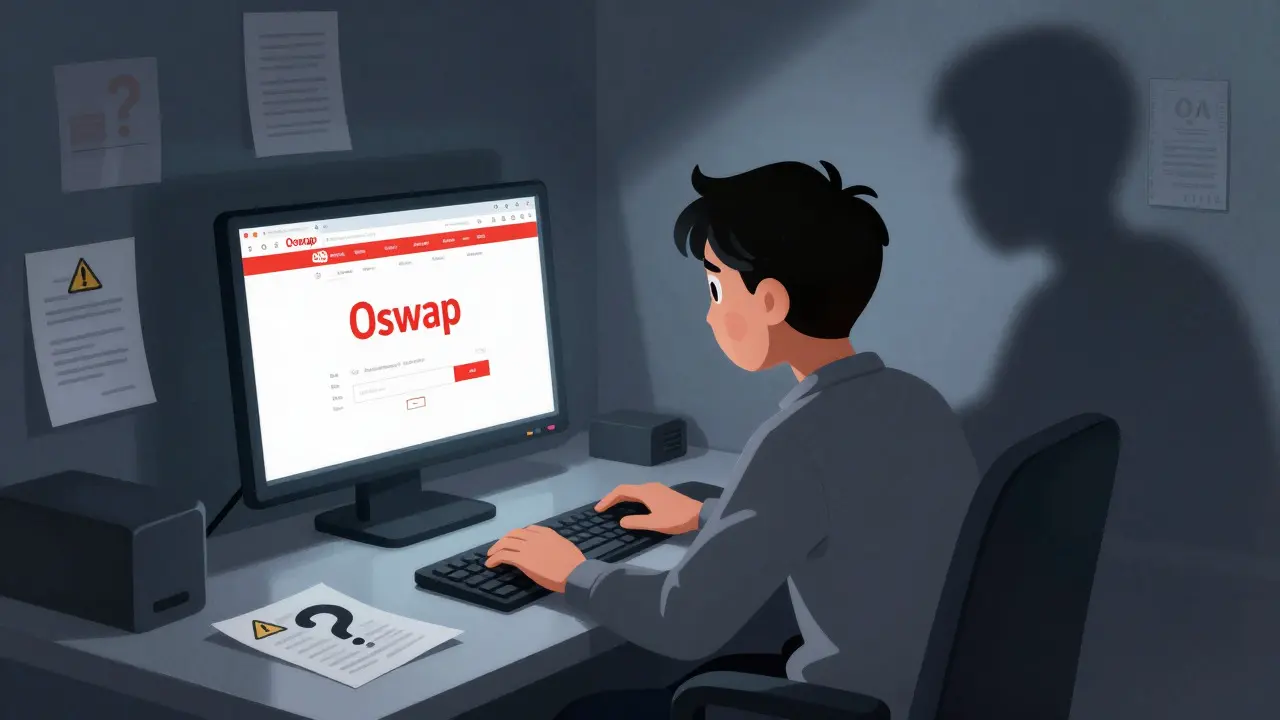
You’ve probably seen the ads. Maybe a friend sent you a link, or you stumbled upon it while searching for high-yield DeFi opportunities. The platform promises easy swaps, low fees, and maybe even some flashy rewards just for signing up. But before you connect your wallet or transfer any funds, there is one massive question hanging over Oswap: does this exchange actually exist?
Here is the hard truth that most quick reviews skip: as of mid-2026, there is no widely recognized, reputable cryptocurrency exchange operating under the name "Oswap." If you are looking at a website claiming to be Oswap, you are likely staring at a clone site, a brand-new unregulated platform, or-worst case scenario-a phishing scam designed to drain your digital assets.
This confusion often stems from a simple mix-up. Many users accidentally search for "Oswap" when they mean OWASP, which stands for the Open Web Application Security Project. OWASP is a global nonprofit foundation focused on software security, not a place to buy Bitcoin. They publish the famous "Top 10" security risks list that developers use to keep apps safe. But OWASP has nothing to do with trading crypto. So, if you aren’t talking about the security foundation, what exactly is this Oswap platform you found?
The Identity Crisis: Why You Can’t Find Reliable Info
In the world of legitimate finance, transparency is non-negotiable. Big exchanges like Coinbase, Binance, or Kraken have thousands of pages of documentation, clear regulatory filings, and active communities on social media. When you try to dig into Oswap, you hit a wall. There are no verified news articles from major financial outlets. There are no detailed audits from top-tier security firms. And crucially, there is no clear information about who owns the company or where it is legally registered.
This silence is a huge red flag. In the crypto space, anonymity used to be cool. Now, it’s suspicious. A legitimate exchange needs to prove it exists to satisfy anti-money laundering (AML) laws in countries like the US, UK, and EU. If Oswap cannot tell you its legal entity name, its physical address, or its license numbers, it is operating in the shadows. And in the shadows, predators thrive.
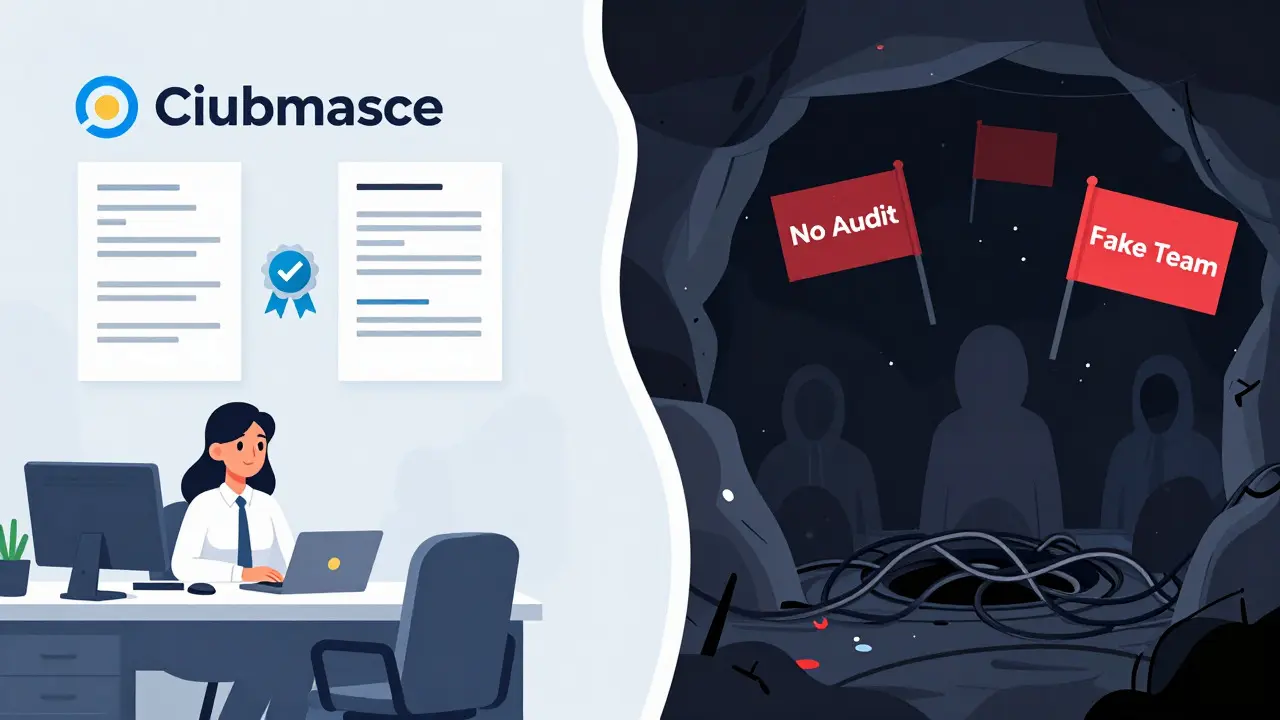
Let’s look at the anatomy of a typical fake exchange. These sites often copy the design of popular platforms. They might use similar color schemes or logo styles to trick your brain into thinking you’re on a safe site. They promise things that real exchanges rarely offer, like guaranteed daily returns or zero-fee withdrawals without limits. Real trading involves risk; if a platform promises safety and profit simultaneously, it is lying.
Red Flags: How to Spot a Fake Exchange
If you are currently logged into an "Oswap" dashboard, check these specific signs immediately. These are the tell-tale symptoms of a scam operation that have been documented in countless fraud reports since the 2022 market crash.
- The Domain Age: Use a tool like WHOIS to check when the domain was registered. If the site claims to be a veteran trader but the domain was created only three months ago, run away. Legitimate brands build history.
- Generic Contact Info: Does the support email end in @gmail.com or @protonmail.com? Real companies use custom domains (e.g., [email protected]). Even better, if their "contact us" form leads nowhere, that’s a dead giveaway.
- Pressure Tactics: Are pop-ups telling you that "only 3 spots left" for a bonus? Or that your account will expire if you don’t deposit more? This is psychological manipulation, not customer service.
- Unverified Smart Contracts: If Oswap claims to be a Decentralized Finance (DeFi) protocol, check its smart contract addresses on Etherscan or BscScan. If the contracts are not verified, or if the ownership hasn’t been renounced, the developers can change the rules-or steal your money-at any time.
- Mystery Team: Look for the "About Us" page. Do they list real names with LinkedIn profiles? Or do they show stock photos of smiling people with generic titles like "Head of Blockchain"? Scams love vague authority figures.
One specific danger with platforms named similarly to known entities (like the confusion between Oswap and OWASP) is the trust transfer effect. Scammers know you trust established names. They bank on you making a quick association and skipping due diligence. Don’t let them win.
The Technical Reality: What Should a Safe Exchange Look Like?
To understand why Oswap feels off, we need to look at what a secure crypto environment actually requires. Security isn’t just a feature; it’s the foundation. The industry standard for evaluating security risks comes from frameworks like the OWASP Top 10. While this is for web apps, the principles apply directly to exchange interfaces.
A safe exchange protects against cryptographic failures. This means your private keys (if self-custody) or your account credentials are encrypted properly. It means they don’t store passwords in plain text. It means they use multi-factor authentication (MFA) that isn’t easily bypassed. If Oswap asks for your password via email or SMS to "verify" your withdrawal, it is failing basic security hygiene.
Furthermore, consider the concept of Proof of Reserves. Since the collapse of FTX in 2022, major exchanges publish monthly cryptographic proofs showing they hold enough assets to cover user balances. Does Oswap have a Merkle Tree audit from a firm like Chainalysis or Deloitte? If the answer is no, you have no way of knowing if your money is actually there or if it’s being used to pay earlier investors in a Ponzi scheme.
| Feature | Legitimate Exchange (e.g., Coinbase, Kraken) | Suspicious Platform (e.g., Unverified Oswap) |
|---|---|---|
| Regulatory Status | Licensed in multiple jurisdictions (US, EU, UK) | No visible licenses or offshore registration only |
| Security Audits | Regular third-party audits (CertiK, Trail of Bits) | No audits or self-proclaimed "internal" checks |
| Withdrawal Process | Clear fees, predictable times, no hidden hurdles | High "gas fees," delays, requests for extra deposits to unlock funds |
| Team Transparency | Public founders with verifiable professional histories | Anonymous team or stock photo placeholders |
| User Reviews | Mixed but genuine feedback on Trustpilot/Reddit | Only 5-star reviews from new accounts or none at all |
The DeFi Angle: Could Oswap Be a DEX?
Maybe you aren’t looking at a centralized exchange (CEX) but a Decentralized Exchange (DEX). In the DeFi world, projects launch quickly, sometimes without much fanfare. Could Oswap be a small, niche DEX on a network like Polygon or Solana?
It’s possible, but unlikely to be worth your attention if it lacks liquidity. A DEX works by connecting you to liquidity pools. If Oswap is a tiny pool, you face massive "slippage." This means if you try to swap $100 of ETH for USDT, you might only get $80 back because there isn’t enough money in the pool. High slippage eats your profits instantly.
Moreover, small DEXs are prime targets for hacks. Without the deep pockets to hire elite security teams, their code is often riddled with bugs. The OWASP Smart Contract Top 10 lists common vulnerabilities like reentrancy attacks and integer overflows. If Oswap’s code hasn’t been audited by a reputable firm, you are essentially gambling with the developer’s coding skills. Given that billions have been lost to smart contract exploits since 2020, sticking to audited, established protocols like Uniswap or PancakeSwap is a much safer bet.
What To Do If You Already Deposited Funds
If you have already sent money to an Oswap address or connected your wallet to their site, act fast. Time is your enemy. Here is a step-by-step crisis management plan:
- Disconnect Your Wallet: Go to your wallet settings (MetaMask, Phantom, etc.) and remove the Oswap site from trusted connections. Revoke any token approvals using tools like Revoke.cash. This prevents the site from draining other tokens you hold.
- Change Passwords: If you created an account with an email and password, change that password immediately. If you reused that password elsewhere, change those too. Assume your data is compromised.
- Check Transaction History: Look at the blockchain explorer for your network. Did the transaction confirm? If so, remember that crypto transactions are irreversible. No customer support can reverse a blockchain transfer.
- Contact Support (Carefully): Try to reach out. If they ask for a "withdrawal fee" or "tax payment" to release your funds, it is a scam. Legitimate exchanges deduct fees from the withdrawal amount; they never ask for separate payments to unlock existing funds.
- Report It: File a report with your local consumer protection agency and the FBI’s IC3 (Internet Crime Complaint Center) if you are in the US. Also, warn others on Reddit or Twitter. Community awareness stops the next victim.
Safer Alternatives for Trading Crypto
Why risk it with an unknown entity like Oswap when proven alternatives exist? The crypto market is mature enough that you don’t need to gamble on obscure platforms to find good rates.
For beginners, centralized exchanges like Coinbase or Kraken offer ease of use, strong regulatory compliance, and insurance on fiat holdings. For advanced traders looking for lower fees, Binance or Bybit provide deep liquidity and advanced charting tools. If you prefer self-custody and DeFi, stick to blue-chip DEXs like Uniswap (on Ethereum), Jupiter (on Solana), or PancakeSwap (on BNB Chain). These platforms have survived years of market volatility and numerous security audits.
Remember, the best exchange is the one that lets you sleep at night. If you are constantly checking if your funds are still there, you’ve chosen the wrong platform.
Is Oswap a legitimate crypto exchange?
As of 2026, there is no evidence that Oswap is a legitimate, regulated cryptocurrency exchange. Most references to "Oswap" are either confused searches for the security organization OWASP or links to potential scam sites. Exercise extreme caution and avoid depositing funds.
Why is Oswap confused with OWASP?
The names sound similar phonetically. OWASP (Open Web Application Security Project) is a well-known nonprofit that creates security standards for software. Oswap appears to be a misspelling or a scam brand trying to leverage that familiarity. They are completely unrelated entities.
Can I withdraw my money from Oswap?
If Oswap is a scam, withdrawals are often blocked until you pay additional "fees." Never pay extra to withdraw. If the site is a functional but unregulated DEX, you may be able to withdraw, but expect high slippage and gas costs. Check the blockchain status first.
How do I verify if a crypto exchange is safe?
Check for regulatory licenses, read independent reviews on Trustpilot and Reddit, verify the domain age via WHOIS, and ensure they publish regular Proof of Reserves audits. Avoid platforms with anonymous teams or pressure tactics.
What should I do if I think I was scammed by Oswap?
Immediately disconnect your wallet, revoke token approvals, change your passwords, and report the incident to local authorities and the FBI IC3. Unfortunately, blockchain transactions are usually irreversible, so prevention is key.