
The landscape for accessing cryptocurrency exchanges from Russia has shifted dramatically in recent years. What started as isolated regulatory measures has evolved into a sophisticated, multi-layered campaign by Western authorities to cut off financial lifelines. If you are trying to navigate this space, you need to understand that it is no longer just about blocking bank accounts; it is about dismantling the entire digital infrastructure that allows sanctioned entities to move money.
In August 2025, the U.S. Department of the Treasury’s Office of Foreign Assets Control (OFAC) took decisive action against Garantex, a major Russian-operated cryptocurrency exchange known for facilitating illicit transactions. This wasn't just a slap on the wrist. It was part of a broader strategy to target the specific tools Russian actors use to evade economic pressure. The crackdown extended beyond Garantex itself to include its successor platform, Grinex, a cryptocurrency exchange created specifically to bypass sanctions placed on Garantex, and the complex network of companies behind the A7 network, a group of firms including A71 and InDeFi Bank involved in processing billions in crypto transactions. Understanding these moves is critical for anyone dealing with assets in or near these jurisdictions.
The Fall of Garantex and the Rise of Grinex
To grasp the current limitations, we have to look at how the situation unfolded. Garantex Europe OU, founded by Sergey Mendelev and Aleksandr Mira Serda, was first designated by OFAC back in April 2022 under Executive Order 14024. At that time, the focus was on its role in the Russian financial services sector. However, the enforcement escalated significantly over the next few years.
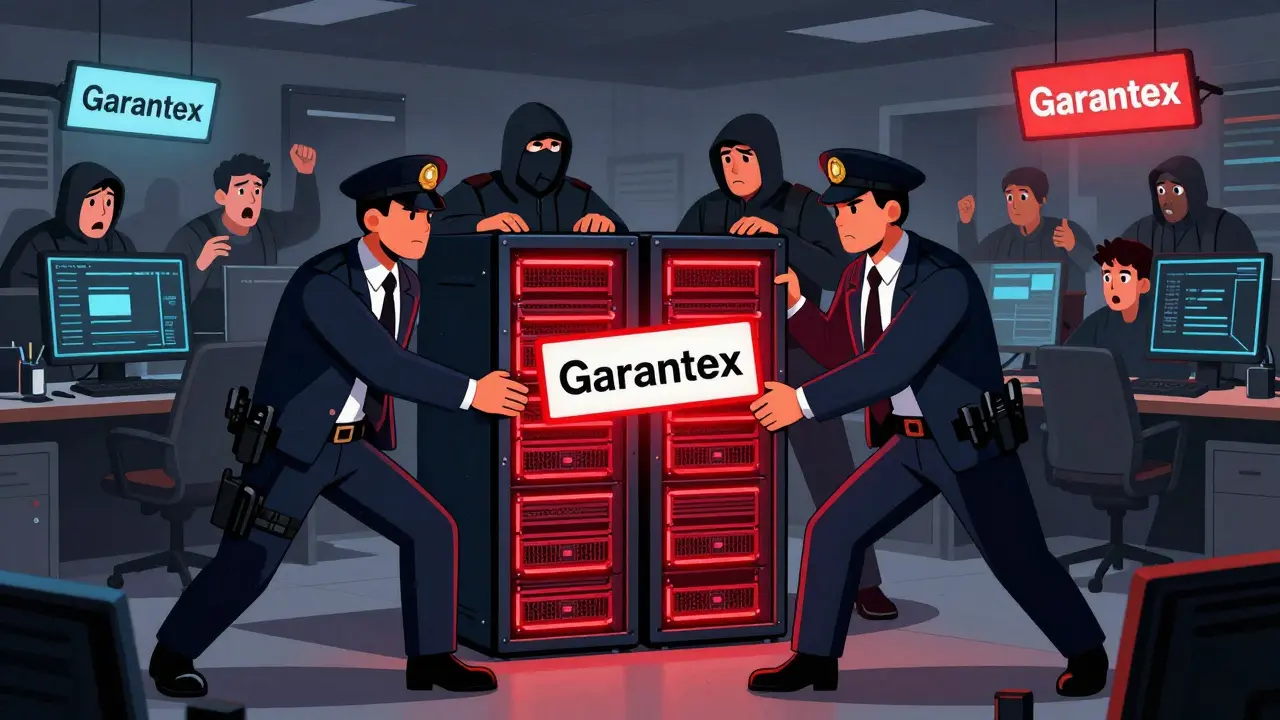
By March 2025, the U.S. Secret Service led an international operation that dealt a massive blow to the exchange. They seized three domain names, confiscated servers, and froze more than $26 million in cryptocurrency. Crucially, they arrested co-founder Aleksej Besciokov while he was vacationing in India. This physical takedown sent a clear message: geography offers little protection when your digital footprint leads back to sanctioned activities.
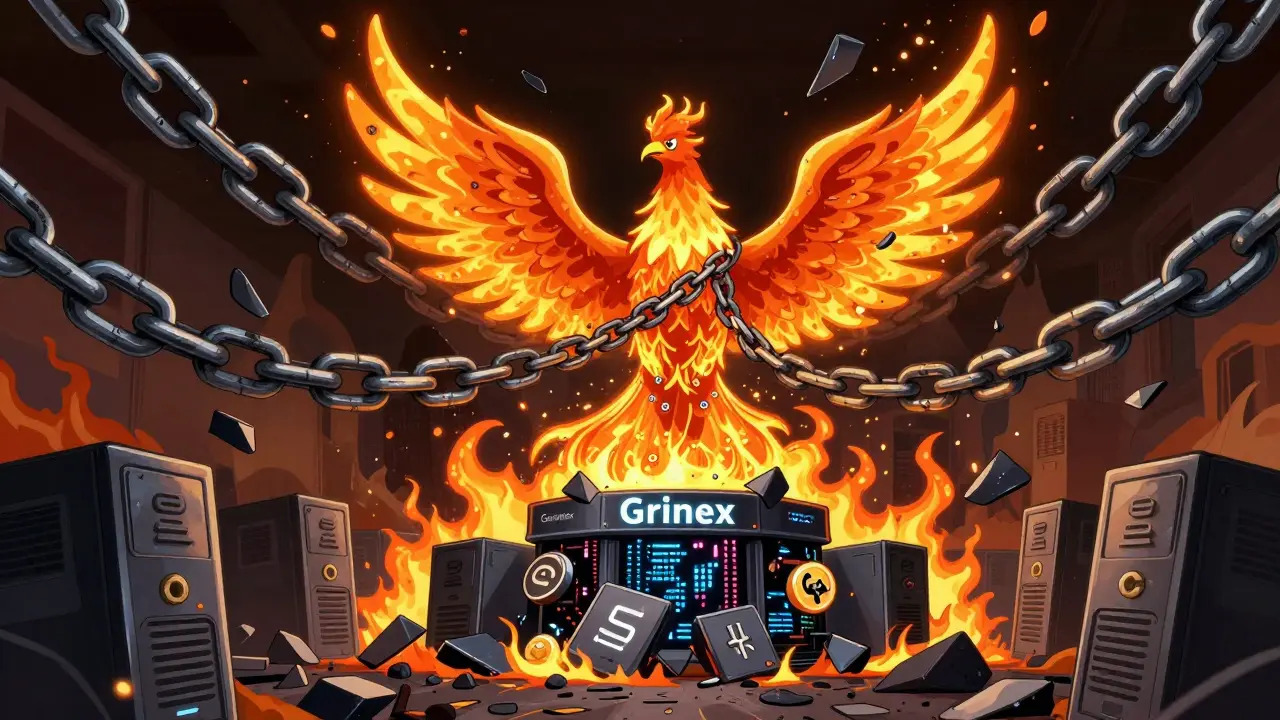
But the story didn’t end there. In response to these disruptions, Garantex employees immediately pivoted. They created Grinex, the direct successor platform to Garantex designed to restore user access. Grinex’s own promotional materials openly admitted it was formed to counteract the sanctions and asset freezes affecting Garantex. The plan was simple: allow former Garantex customers to regain access to their accounts using a new token system. However, this adaptation was short-lived. On August 14, 2025, OFAC re-designated Garantex and simultaneously sanctioned Grinex, citing its ownership by the blocked entity and its role in facilitating cybercriminal activities.
The A7 Network and the Scale of Evasion
Behind Garantex and Grinex lies a deeper infrastructure known as the "A7" network. This isn't just one company; it’s a constellation of entities including A7, A71, A7 Agent, Old Vector, Independent Decentralized Finance Smartbank and Ecosystem (InDeFi Bank), and Exved. These organizations work together to process vast amounts of cryptocurrency traffic.
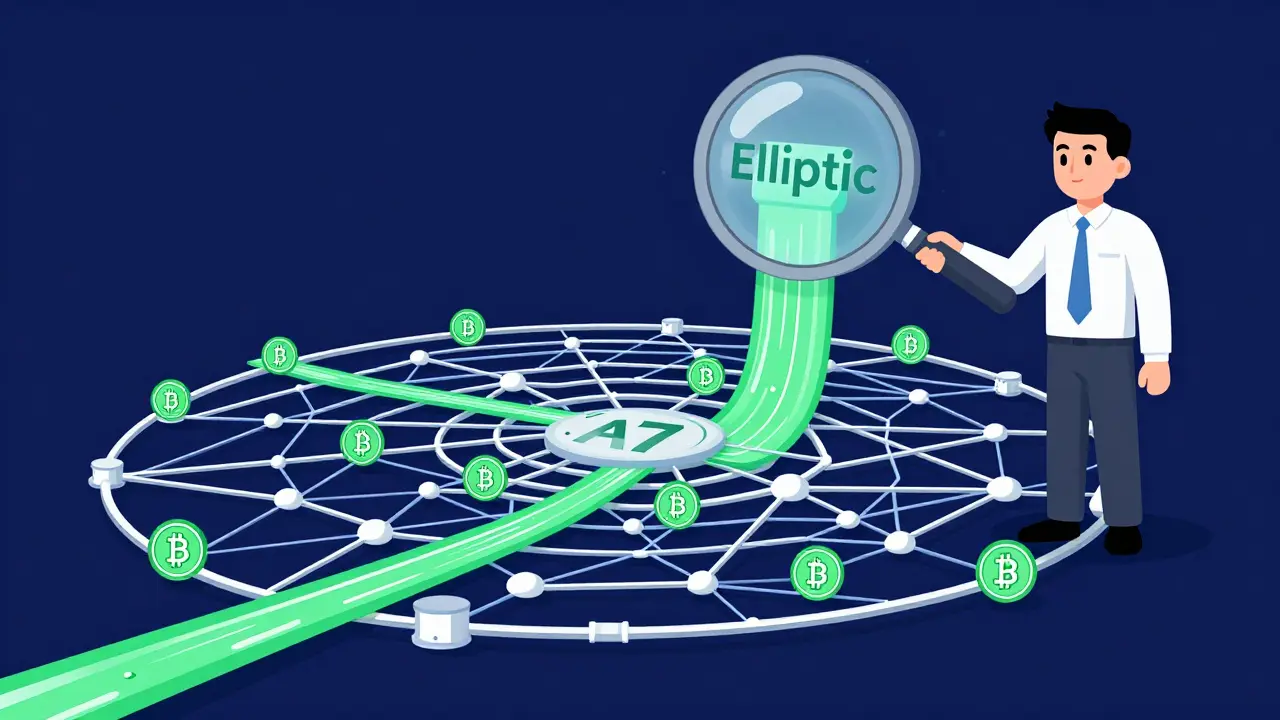
The scale of this operation is staggering. Analysis by Elliptic, a leading blockchain analytics firm, revealed that companies linked to the A7 network received approximately $8 billion in cryptocurrency transactions since early 2024. Elliptic noted this is likely a conservative lower bound, as additional unidentified wallets probably exist within the ecosystem. This volume underscores why regulators are so focused on this specific network-it represents a significant channel for capital flight and illicit finance.
| Entity | Type | Status / Action | Key Detail |
|---|---|---|---|
| Garantex | Crypto Exchange | Sanctioned (April 2022, Aug 2025) | Processed >$100M in illicit transactions since 2019 |
| Grinex | Successor Exchange | Sanctioned (Aug 2025) | Created to bypass Garantex freezes; uses A7A5 token |
| A7 Network | Corporate Group | Targeted by Enforcement | Includes A71, InDeFi Bank; processed ~$8B since 2024 |
| A7A5 Stablecoin | Digital Asset | Monitored by Analytics Firms | Ruble-backed alternative to USDT; issued by Kyrgyzstani firm |
| Sergey Mendelev | Individual | Sanctioned (Aug 2025) | Co-founder of Garantex |
The Role of A7A5 and Blockchain Analytics
A central piece of this puzzle is the A7A5 stablecoin, a ruble-backed digital asset used to facilitate transactions on Grinex. As traditional banks were cut off from SWIFT, Russian users needed a reliable way to store value and transfer funds. Initially, many turned to Tether’s USDT due to its price stability and wide acceptance. However, USDT is centralized, meaning Tether can freeze wallets if pressured by authorities. This became a major liability after Garantex was disrupted in March 2025.
In response, the A7 network promoted A7A5 as a more resilient alternative. Issued by a Kyrgyzstani firm, A7A5 allowed users to bypass some of the restrictions tied to mainstream stablecoins. But this innovation did not go unnoticed. Elliptic announced in August 2025 that it had added support for screening A7A5 transactions on both TRON and Ethereum blockchains. This integration means that compliance teams and law enforcement can now track flows involving this specific token, reducing its effectiveness as a shield against sanctions.
The cat-and-mouse game continues. In mid-2025, the "A7 leaks" disclosed information linking specific cryptocurrency wallets to A7 companies. Evidence suggests that infrastructure changes observed around August 14, 2025-including unusual activity with A7A5 wallets-were reactions to potential security breaches or compromised cryptographic keys. Despite these efforts to obfuscate their trails, Garantex had employed sophisticated wallet techniques to avoid detection. Yet, Elliptic’s technical analysis helped the U.S. Secret Service overcome these methods, directly contributing to the freezing of $26 million in USDT.
Legal Frameworks and Personal Liability
The legal basis for these actions is robust. The August 2025 designations were made pursuant to Executive Order 13694, as amended by EOs 14144 and 14306. This order targets individuals and entities involved in malicious cyber-enabled activities. By sanctioning Grinex, OFAC explicitly stated it was owned or controlled by Garantex, thereby extending the reach of the original blockade. This approach prevents sanctioned entities from simply reincorporating or rebranding to continue operations.
Personal liability is also a key component. Alongside the corporate sanctions, OFAC targeted three Garantex executives: Sergey Mendelev, Aleksandr Mira Serda, and Pavel Karavatsky. Simultaneously, the U.S. Department of State announced financial rewards totaling up to $6 million for information leading to the arrest or conviction of Garantex leaders. Specifically, a reward of up to $5 million was offered for Aleksandr Mira Serda. This demonstrates that leadership cannot hide behind corporate structures; they are personally accountable for facilitating illicit flows.
Implications for Users and Compliance Professionals
For cryptocurrency users in Russia and other sanctioned jurisdictions, these developments create increasingly complex challenges. Traditional platforms like Garantex are systematically targeted, and successor platforms like Grinex are quickly identified and sanctioned. The window for operating freely is closing rapidly. The emergence of new platforms and stablecoins like A7A5 shows that evasion networks are adaptive, but the combination of OFAC sanctions, State Department rewards, and private sector blockchain analytics creates a formidable barrier.
Compliance professionals must be aware that the definition of "sanctioned activity" now includes supporting successor entities and affiliated networks. Simply avoiding direct transactions with a primary sanctioned name is no longer sufficient. You must trace ownership, control, and operational links. The $8 billion figure flowing through A7-linked wallets highlights the material risk involved. Ignoring these connections can lead to severe penalties, including frozen assets and criminal charges.
The timing of these sanctions also reflects broader geopolitical tensions. President Trump’s statement in August 2025 regarding preparedness to impose further economic sanctions on Russia if ceasefire negotiations fail adds another layer of uncertainty. Regulatory environments can shift overnight based on political developments. Staying informed is not optional; it is essential for survival in this market.
What happened to Garantex in 2025?
In March 2025, the U.S. Secret Service seized Garantex domains and servers, freezing over $26 million in crypto. Later, in August 2025, OFAC re-sanctioned Garantex and its successor, Grinex, citing their role in facilitating illicit transactions and cybercrime.
Is Grinex safe to use?
No. Grinex was sanctioned by OFAC in August 2025 because it was created to bypass sanctions on Garantex. Using it may expose you to legal risks and asset freezes.
What is the A7A5 stablecoin?
A7A5 is a ruble-backed stablecoin issued by a Kyrgyzstani firm, promoted by the A7 network as an alternative to USDT to help users bypass sanctions. However, it is now monitored by blockchain analytics firms like Elliptic.
Who are the key figures sanctioned in this case?
Key sanctioned individuals include Sergey Mendelev, Aleksandr Mira Serda, and Pavel Karavatsky, all executives associated with Garantex. The U.S. State Department has offered up to $5 million for information leading to Serda's arrest.
How much money flowed through the A7 network?
According to Elliptic, companies linked to the A7 network received approximately $8 billion in cryptocurrency transactions since early 2024. This figure is considered a conservative estimate.