
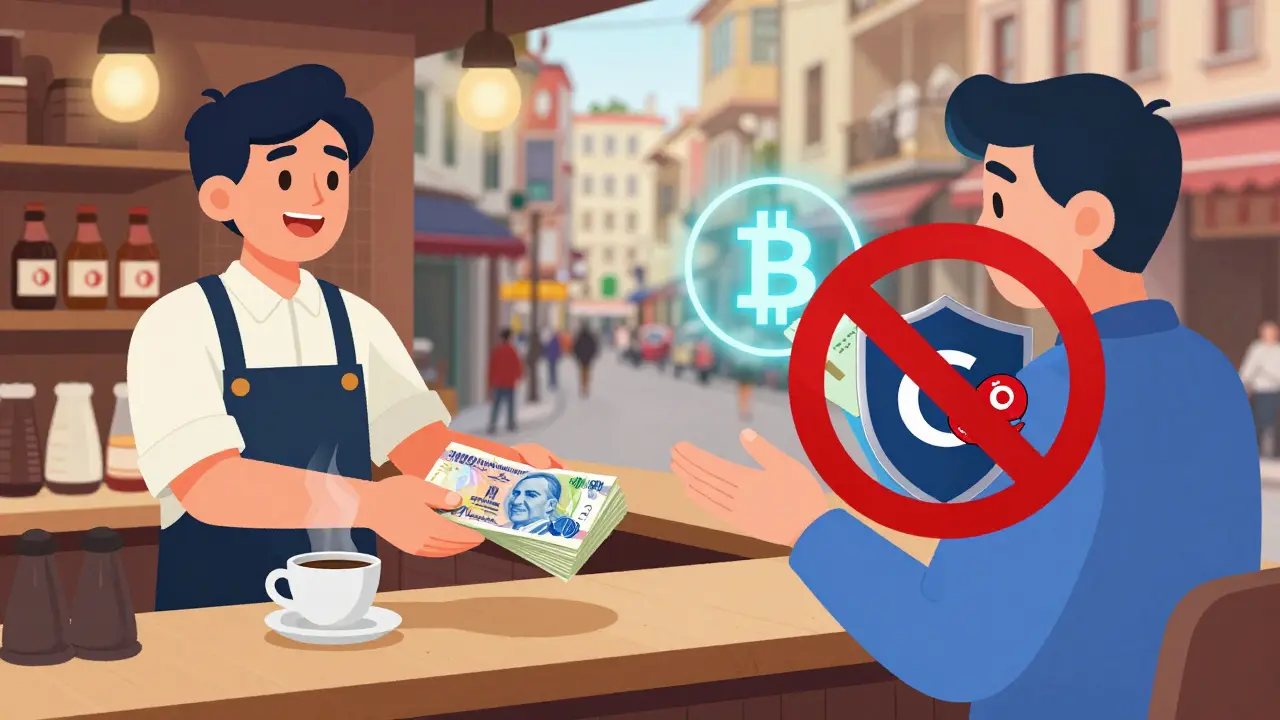
Buying Bitcoin or Ethereum in Turkey is legal. Paying for your morning coffee with it? That’s a hard no. This dual reality defines the current landscape for anyone trying to navigate digital assets in Türkiye. If you are looking to trade, hold, or operate a business involving crypto in this region, understanding the strict boundary between ownership and payment is not just helpful-it is mandatory.
The regulatory environment has shifted dramatically since the initial framework was established in April 2021. By 2026, the rules have hardened into a comprehensive structure that favors large, compliant institutions while squeezing out smaller players and limiting everyday utility. The Central Bank of Turkey (TCMB) remains firm on one point: the Turkish lira is the only legal tender. Any attempt to bypass this using digital assets triggers immediate regulatory scrutiny.
The Legal Boundary: Trading vs. Payment
To understand where you stand, you must first separate two distinct activities: investment and commerce. Under current law, owning, buying, and selling cryptocurrencies like Bitcoin or Ethereum is perfectly legal. You can hold these assets in a wallet, trade them on licensed exchanges, and even profit from price movements without paying capital gains tax-a status that held true through late 2025.
However, the moment you try to use those assets as money, you cross a line. The TCMB prohibits using crypto to pay for goods or services. This means merchants cannot accept crypto directly, and individuals cannot use it for peer-to-peer payments for everyday transactions. This restriction exists to protect the stability of the Turkish lira, which has faced significant volatility and depreciation over recent years. The government wants crypto to remain an asset class, not a replacement currency.
This creates a unique friction for users. While you can legally own crypto, converting it back into spendable lira often requires navigating complex exchange processes. Many traders find themselves relying on peer-to-peer methods to bridge this gap, though doing so carries inherent risks under the new enforcement regimes.
New Rules for Exchanges: High Barriers to Entry
If you are operating a platform or considering where to trade, the barrier to entry has never been higher. The "Law on Amendments to the Capital Markets Law," enacted in July 2024, fundamentally changed how Crypto Asset Service Providers (CASPs) must operate. These providers now need explicit licenses from the Turkish Capital Markets Board (CMB).
The financial requirements are steep. To operate as an exchange, a company must maintain a minimum capital of 150 million Turkish lira (approximately $4.1 million). For custodians-entities that store assets on behalf of others-the requirement jumps to 500 million Turkish lira ($13.7 million). These figures are significantly higher than typical licensing thresholds in the European Union, signaling that Turkey intends to consolidate its market around a few large, well-capitalized players rather than supporting a fragmented startup ecosystem.
| Service Type | Minimum Capital (TRY) | Approximate USD Value |
|---|---|---|
| Cryptocurrency Exchange | 150,000,000 TRY | $4.1 Million |
| Custodian Service | 500,000,000 TRY | $13.7 Million |
Beyond capital, these firms face rigorous operational audits. The Scientific and Technological Research Council of Türkiye (TÜBİTAK) conducts mandatory technological system audits. This ensures that the infrastructure handling user funds meets high security standards. Additionally, companies must hire dedicated risk management teams and implement sophisticated transaction monitoring systems capable of flagging suspicious activity in real-time.

Identity Verification and Privacy Concerns
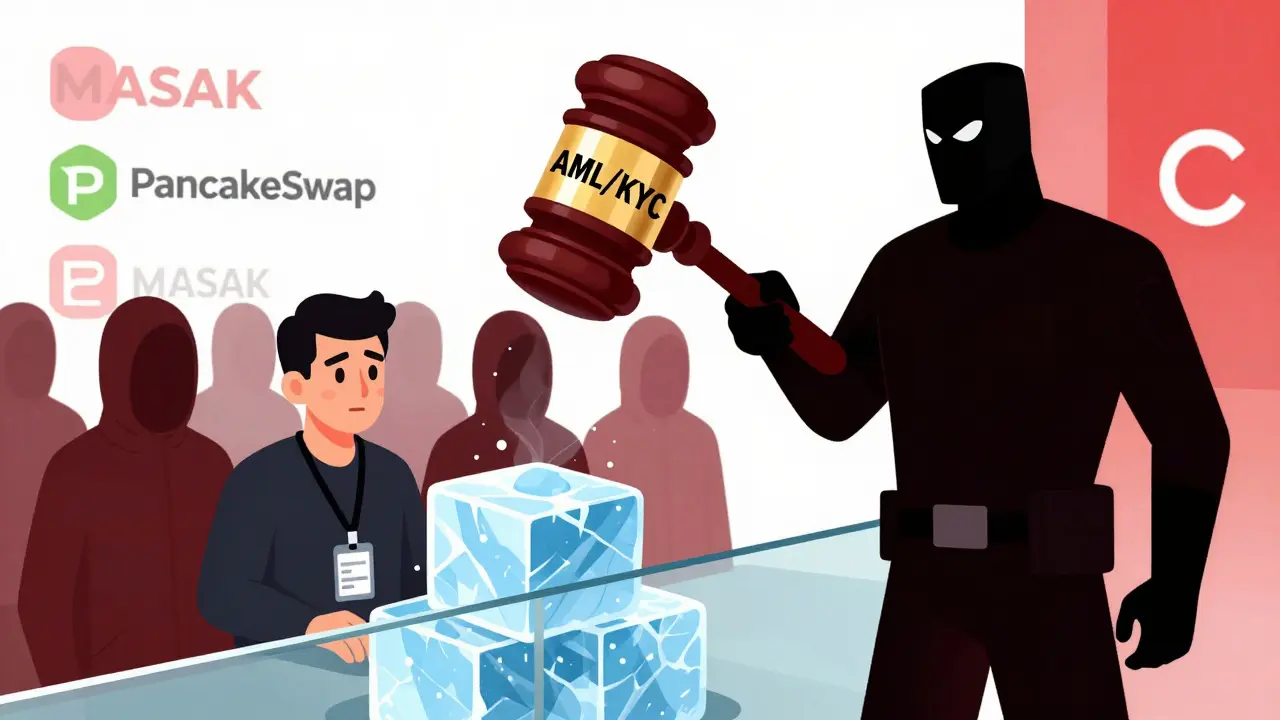
Anonymity is effectively dead in the Turkish crypto market. The Financial Crimes Investigation Board (MASAK) enforces strict Anti-Money Laundering (AML) and Know-Your-Customer (KYC) protocols. Identity verification is mandatory for any transaction exceeding 15,000 Turkish lira (roughly £425).
Even unregistered wallets are not safe havens. Strict verification checks apply to ensure that no illicit funds are moving through anonymous channels. For users concerned about privacy, this is a major shift. The grey market for crypto-to-lira conversions, which once thrived on anonymity, is being squeezed out by these transparency demands. Traders who previously relied on decentralized platforms may find their options limited as regulators actively block access to unauthorized interfaces.
In July 2024, the CMB demonstrated its enforcement capability by blocking access to several unauthorized platforms, including popular decentralized exchanges like PancakeSwap. This move sent a clear message: if a platform does not comply with local licensing and identity rules, it will be inaccessible to Turkish users.
Upcoming Powers: Account Freezes and Blacklists
The regulatory hammer continues to fall. Draft legislation prepared for the Grand National Assembly aims to grant MASAK unprecedented authority. The proposed bill would allow regulators to freeze cryptocurrency accounts as part of anti-money laundering efforts. This power extends across payment systems, electronic money institutions, banks, and crypto exchanges.
Under these rules, MASAK could:
- Freeze or close accounts linked to criminal activity.
- Impose strict transaction limits on flagged entities.
- Blacklist specific crypto wallets associated with fraud or illegal gambling.
This legislation specifically targets "rented accounts"-a common tactic where criminals pay individuals to use their identities for illegal financial flows. By aligning with Financial Action Task Force (FATF) global standards, Turkey is closing loopholes that previously allowed bad actors to exploit the borderless nature of crypto. For legitimate traders, this means increased security but also less tolerance for errors or oversight in compliance.
How This Compares Globally
Turkey’s approach stands out when compared to other major economies. Unlike the European Union’s MiCA framework, which allows regulated crypto payments, Turkey maintains a strict prohibition on using digital assets for commerce. The United States operates on a state-by-state basis with varying degrees of flexibility, whereas Turkey applies a uniform national ban on crypto payments.
Furthermore, Turkey’s capital requirements for exchanges are more stringent than many Western jurisdictions. While the EU focuses on consumer protection and market integrity, Turkey prioritizes financial stability and control over the national currency. This makes the Turkish market attractive for large institutional players who can absorb high compliance costs but difficult for small startups or individual innovators.
Practical Implications for Users
If you are a trader in Turkey, your daily experience involves navigating these constraints. You likely use local exchanges like BTCTurk or Paribu, which have adapted to the regulatory environment. These platforms offer robust KYC procedures and comply with CMB guidelines, providing a safer but more monitored trading experience.
For those looking to hedge against lira volatility, crypto remains a viable option. The growing domestic adoption reflects this demand, with millions of citizens turning to digital assets to preserve value. However, the inability to spend crypto directly means you must constantly convert back to lira for daily needs, exposing you to exchange rate fluctuations at every step.
Business owners should note that accepting crypto is still off the table. Attempts to integrate crypto payments into e-commerce or retail operations will result in penalties. Instead, businesses are encouraged to focus on traditional banking channels while monitoring potential future changes in stablecoin regulations, which the Finance Ministry is currently reviewing.
Is it legal to buy cryptocurrency in Turkey?
Yes, buying, selling, and holding cryptocurrency is legal in Turkey. However, it is treated strictly as an investment asset, not as money. You cannot use it to pay for goods or services.
What happens if I use crypto to pay for something?
Using cryptocurrency for payments is prohibited by the Central Bank of Turkey. Merchants who accept crypto and individuals who use it for transactions violate the law, which mandates the Turkish lira as the sole legal tender.
Do I need to pay taxes on crypto profits?
As of late 2025, cryptocurrency profits remain untaxed in Turkey. However, this status is subject to change as regulations mature and the government seeks additional revenue sources. Always consult a local tax professional for the most current advice.
Can my crypto account be frozen?
Yes. New draft legislation grants MASAK the power to freeze or close crypto accounts linked to suspicious activity, money laundering, or terrorist financing. This includes blacklisting specific wallets associated with criminal behavior.
Which exchanges are safe to use in Turkey?
You should only use exchanges licensed by the Turkish Capital Markets Board (CMB). Local platforms like BTCTurk and Paribu are compliant. Unauthorized international platforms, especially decentralized ones, may be blocked by regulators.