
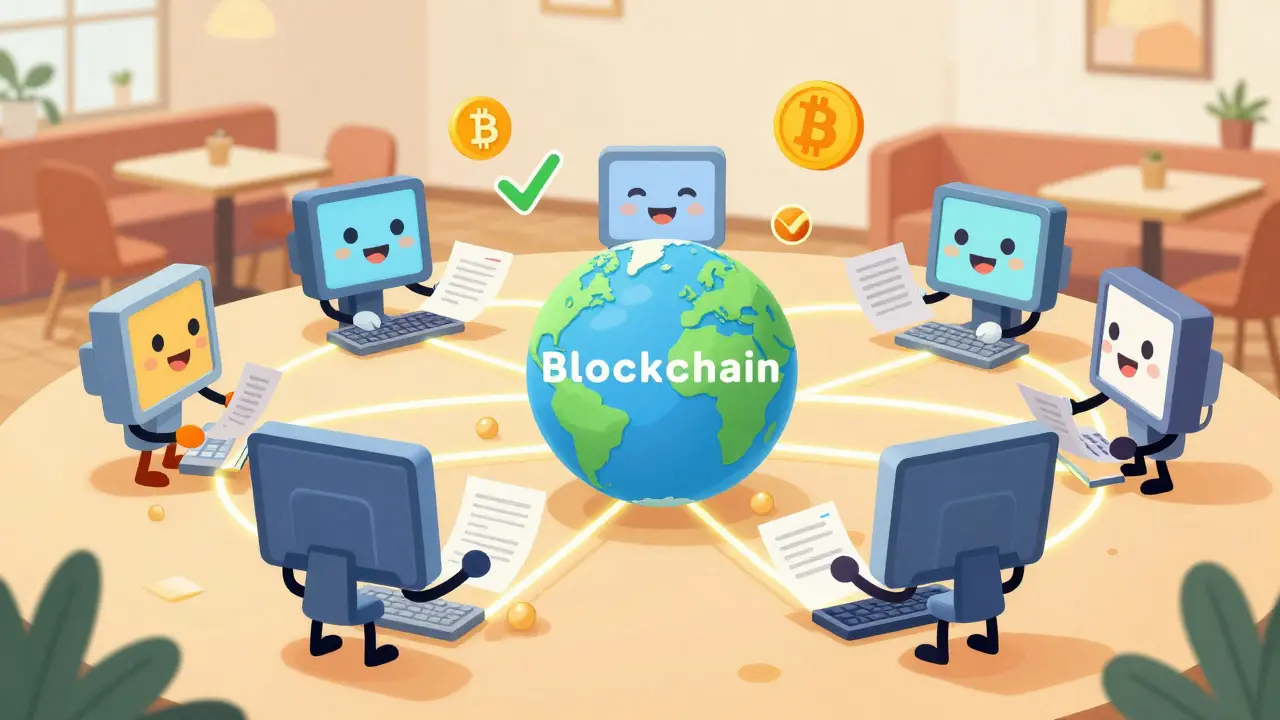
Think of blockchain like a public notebook everyone can see and write in, but no one can erase or secretly change. That notebook doesn’t live on one computer. It’s copied and shared across thousands of machines around the world. This is where peer-to-peer networks come in - they’re the invisible backbone that makes this possible.
In a regular website, your computer talks to a central server. If that server crashes, the site goes down. But in a blockchain, there’s no central server. Instead, every participant - called a node - talks directly to other nodes. Each one holds a full copy of the blockchain. No one’s in charge. No one owns the system. That’s what makes it peer-to-peer.
How Peer-to-Peer Networks Work in Blockchain
Imagine you’re at a crowded coffee shop. Everyone has the same list of who paid for what. When someone buys a coffee, they tell everyone: “I paid $5 to Alex.” Everyone checks their copy, confirms it’s valid, and writes it down. No manager. No receipt system. Just people agreeing on the truth.
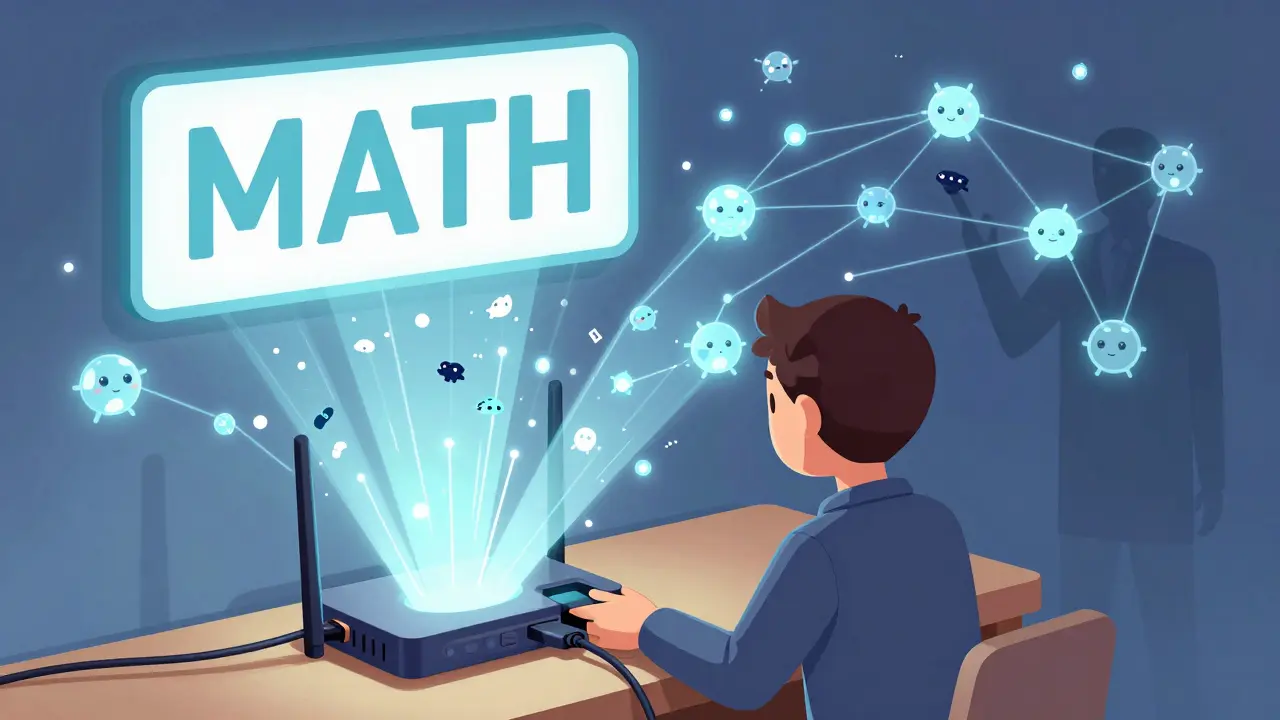
In blockchain terms, each person’s device is a node. When a transaction happens - like sending Bitcoin - it doesn’t go to a bank. It gets broadcast to every connected node. Those nodes verify it using math, not passwords or IDs. If it checks out, they add it to their copy of the ledger. Then they pass it along to others. This happens in seconds.
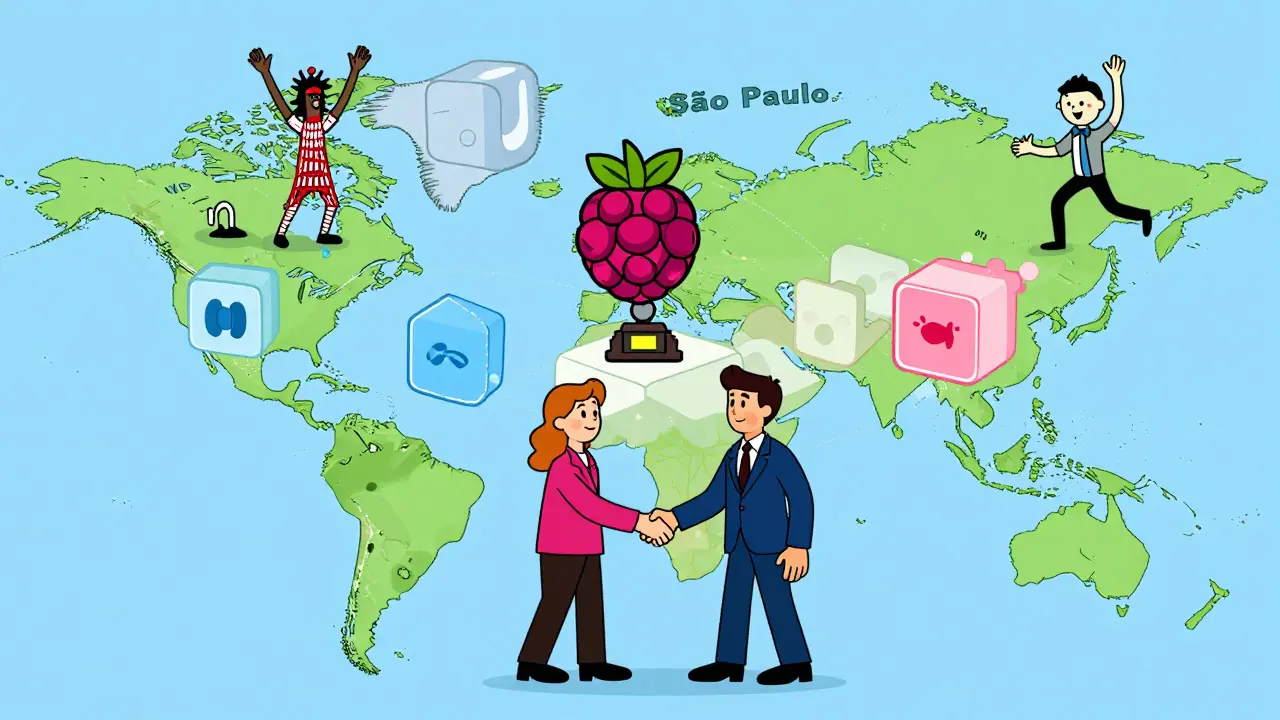
Nodes don’t just receive data - they also send it. Every node acts as both a client and a server. That’s the core of peer-to-peer: no hierarchy, no middlemen. A node in Tokyo can send data to a node in São Paulo without going through a company’s server in New York.
Why This Matters: No Single Point of Failure
Centralized systems are fragile. If Amazon’s servers go down, half the internet stalls. If a bank’s database gets hacked, millions of accounts are at risk.
Not so with P2P blockchains. If 100 nodes go offline? No problem. The other 9,900 keep running. The network doesn’t care if one person turns off their laptop. It’s built to survive. That’s why Bitcoin has kept running since 2009 - even through wars, blackouts, and government crackdowns.
This resilience isn’t magic. It’s math and redundancy. Every transaction is stored on hundreds, sometimes millions, of devices. To alter one block, you’d need to change it on over half the network at once. Impossible without controlling most of the world’s computers.
The Role of Consensus and Nodes
Not every node does the same job. Some just store data. Others help validate transactions. The ones that do the heavy lifting are called miners (in Proof of Work) or validators (in Proof of Stake).
Proof of Work, used by Bitcoin, asks nodes to solve hard math puzzles. The first one to solve it gets to add the next block and earns Bitcoin as a reward. It’s like a global lottery - anyone can join, but only one wins per round.
Proof of Stake, used by Ethereum now, works differently. Instead of using electricity to solve puzzles, nodes lock up (or “stake”) their own cryptocurrency. The more they stake, the higher their chance to validate the next block. It’s less energy-hungry and still keeps the network honest - because if you cheat, you lose your stake.
Either way, these consensus rules only work because of the P2P network. Without every node sharing and checking data, there’s no way to agree on what’s real.
Real-World Examples
Bitcoin is the original P2P blockchain. It runs on over 15,000 active nodes worldwide. You can run one yourself - on a Raspberry Pi, even. No permission needed. Just download the software, connect to the network, and start syncing the blockchain.
Ethereum, the second-largest blockchain, also uses P2P. But it goes further. It hosts smart contracts - self-executing code that runs when conditions are met. These contracts live on every node. When you buy an NFT or lend crypto on a DeFi app, you’re using code that runs across thousands of machines, not a single company’s server.
Even newer blockchains like Solana and Polygon rely on P2P. They tweak the protocol for speed, but the core idea stays: no central authority. Just nodes talking to each other.
Benefits of P2P in Blockchain
- No middlemen: You don’t need banks, payment processors, or brokers to move value.
- Lower costs: No server farms to maintain, no licensing fees, no corporate overhead.
- Transparency: Every transaction is public. You can trace every Bitcoin from day one.
- Censorship resistance: Governments can’t shut down a network with no central address.
- Scalability through participation: The more people join, the stronger the network gets. Unlike cloud servers, which get overloaded, P2P networks grow more powerful with more users.
Challenges and Trade-Offs
It’s not all perfect. P2P networks need enough active nodes to stay healthy. If too many people stop running nodes - maybe because it’s too slow or expensive - the network becomes vulnerable.
Running a full node requires storage (over 700 GB for Bitcoin), bandwidth, and uptime. Most users don’t run full nodes. They use wallets that connect to trusted nodes. That’s fine for casual use, but it reduces decentralization.
Also, privacy isn’t automatic. Even though transactions are pseudonymous (using wallet addresses, not names), your IP address can be seen by peers. Some blockchains are building tools to hide IPs, but it’s still a work in progress.
What’s Next for P2P Networks?
As blockchain moves beyond crypto - into supply chains, identity systems, and even voting - P2P networks will keep evolving.
Layer-2 solutions like Lightning Network for Bitcoin and rollups for Ethereum are adding speed without breaking the P2P foundation. They still rely on the main blockchain’s nodes for final security.
Projects are also testing ways to make node-running easier. Imagine plugging a $50 device into your router that automatically helps secure the network. No tech skills needed. That’s the future.
The real win? You don’t need to trust anyone. You just need to trust the math, the network, and the fact that thousands of strangers are doing the same thing - keeping the ledger honest.
Do I need to run a node to use blockchain?
No. Most people use wallets like MetaMask or Trust Wallet that connect to public nodes. You only need to run your own node if you want full control, maximum privacy, or to help secure the network. Running a node is optional but strengthens the whole system.
Can governments shut down a P2P blockchain?
Not easily. Since there’s no central server or company to target, shutting down a blockchain means blocking every single node worldwide. Even if a country bans it, nodes still run in other countries. Bitcoin has survived bans in China, Russia, and Nigeria. The network adapts.
Are all blockchains peer-to-peer?
Most public blockchains are, like Bitcoin and Ethereum. But private or permissioned blockchains - used by banks or corporations - often use centralized servers or a small group of trusted nodes. These aren’t true P2P networks. They’re just databases with blockchain-like features.
How do nodes communicate with each other?
Nodes connect directly over the internet using TCP/IP, like your phone connects to Wi-Fi. They exchange data in small chunks - transaction lists, block headers, validation messages. They don’t need to know who you are, just that the data follows the rules. It’s like texting a stranger who’s also following the same grammar rules.
What happens if a node is hacked?
Not much. A hacked node can’t change the blockchain. It can only lie to itself. Other nodes will reject its fake data because it doesn’t match the majority copy. The network ignores bad actors. The real power comes from the majority - if more than half the nodes agree, that’s the truth.


Ian Plunkett
This is literally the most accurate explanation I've ever seen. 🤯 No central server? So it's like a giant group chat where everyone's the admin? I'm sold. Bitcoin's still alive because it's a ghost network now. No one can kill what doesn't have a heartbeat.