
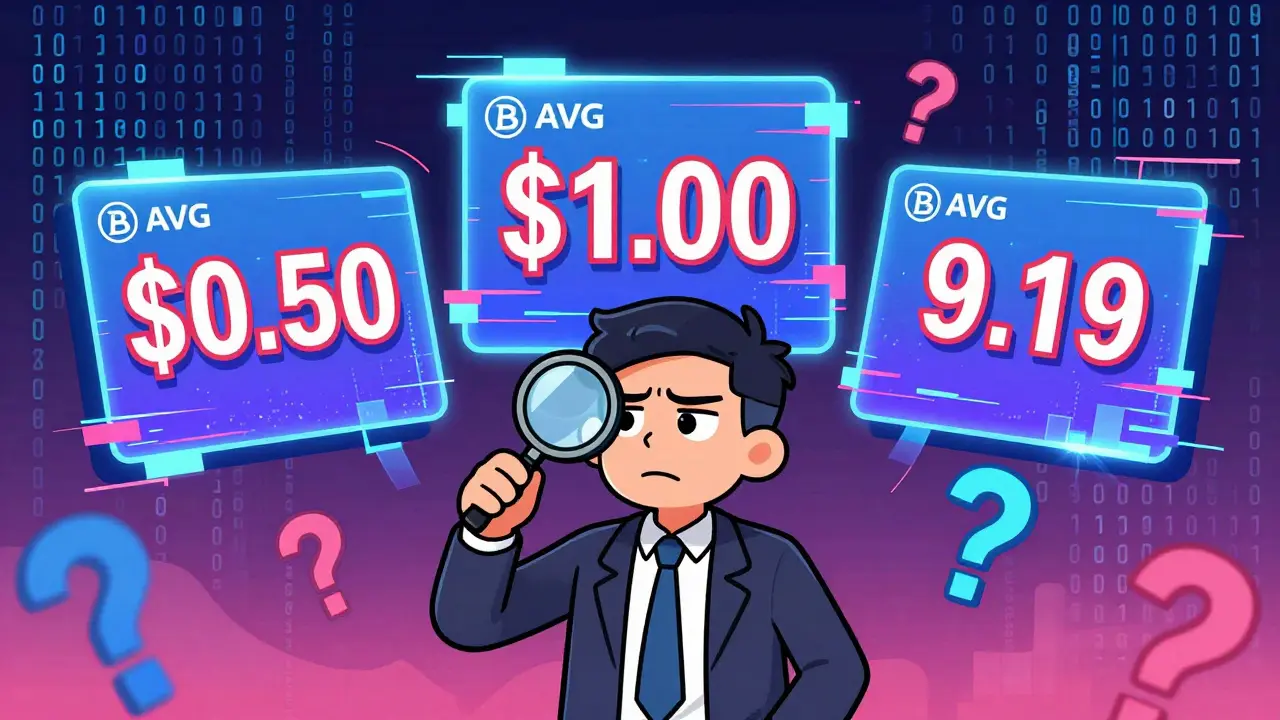
Imagine checking the price of a cryptocurrency on three different websites and seeing three completely different numbers. One says it’s worth $0.50, another claims it’s $1.00, and a third insists it’s trading at $9.19. This isn’t a glitch in your browser; it’s the reality for Agilavetri Groups, a cryptocurrency token that has raised more questions than answers since its launch in 2025.
If you’ve stumbled upon the ticker symbol AVG and are wondering what this coin actually does, who is behind it, and whether it’s safe to touch, you’re not alone. The crypto space is flooded with new tokens every day, but few present such a confusing picture of data inconsistencies and missing information as AVG. Before you consider buying or holding any amount of this token, it is crucial to understand exactly what you are looking at-and what you aren’t.
The Basics: What Is Agilavetri Groups?
At its core, Agilavetri Groups (AVG) is a utility token built on the BNB Smart Chain (also known as BSC or BEP-20). It launched in 2025 with a stated maximum supply of 1 billion tokens. The project’s marketing materials describe it as the native currency for an "AVG Ecosystem" that supposedly includes decentralized finance (DeFi) tools, NFT marketplaces, Web3 commerce platforms, and blockchain gaming.
Technically, AVG operates as a standard BEP-20 token. This means it uses the same underlying technology as thousands of other tokens on the Binance network. It benefits from BNB Chain’s fast block times (roughly 3 seconds) and low transaction fees, which often cost less than $0.10 per transfer. You can hold AVG in common wallets like MetaMask or Trust Wallet by adding the BNB Chain network and importing the specific contract address: 0x6df337a7b2803e6523cae85b6852dd6319023e51.
However, knowing the technical specs doesn’t tell you much about the project’s legitimacy. To understand AVG, we have to look deeper into the data discrepancies that plague its public profile.
The Data Chaos: Why Prices and Supplies Don’t Match
In the world of established cryptocurrencies like Bitcoin or Ethereum, data aggregators like CoinMarketCap, CoinGecko, and Binance generally agree on prices and market caps. With Agilavetri Groups, this consistency vanishes. This lack of agreement is a major red flag for investors.
| Source | Listed Price (USD) | Circulating Supply | 24h Volume |
|---|---|---|---|
| CoinCarp | $0.48 | 700 Million | $17,129 |
| LiquidityFinder / Binance | $0.52 | 0 | $0 |
| CoinTracker | $1.00 | N/A | N/A |
| CoinMarketCap | $9.19 - $11.99 | 10 Million | $36.38 |
Look closely at those numbers. How can a token be worth $0.48 on one site and $9.19 on another? In normal markets, arbitrageurs would instantly buy the cheap version and sell the expensive one, equalizing the price. The fact that these prices remain wildly different suggests two things:
- Extreme Illiquidity: There is very little actual trading happening. When volume is near zero, a single small trade can spike the price on one exchange without affecting others.
- Data Feed Errors: Some aggregators may be tracking the wrong contract, reading stale order books, or misinterpreting locked tokens as circulating supply.
For example, LiquidityFinder and Binance report a circulating supply of zero, yet they still show a price. CoinMarketCap lists a self-reported circulating supply of only 10 million tokens, while CoinCarp claims 700 million are in circulation. These contradictions make it impossible to calculate a true market capitalization. Is AVG worth millions, or is it effectively worthless because no one is trading it?
Who Is Behind Agilavetri Groups?
One of the most critical aspects of any cryptocurrency investment is the team behind it. For major projects, you can find LinkedIn profiles, company registrations, and public interviews with founders. For Agilavetri Groups, the answer is silence.
None of the major data aggregators list named founders, a registered corporate entity, or a development team. The official website, avgcoin.org, links out to generic descriptions but lacks a transparent "About Us" section with verifiable identities. This anonymity is common in the early stages of some privacy-focused projects, but for a token claiming to build a broad financial ecosystem, it is highly unusual.
Without a known team, there is no accountability. If the smart contracts contain bugs, if the liquidity is pulled, or if the roadmap is abandoned, there is no one to contact. This is a classic characteristic of high-risk micro-cap tokens.
Promises vs. Reality: The "Ecosystem" Claims
The marketing narrative for AVG is ambitious. Blockspot.io and CoinMarketCap describe an "AVG Ecosystem" that aims to bridge traditional finance and the decentralized economy. They claim the token will support:
- Peer-to-peer payments
- Staking and yield farming
- NFT marketplace transactions
- Blockchain-based gaming rewards
- Community governance voting
While these features sound appealing, there is a significant gap between marketing promises and on-chain reality. As of mid-2026, there are no verified partnerships with major DeFi protocols, no listed NFT marketplaces accepting AVG, and no active gaming platforms using the token. The "staking" and "yield farming" mentioned in descriptions are likely generic functions within the token contract rather than integrated, audited financial products.
Furthermore, the roadmap mentions plans for a "native blockchain." This is a massive undertaking. Building a standalone blockchain requires significant engineering talent, security audits, and validator infrastructure. Without GitHub repositories showing code commits or testnet launches, this remains a speculative goal rather than a concrete plan.
Security Risks and Red Flags
When evaluating a crypto asset, especially one with opaque origins, you must assume the worst until proven otherwise. Here are the specific risks associated with Agilavetri Groups:
- No Public Audits: There is no record of a smart contract audit by reputable firms like CertiK, PeckShield, or Trail of Bits. Unaudited contracts can contain hidden backdoors that allow developers to freeze funds or mint unlimited tokens.
- Centralization Concerns: CoinMarketCap once listed the number of holders as "1.00." While this might be a data indexing error, it highlights the danger of extreme centralization. If a single wallet holds the majority of the supply, the project is vulnerable to a "rug pull," where the owner sells everything and crashes the price to zero.
- Regulatory Gray Area: AVG operates without clear regulatory compliance. In jurisdictions like the US or EU, tokens that promise future profits or ecosystem growth without underlying utility can be classified as unregistered securities. This poses legal risks for both the issuers and potentially the holders.
- Lack of Community Activity: Healthy crypto projects usually have active communities on Reddit, Twitter/X, or Telegram. Searches for Agilavetri Groups reveal almost no organic discussion. This silence suggests either a lack of user interest or a community that hasn’t formed yet.
How to Verify AVG Yourself
If you are determined to investigate AVG further, do not rely on aggregator websites. Go directly to the source: the blockchain.
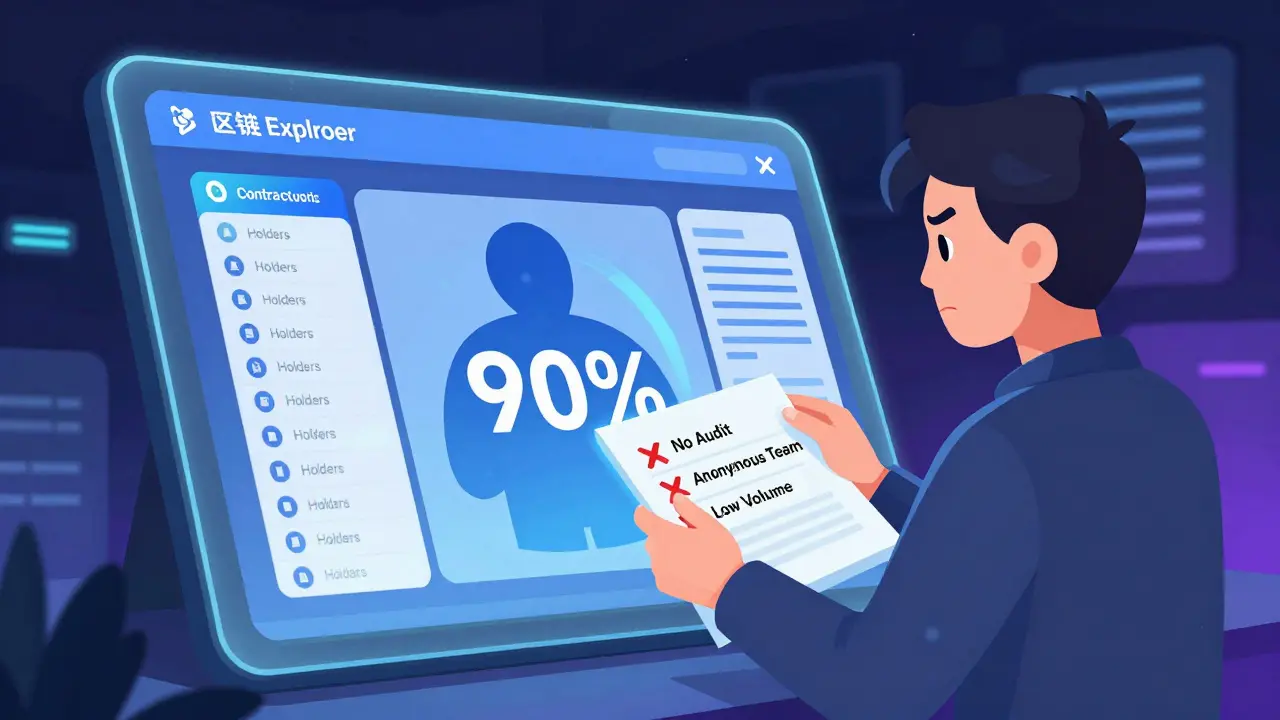
Use BscScan (the block explorer for BNB Smart Chain) and search for the contract address: 0x6df337a7b2803e6523cae85b6852dd6319023e51. Look at the following:
- Holders Tab: Who owns the tokens? Are the top 10 wallets holding 90% of the supply? If so, the risk is extremely high.
- Transactions Tab: Is there real trading activity, or just internal transfers between developer wallets?
- Contract Code: Is the code verified? Can you read the functions? Look for suspicious permissions like `mint`, `pause`, or `blacklist` that give owners control over your funds.
This due diligence process is tedious, but it is the only way to separate legitimate projects from scams.
Conclusion: Proceed with Extreme Caution
Agilavetri Groups (AVG) presents a textbook case of a high-risk, low-information cryptocurrency. While it operates on the robust BNB Smart Chain infrastructure, the token itself suffers from severe data inconsistencies, anonymous leadership, unverified utility claims, and a lack of security audits.
The wild variations in price and supply data across platforms indicate that AVG is not yet a mature financial asset. It behaves more like a speculative experiment than a functional currency. For most investors, the potential losses far outweigh the uncertain gains. If you choose to interact with AVG, treat it as a high-risk venture capital bet, not a stable investment. Never invest money you cannot afford to lose entirely, and always verify information on-chain rather than trusting marketing websites.
Is Agilavetri Groups (AVG) a scam?
It is difficult to definitively label AVG a scam without proof of malicious intent, but it exhibits many characteristics of high-risk projects, including anonymous teams, unaudited contracts, and inconsistent data. These are common red flags in fraudulent schemes. Always assume high risk when dealing with such tokens.
Where can I buy AVG coin?
AVG is a BEP-20 token, so it is likely traded on decentralized exchanges (DEXs) like PancakeSwap. However, due to low liquidity, you may face high slippage or fail to execute trades. It is not listed on major centralized exchanges like Binance or Coinbase for spot trading. Use caution when swapping via DEXs.
Why is the price of AVG different on every website?
The price discrepancies arise from extreme illiquidity and data feed errors. Different aggregators may be tracking different trading pairs, stale prices, or incorrect supply metrics. When a token has near-zero trading volume, prices become unreliable and easily manipulated.
What is the total supply of AVG?
The maximum supply of Agilavetri Groups is fixed at 1,000,000,000 (1 billion) tokens. However, the circulating supply is disputed, with sources ranging from 0 to 700 million tokens. This discrepancy makes it hard to determine the true market value.
Does AVG have a working DeFi ecosystem?
As of now, there is no evidence of a fully functional, independent DeFi ecosystem for AVG. Marketing materials mention staking and yield farming, but these are likely basic contract functions rather than integrated financial services. No major partnerships or TVL (Total Value Locked) data supports these claims.