

Imagine buying Bitcoin today and selling it exactly one year from now for double the price. In most countries, you’d be handing over a chunk of that profit to the tax man. But if you’re in Germany, a country with one of Europe’s most favorable cryptocurrency tax frameworks, that gain is completely yours. No questions asked. No forms filled out for capital gains. This isn’t a loophole or a temporary glitch; it’s the law.
As of 2026, Germany remains one of the few major economies where holding crypto for more than 12 months results in zero tax liability on profits. This policy has turned the country into a magnet for digital asset investors who want clarity and fairness. While other nations are scrambling to figure out how to tax decentralized finance (DeFi) or staking rewards, Germany offers a simple rule: hold it for a year, keep the money. If you’re an investor living in or moving to Germany, understanding this rule is the difference between keeping your wealth and losing nearly half of it to short-term taxes.
The One-Year Holding Period: How It Actually Works
The core of this benefit lies in Section 23 of the Income Tax Act (EStG). This section classifies cryptocurrencies as private assets rather than securities or commodities. The rule is brutally simple but requires precision: you must hold the asset for at least 12 months from the exact moment you acquired it.
Let’s break down what "exact moment" means. If you bought Ethereum on January 15, 2025, at 14:30 UTC, you can sell it on January 15, 2026, at 14:31 UTC without paying any tax. Sell it one minute earlier, and the entire profit becomes taxable. This granularity matters because tax authorities look at timestamps, not just dates.
This exemption applies to all types of crypto assets:
- Major coins: Bitcoin, Ethereum, Solana.
- Altcoins: Any smaller cap tokens.
- Stablecoins: USDT, USDC (though gains here are usually minimal).
- NFTs: Non-fungible tokens are treated identically to cryptocurrencies under this rule.
If you hold these assets for longer than a year, the profit is tax-free. There is no limit to the amount. You could make €1 million or €1 billion; the tax bill remains zero. This encourages long-term investing, often referred to as "HODLing," and discourages day-trading speculation.
What Happens If You Sell Early?
Life happens. Maybe you need cash before the one-year mark. Or maybe you just guessed wrong on the market timing. Selling before the 12-month deadline triggers standard income tax rules. Here is where it gets expensive.
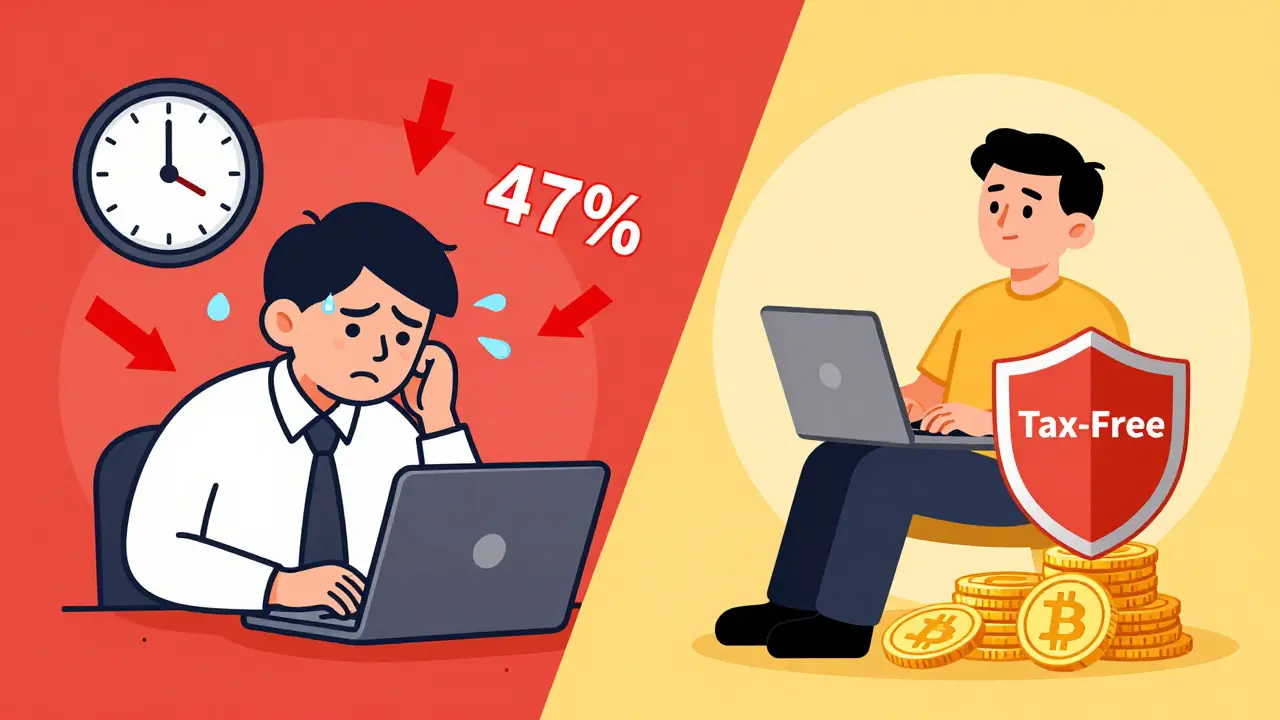
Short-term crypto gains are added to your total annual income and taxed at your progressive income tax rate. Depending on your overall earnings, this rate ranges from 14% to 45%. On top of that, there is the Solidarity Surcharge (Solidaritätszuschlag), which adds another 5.5% to your tax bill. For high earners, this pushes the effective tax rate on short-term crypto gains to roughly 47.4%.
However, there is a small safety net. Germany provides an annual tax-free allowance for speculative gains. As of recent updates, this threshold is €1,000 per year. If your total short-term losses exceed your gains, or if your net short-term profit is under €1,000, you pay nothing. But once you cross that €1,000 line, the entire amount is taxed at your marginal rate, not just the excess.
| Holding Period | Tax Rate | Tax-Free Allowance | Best For |
|---|---|---|---|
| Less than 12 months | 14% - 47.4% | €1,000 annually | Day trading, quick flips |
| 12 months or more | 0% | Unlimited | Long-term investing, HODLing |
Germany vs. The Rest of Europe
To appreciate why Germany’s policy is so attractive, you have to look at its neighbors. In France, for example, crypto gains are subject to a flat 30% tax rate regardless of how long you hold them. This includes social contributions, making it one of the least friendly environments for crypto investors in the EU.
The United Kingdom applies Capital Gains Tax (CGT) at rates of 10% or 20%, depending on your income bracket. They do offer an annual allowance (recently reduced to £3,000), but once you exceed that, you pay up. Portugal was once considered a tax haven for crypto, but regulatory shifts have introduced uncertainty, and they are under pressure to align with EU standards.
Germany stands out because it combines this tax exemption with strong legal clarity. The Federal Central Tax Office (BZSt) has issued clear guidelines stating that crypto-to-crypto swaps are not taxable events if held long-term. In contrast, countries like the United States treat every single swap as a taxable event, creating a nightmare of paperwork for traders.
This clarity makes Germany competitive against traditional financial hubs. Switzerland imposes wealth taxes on crypto holdings, and Singapore taxes frequent trading as business income. Germany’s approach treats crypto similarly to gold or art-assets meant for long-term storage of value.
The Hidden Complexity: Tracking Your Holdings
The rule sounds easy, but execution is tricky. The biggest challenge for German investors is record-keeping. Because the tax exemption depends on precise timestamps, you cannot rely on memory or rough estimates.
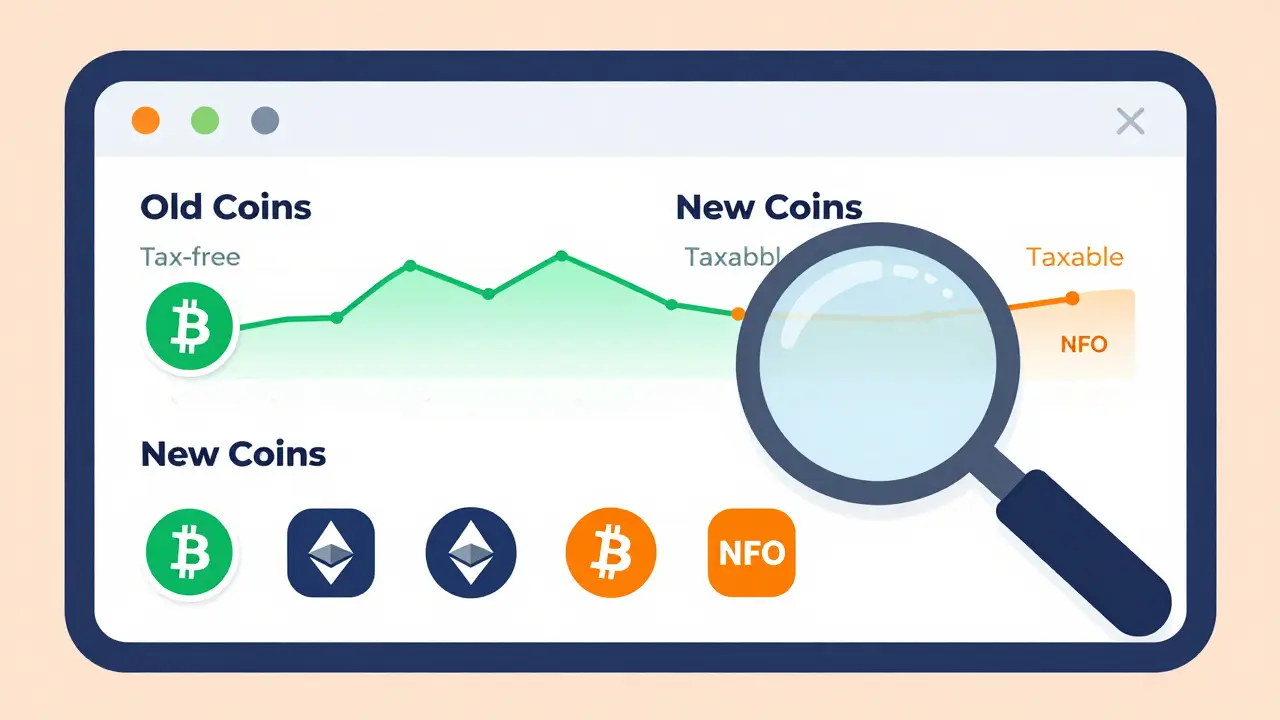
If you use Dollar-Cost Averaging (DCA)-buying small amounts regularly-you create multiple "lots" of crypto with different purchase dates. When you sell, you must prove which specific coins you sold. Did you sell the ones you bought two years ago (tax-free) or the ones you bought last week (taxable)?
The tax authority expects you to apply the FIFO (First-In, First-Out) method unless you can prove otherwise. This means the first coins you bought are the first ones considered sold. If those early purchases are still in your wallet, selling new coins might trigger taxes unexpectedly.
Most serious investors use specialized software to handle this. Tools like Blockpit, Koinly, or CoinTracker connect to your exchanges and wallets to track every transaction hash and timestamp. Setting up these tools takes a few hours, but it saves thousands in potential errors. Professional accountants in Germany charge between €150 and €500 for annual crypto tax preparation, which is a small price compared to the risk of an audit.
Staking, DeFi, and Gray Areas
While the basic buy-and-hold rule is clear, newer technologies create gray areas. What about staking rewards? Are they taxable when received or when sold?
Currently, staking rewards are generally considered taxable income at the fair market value when you receive them. This resets the clock for the one-year holding period. If you stake ETH and earn 4% APY, those new ETH tokens start their own 12-month countdown from the date of receipt. Selling them immediately would incur income tax.
Decentralized Finance (DeFi) activities, such as lending or providing liquidity, are even less defined. The BZSt has not issued comprehensive guidance for all DeFi scenarios. Some experts argue that yield farming profits are speculative gains subject to the one-year rule, while others view them as business income if done frequently. Until clearer rules emerge, caution is advised. Keep detailed records of every interaction with smart contracts, including transaction hashes and gas fees.
Future Outlook: Will the Rule Change?
Investors often worry that this generous policy is temporary. As of 2026, there are no announced plans to change Section 23 EStG. The European Union’s Markets in Crypto-Assets (MiCA) regulation focuses on consumer protection and market integrity, not direct taxation. Member states retain sovereignty over tax laws.
However, pressure for harmonization exists. Other EU countries may lobby for stricter rules to prevent tax competition. Analysts predict that changes, if any, are unlikely before 2027-2030. Germany benefits significantly from being a crypto-friendly hub, attracting blockchain companies and institutional investment. Changing the rules now would risk driving innovation back to more flexible jurisdictions.
For now, the strategy remains clear: buy quality assets, secure them properly, and wait. The German tax system rewards patience. By holding your crypto for more than 12 months, you align yourself with one of the most investor-friendly policies in the world.
Is crypto really tax-free in Germany after one year?
Yes. Under Section 23 of the German Income Tax Act (EStG), any profit from selling cryptocurrency held for more than 12 months is completely exempt from income tax. This applies to all types of crypto, including Bitcoin, Ethereum, and NFTs.
How is the one-year holding period calculated?
The period is calculated from the exact timestamp of acquisition to the exact timestamp of disposal. For example, if you bought BTC on Jan 1, 2025, at 10:00 AM, you can sell it on Jan 1, 2026, at 10:01 AM without tax. Precision is key, so keep detailed records of all transactions.
What tax do I pay if I sell crypto within one year?
Short-term gains are taxed as regular income. The rate depends on your total annual income, ranging from 14% to 45%, plus a 5.5% solidarity surcharge. However, you have a tax-free allowance of €1,000 per year for speculative gains.
Are staking rewards tax-free after one year?
No. Staking rewards are typically taxed as income when you receive them. The one-year holding period for those specific reward tokens starts from the date you receive them, not the date you staked the original principal.
Do I need to report tax-free crypto sales to the Finanzamt?
Generally, no. You only need to report crypto transactions if they result in taxable income (i.e., short-term gains exceeding the €1,000 allowance). However, it is wise to keep all records in case of an audit.